
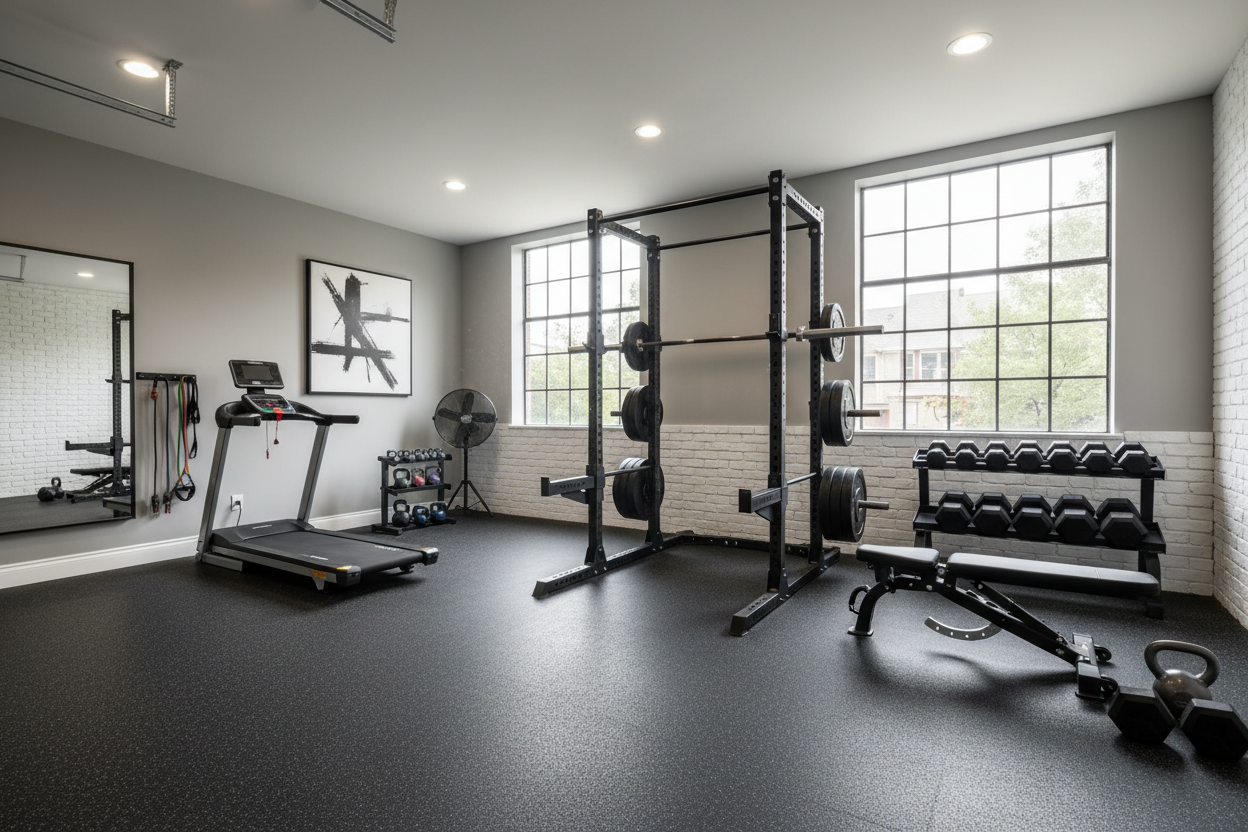
I spent my Saturday morning looking at my slightly rusted squat stand and then scrolling through Instagram. You have seen the posts — the ones where the lighting is perfect, the racks are custom-painted, and the equipment costs more than a mid-sized sedan. We have all daydreamed about these crazy home gyms, thinking that if we just had that one extra row machine, our lats would finally pop.
Quick Takeaways
- More machines usually mean more maintenance, not more muscle.
- Climate control and floor reinforcement are the hidden costs of mega-setups.
- Versatility beats specialized equipment 90% of the time.
- High-end flooring is the one 'luxury' that is actually worth the price.
Why We Are All Obsessed With Going Overboard
The arms race is real. I have seen guys spend twenty grand on a setup before they even hit a 225-lb bench press. It starts with a 'good deal' on Marketplace and ends with you parking your truck in the driveway for the next decade because the garage is full of iron.
The desire for an insane home gym often comes from a place of wanting to remove every excuse. But there is a tipping point where the gear starts managing you. Transitioning from building a functional home gym to curated museum of fitness happens faster than you think, and usually, the training quality actually drops as the clutter increases.
Setup 1: The 1,000-Square-Foot Machine Nightmare
The first stop on my tour was a detached pole barn converted into a 1,000-square-foot training center. It had fifteen different selectorized machines — separate stations for leg extensions, curls, and even a dedicated lateral raise machine. It looked impressive, but the dust on the guide rods told a different story.
The owner admitted he spent four hours a month just lubricating tracks and dusting cables. Every machine has a footprint of about 15 to 20 square feet once you account for the 'working zone.' Instead of ten single-use pieces, a quality smith machine home gym station would have saved him 400 square feet and hours of maintenance while covering 80% of the same movements.
Setup 2: The 'Mini Powerlifting Meet' in a Two-Car Garage
The second setup was a powerlifter's dream — or so it seemed. This guy had four identical power racks lined up in a standard two-car garage. He had calibrated plates for each station because he hated moving weights between squats and bench press. It was a crazy home gym flex, but the spatial flow was terrible. You had to turn sideways just to walk between the racks.
He was constantly deciding between a power rack or smith machine for his fifth station when I visited. My advice? Sell two racks and buy a functional trainer. Having four of the same thing does not make you four times stronger; it just makes your garage feel like a crowded commercial gym at 5:00 PM.
What Nobody Tells You About Owning an Insane Home Gym
Nobody talks about the electric bill. Heating or cooling a massive outbuilding to a liftable temperature is expensive. If you live in a humid climate, you are also fighting a constant battle against rust on your expensive barbells. I saw one owner running three industrial-grade dehumidifiers just to keep his 'insane' setup from turning into a pile of orange flakes.
Then there is the floor. Most residential garage slabs are not poured to hold 6,000 lbs of concentrated weight in a small area. I saw one setup where the concrete was starting to spider-web under a heavy dumbbell rack. You also have to consider the 'friction of choice.' When you have 50 different bars, you spend more time picking the 'perfect' one than actually pulling.
The Only 2 Upgrades You Should Actually Copy
If you want to spend some serious cash, do not buy more iron. Buy better infrastructure. The best part of these high-end setups was not the specialized machines; it was the foundation. Most of these guys had basic 3/4-inch stall mats that smelled like a tire fire and shifted underfoot.
Instead, investing in heavy-duty 4x8 gym mats with a high-density finish makes the whole room feel professional and saves your joints during plyos. The second upgrade worth the hype is a high-end, commercial-grade pulley system. A smooth cable feel is something you cannot fake with cheap gear.
Personal Experience: My Biggest Gear Mistake
I once bought a commercial-grade leg press for four hundred bucks. It was a steal, but it took up half my garage. I used it maybe twice a month because loading 12 plates on it was a chore in itself. I eventually sold it because I was tired of shimmying past it just to reach my barbell. Sometimes, the 'best' piece of equipment is the one that leaves you enough room to actually move.
FAQ
Is a bigger gym always better?
No. A bigger gym usually means more cleaning, more climate control costs, and more distractions. A compact, high-quality setup usually leads to more consistent workouts.
What is the biggest waste of money in a home gym?
Buying single-use machines before you have a solid rack, barbell, and cable system. Most people use a specialized machine for three weeks and then it becomes a coat rack.
How do I stop my garage floor from cracking?
Use high-density rubber flooring and try to distribute the weight. Avoid stacking all your heaviest plates and machines in one corner of the slab.
Share:
Why Most Viral Home Gym Designs Pictures Set You Up to Fail
I Bought a Second Hand Smith Machine. Here's How to Avoid My Mistakes.