
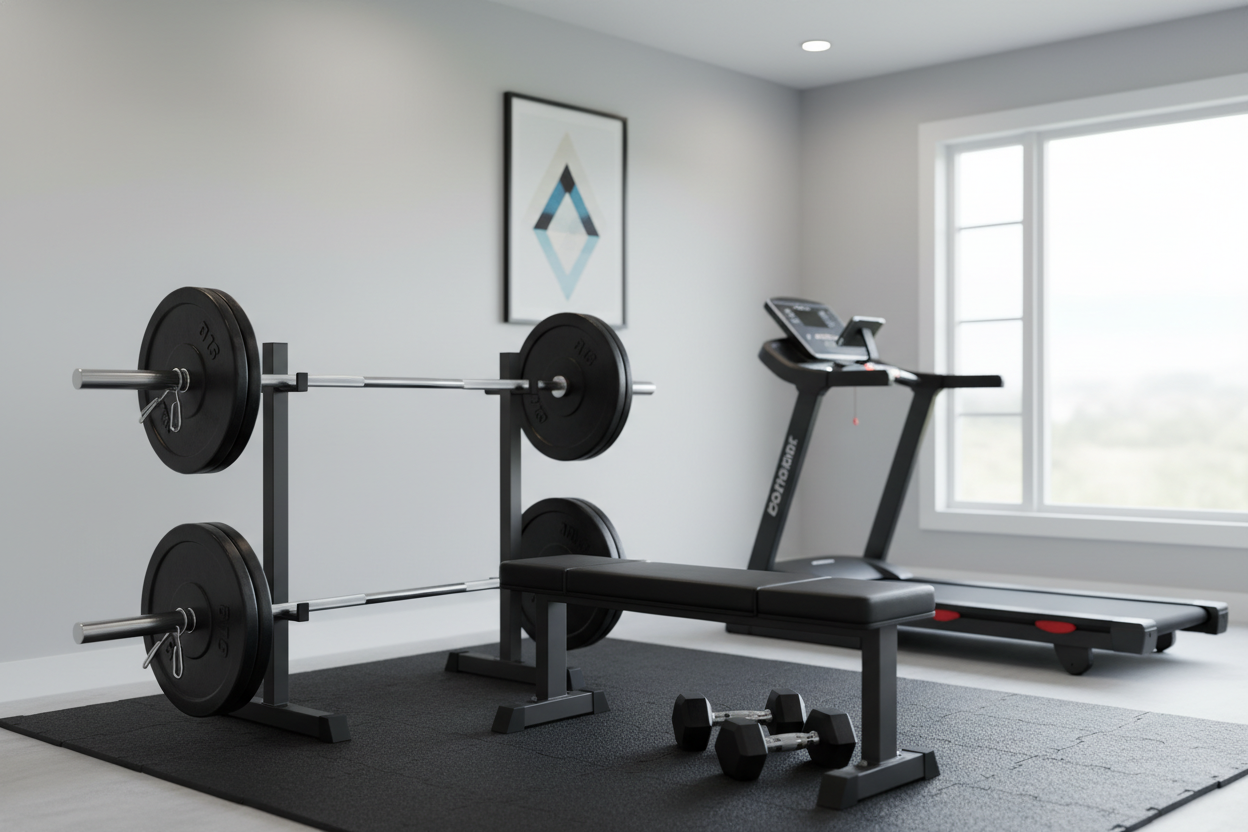
You are staring at a bedroom corner that is barely wide enough for a yoga mat, but you are dying to lift something heavier than a gallon of milk. I have been there—trying to fit a full-sized rack into a space that barely fits a twin bed. That is usually when you start looking at the 4 foot barbell 1 inch as a potential savior.
Quick Takeaways
- Fits in a closet or under a bed easily.
- Uses 'standard' 1-inch plates which are cheaper but less versatile.
- Cannot be used in a standard power rack or squat stand.
- Weight capacity is usually capped around 100-150 lbs.
Why We Need to Talk About Miniature Standard Bars
The 4 foot barbell 1 inch is the 'mini-me' of the lifting world. It is often marketed to apartment dwellers, teenagers, or anyone with exactly zero floor space. Garage gym purists love to mock these bars because they aren't made of high-tensile steel and they don't have fancy needle bearings. But let's be real: not everyone has a 20-foot garage with reinforced concrete floors.
If you are training in a 400-square-foot studio, a 7-foot Olympic bar is a literal weapon against your drywall. One wrong move on a clean and press and you are losing your security deposit. This miniature bar exists for the person who needs to move weight in a hallway or a walk-in closet without knocking over their lamp.
The Good: Where a Short Bar Actually Shines
This bar is not for heavy squats, but it is surprisingly solid for accessory work. Because it is only 48 inches long, the center of gravity feels very tight. It is excellent for bicep curls, skull crushers, and upright rows. In a tight room, a full-sized bar feels unwieldy; this one feels like an extension of your arms.
If you are stripping your routine down to 4 basic barbell exercises to stay fit in a small space, this bar can handle the high-rep, low-weight versions of those movements. It is especially useful for overhead presses if you have low ceilings, as you have much more control over the ends of the bar.
The Brutal Truth: 3 Reasons You Will Outgrow It
I am not going to sugarcoat it: this bar has a shelf life. First, it is physically impossible to rack. Most J-cups on a squat rack are 48 inches apart. Since this 4 foot barbell 1-inch is exactly 48 inches long, there is nowhere for it to sit. You are stuck cleaning the weight from the floor for every single set.
Second, the weight capacity is a joke for serious lifters. Most of these bars are made of hollow or low-grade solid steel that will start to permanent-bend if you load more than 150 pounds. Third, the plates are a dead end. When you eventually realize you need a real Olympic barbell, none of your 1-inch 'standard' plates will fit the new bar. You will have to buy your entire plate collection all over again.
1-Inch Standard vs. 2-Inch Olympic Sleeves Explained
The '1-inch' refers to the diameter of the sleeve where you slide the weights. This is the old-school 'standard' size you see in big-box retail stores. It uses spin-lock or spring collars that are often finicky. The plates are usually cheap cast iron or cement-filled plastic.
Serious lifting revolves around the 2-inch sleeve ecosystem. If you want a bar that can actually handle a heavy deadlift or a proper bench press, you eventually need something like the 20Kg Olympic Barbell Pb01. The 1-inch bar locks you into a beginner ecosystem that is hard to exit without selling everything on Craigslist for pennies on the dollar.
The Final Verdict: Should You Add This to Your Cart?
If you are strictly looking for a way to do curls and tricep extensions in your bedroom, go for it. It is a cheap, space-saving tool for arm day. However, if you have any aspirations of building a real home gym or getting strong, stop wasting money on useless barbell equipments and save up for a 6-foot Olympic bar instead.
This bar is a stopgap, not a foundation. It is better than doing nothing, but it is the first thing you will replace once you catch the lifting bug.
My Personal Experience
I bought one of these for $30 during my sophomore year of college because I lived in a dorm. I thought I could use it for everything. Within three months, I was frustrated because I couldn't safely squat more than I could overhead press. The 'spin-lock' collars also used to unscrew themselves mid-set, which is a great way to drop a 10-pound plate on your big toe. I eventually gave it to a neighbor and bought a real bar.
FAQ
Can I use Olympic plates on a 1-inch bar?
No. The hole in an Olympic plate is 2 inches wide, so it will wobble dangerously on a 1-inch sleeve. You would need adapters, which usually cost more than the bar itself.
How much does a 4 foot barbell 1 inch weigh?
Most of these bars are very light, usually between 10 and 12 pounds. Don't assume it weighs 45 pounds like the bars at the commercial gym.
Is it good for kids?
Actually, yes. Because it is light and short, it is a decent tool for teaching basic form to children before they are ready for a 15kg or 20kg bar.
Share:
I Lift Heavy, But a Dumbbell Set 5 8 10 Saved My Shoulders
What the At Home Fitness Industry Got Dead Wrong After 2020