
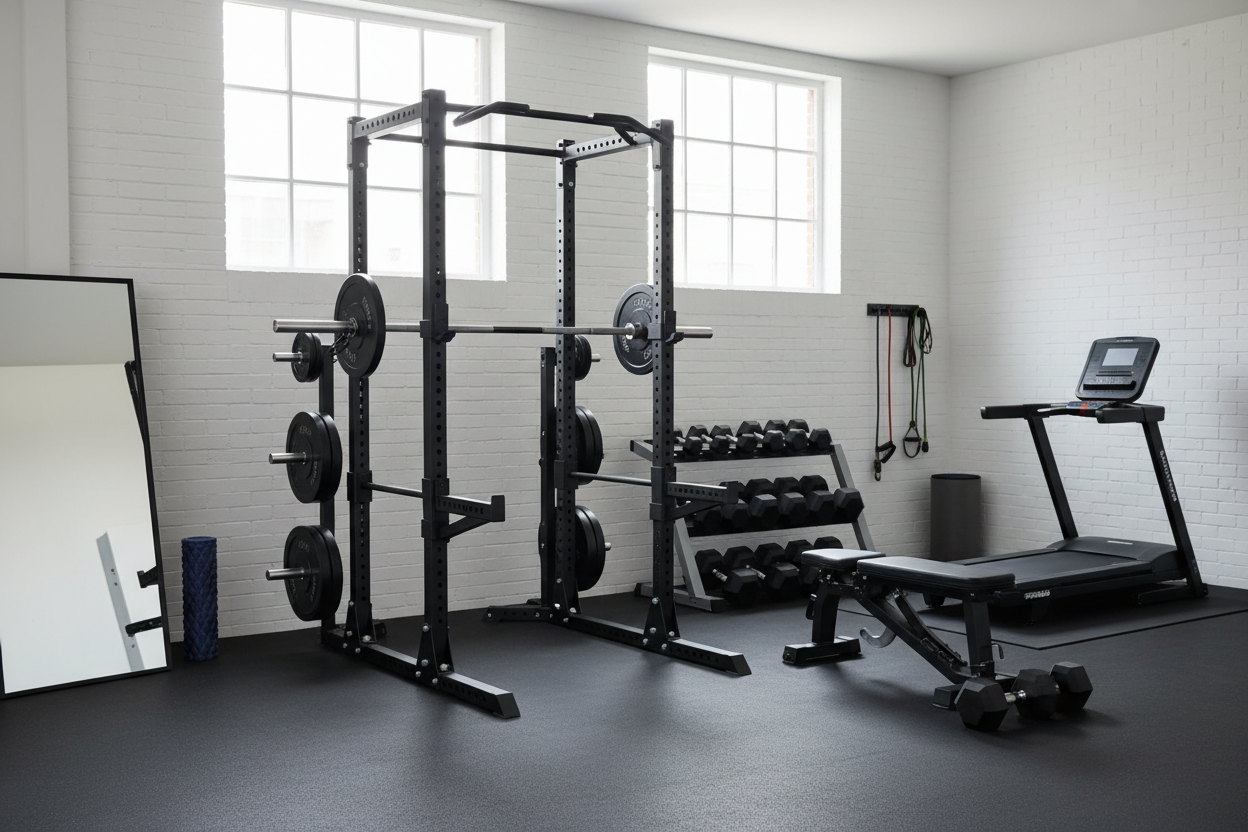
I remember standing in my garage in mid-2020, staring at a pair of rusted 25-pound hex dumbbells I’d paid three times the retail price for on eBay. The at home fitness industry was a wild west of price gouging and panic buying. Everyone was trying to recreate their local powerhouse in a spare bedroom, and the at-home fitness market exploded with promises of connected magic that would make the work feel like play.
Fast forward to now, and my local Facebook Marketplace is a graveyard of $2,000 stationary bikes listed for $400. The hype died, the subscriptions got canceled, and the people who actually kept training are the ones who bought gear that doesn't require a software update to function. We're seeing a massive correction in how people build their spaces.
- Steel and iron are outlasting screens and sensors every single time.
- Subscription fatigue is killing high-end cardio equipment sales.
- Multi-functional units are replacing rows of single-use machines to save floor space.
- Durability and resale value are the new metrics for a smart purchase.
The $10 Billion Question: What Actually Survived the Hype?
Looking at recent home fitness industry statistics, it’s clear the gold rush is over. The at home fitness market size ballooned to nearly $10 billion during the height of the lockdowns, but a lot of that was ghost growth—panic buys from people who never intended to lift long-term. The gear that survived isn't the flashy stuff; it's the basics that don't break.
I’ve tested dozens of these smart home gyms, and most of them share the same flaw: they rely on a company staying in business. If their servers go down, your expensive wall-mounted cable machine becomes a very heavy mirror. The market is finally realizing that a solid power rack and a barbell don't have a 5-year expiration date.
Why Wi-Fi Enabled Machines Are Becoming Expensive Coat Racks
The pandemic home gym was built on the idea that we needed a digital community to stay motivated. But home workout statistics from the last two years show a different story. People are tired of paying $40 a month just to unlock the manual mode on a treadmill they already paid $2,000 for. It’s predatory, and users are voting with their wallets.
I recently helped a buddy tear down a high-tech rower that had a dead screen. The manufacturer wanted $600 for a replacement tablet. Instead, we sold the frame for scrap and bought a used Concept2. That’s the shift: moving away from planned obsolescence and toward equipment that can be passed down to your kids.
The Quiet Resurgence of the Multi-Station Rig
If you check the latest fitness equipment industry statistics, the growth isn't in bikes—it's in strength. Specifically, people want maximum utility in a 4x6 foot footprint. The fitness equipment market size for functional trainers and all-in-one stations is holding steady because they actually solve a problem: floor space.
For most of us, a Smith machine home gym station is the smartest play for a garage. You get the safety of a fixed path for solo heavy lifting, usually paired with a cable system for accessory work. It beats having four different machines cluttering up the place where you’re supposed to park your car.
How to Build Your Setup Without Becoming a Statistic
Every home fitness equipment market report tries to sell you on the next big thing, but those reports are written for investors, not lifters. Home gym statistics prove that most people quit because their gear is too much of a hassle to set up. If you have to move three things just to start your first set of squats, you’re going to skip the workout.
When you're building a home gym, focus on the big three movements. I’ve said it before, but the best home gym fitness equipment is just 3 things: a way to squat, a way to press, and a way to pull. Everything else is just dressing. Buy a rack with 3x3 inch 11-gauge steel uprights. It’s overkill for most, but it’ll never wobble and it holds its value.
My Prediction for the Next Five Years of Garage Gyms
The home fitness industry is heading back to the basics, but with better manufacturing. The home fitness market is maturing. We’re done with the flimsy $150 racks from big-box stores. People are willing to spend more on the home fitness market size that represents quality—think stainless steel bars and urethane-coated plates.
I predict we’ll see a total collapse of the connected fitness model for anything other than high-end boutique users. The average garage gym owner wants to blast their own music, follow their own program, and not worry about a firmware update mid-session. Durable, analog steel is the future of the home fitness market. It’s quieter, it’s tougher, and it doesn't need a router to work.
What went wrong with my first gym?
I fell for the all-in-one trap with a cheap plastic-pulley system I found on sale. The cables were sticky, the weight stack didn't actually weigh what it said, and the whole thing felt like it was going to tip over during lat pulldowns. I ended up giving it away for free just to get the space back. Buy once, cry once—invest in heavy steel from the start.
FAQs
Is the home fitness market shrinking?
The hype is shrinking, but the core market of dedicated lifters is actually more stable than ever. People realized they hate commercial gym crowds and are investing in better quality gear at home.
What’s the best way to save money on a home gym?
Buy your rack and barbell new—those are your safety items. Everything else, like plates and benches, can usually be found used if you’re patient and have a truck.
Are smart gyms worth it?
Only if you absolutely need a coach's voice in your ear to move. For most people, the hardware is subpar and the subscription costs more than a local gym membership over time.
Share:
Is a 4 Foot Barbell 1 Inch Actually Worth Your Money?
Why Free Weight Purists Are Wrong About Weight Lifting Machines