
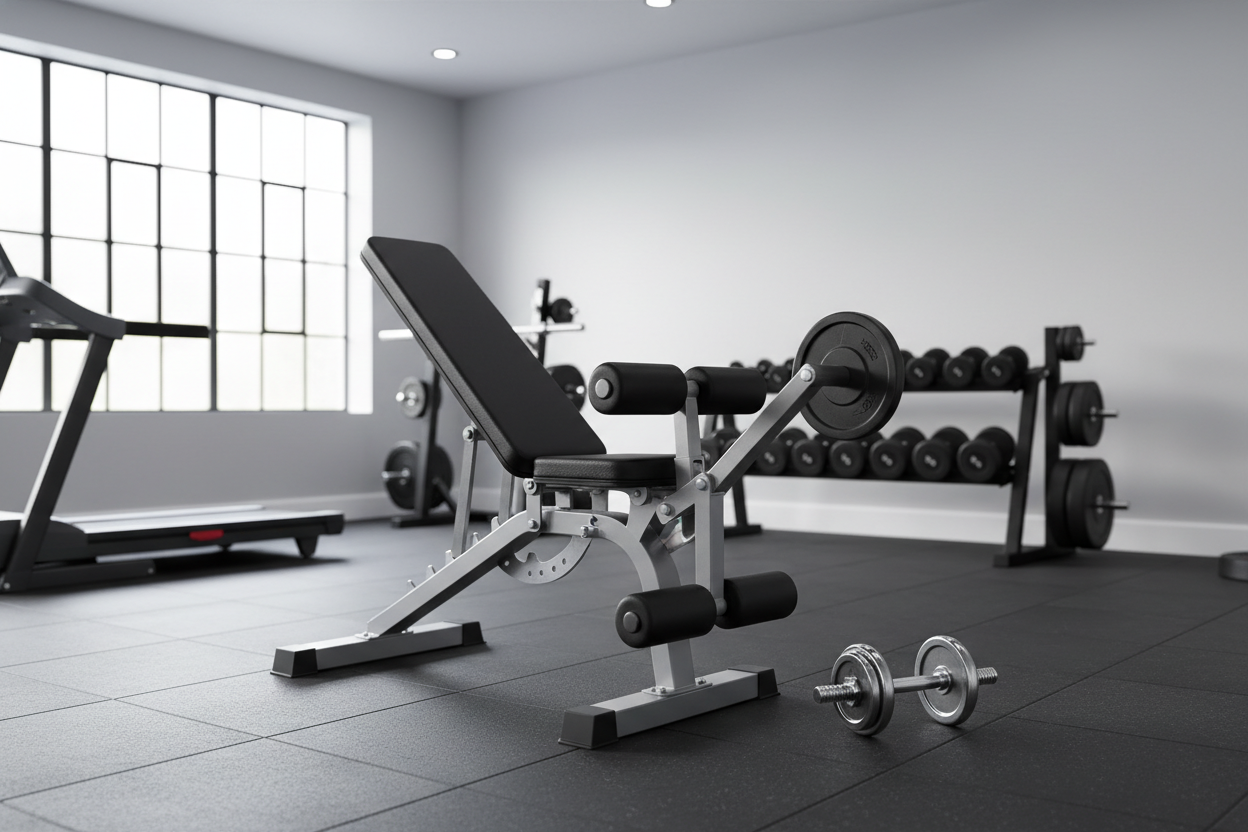
I remember the first time I tried to program a high-volume leg day in my garage. I had a rack and a barbell, but trying to isolate my hamstrings with nothing but floor glute-ham raises felt like a chore. That is when the siren song of the adjustable workout bench with leg curl started calling my name. It looks like the ultimate space-saver, promise of a commercial gym experience in a six-foot footprint.
Quick Takeaways
- Most budget combo benches are too light and will tip if you load over 50 lbs on the leg developer.
- Pivot points are usually the weak link; if the bolt is cheap, the movement will feel 'choppy.'
- A bench with quad extension capabilities needs a wide front base to prevent side-to-side wobble.
- If you are over six feet tall, many of these attachments will be too short for your shins.
The Dream vs. Reality of Home Gym Leg Days
We all want those teardrop quads and thick hamstrings, but unless you have $3,000 and 20 square feet to spare for a standalone selectorized machine, you are stuck with creative alternatives. The appeal of a combo unit is obvious: you already need a bench for presses, so why not slap a lever arm on the front and call it a day?
In theory, it is brilliant. In practice, most of these units are built for people who weigh 150 lbs and use 20 lbs of resistance. When you actually start training with intent, the physics of a small bench frame start to fight against you. You want a gym bench leg curl that feels smooth, not one that hitches every time the weight plate passes the midpoint of the arc.
Why Most Leg Attachments Feel So Awful
The biggest issue is the pivot point geometry. On a commercial machine, the cam is designed to keep tension on the muscle throughout the entire range of motion. On a cheap cheap $150 adjustable bench with weights, the pivot is often just a bolt through a metal tube. This creates a 'dead spot' at the top of the movement where there is zero resistance on your quads.
Stability is the other nightmare. I have tested benches where the moment I started a heavy leg curl, the back of the bench lifted off the floor. If the frame is made of thin 2-inch by 2-inch tubing, it simply does not have the mass to stay anchored. You end up spending more energy trying not to tip over than you do actually hitting your hamstrings.
What to Look for in a Bench with Quad Extension
If you are dead set on this setup, do not buy the first thing you see on a big-box retailer's shelf. You need a 14-gauge steel frame at a minimum, though 11-gauge is the gold standard if you can find it. Look for a heavy-duty leg extension curl station that uses actual bearings or high-density bushings rather than plastic inserts.
Check the padding dimensions. A bench with quad extension is useless if the rollers are thin foam that compresses down to the metal bar the second you add a 45-lb plate. You want 3-inch to 4-inch thick vinyl-wrapped rollers. Also, ensure the 'horn' where you load the weights is compatible with Olympic plates; many budget models only take 1-inch standard plates, which limits your progression.
Do You Actually Need the Leg Attachment?
I will be honest: if you are a powerlifter focused on the Big Three, you probably don't need this. You are better off buying a high-quality standard adjustable weight bench that can handle 1,000 lbs without flinching. You can get your leg volume from split squats, RDLs, and lunges.
However, if you have lower back issues that make heavy squatting a literal pain, or if you are chasing a bodybuilding physique, isolation is mandatory. For those lifters, the attachment is a lifesaver for finishing off a workout after your compounds are done. Just realize you are buying a tool for accessory work, not a primary mass builder.
The Final Verdict
My personal experience? I bought a cheap combo bench early in my lifting career and regretted it within three months. The foam tore, and the leg developer rattled so loud it woke up my neighbors. I eventually upgraded to a unit with a wider tripod base and thicker steel, and the difference was night and day. If you have the budget, buy a bench where the leg developer is an optional, heavy-duty add-on rather than a permanent, flimsy fixture. Your knees—and your gains—will thank you.
FAQ
Will an Olympic plate fit on any leg curl bench?
No. Many entry-level benches use a 1-inch post. You will need an Olympic adapter sleeve if you want to use your 2-inch plates securely without them rattling around.
Can I do leg curls lying down on these benches?
Most allow for 'prone' leg curls, but check the bench length. If the bench is too short, your knees will hang off the edge, which puts a lot of unnecessary pressure on the joint.
How much weight can these attachments typically hold?
Budget models usually max out at 50-80 lbs. High-end residential units can often handle 150 lbs or more, which is plenty for high-rep isolation work.
Share:
I Bought the 30 Pound Dumbbells Target Sells (And Dropped Them)
I Swapped Iron for Water: Testing a Fillable Dumbbell on the Road