
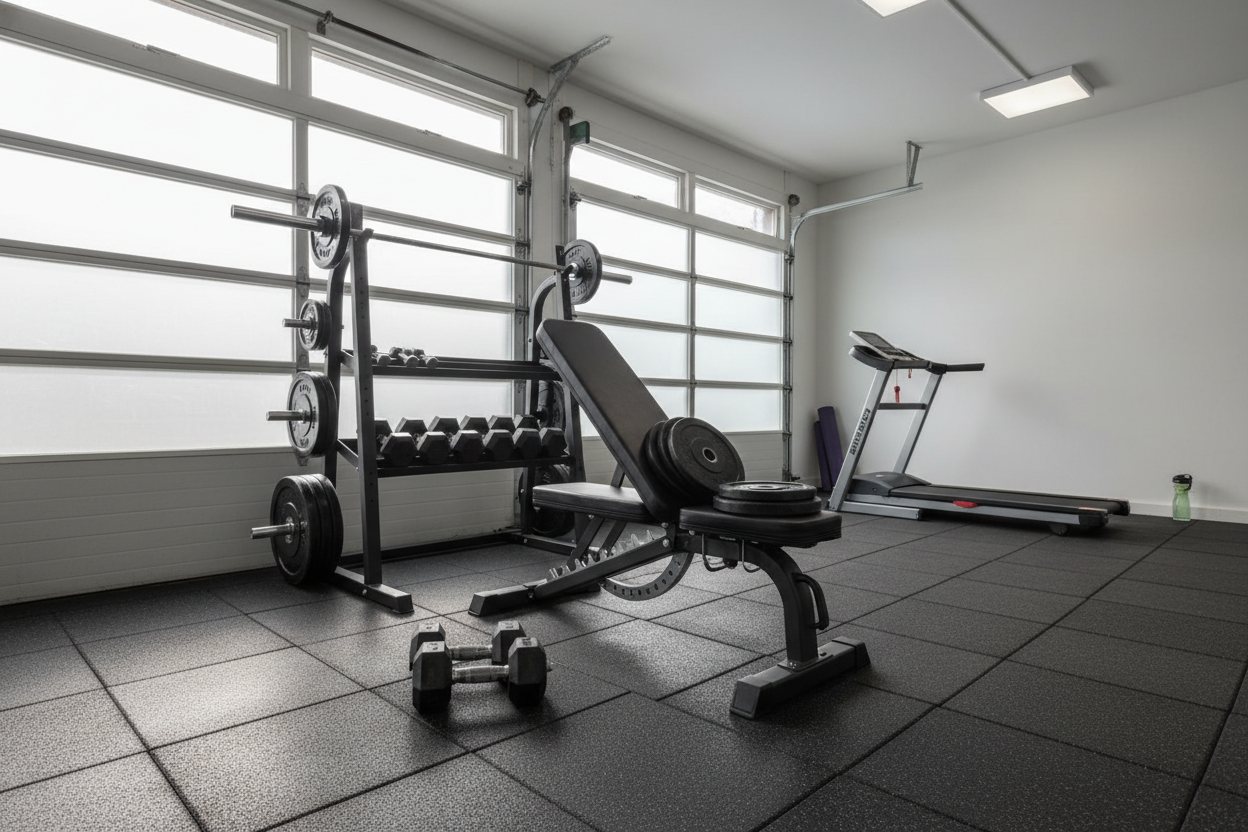
I remember the first time I tried to save a buck on my garage setup. I bought a 'complete' adjustable bench with weights from a big-box store, thinking I had hacked the system. Ten minutes into my first set of presses, the frame groaned like a haunted house floorboard and the 'weights'—which were just plastic shells filled with sand—started leaking grit onto my floor.
- Budget combos often have a total weight limit under 300 lbs, including the lifter.
- Narrow uprights force a cramped grip that can wreck your wrists and shoulders.
- Plastic-coated plates are bulky and limit the range of motion on your lifts.
- A wobbly bench is a mental block that prevents you from actually training hard.
The Trap of the 'Complete Starter Kit'
Marketing for a budget multi adjustable weight bench is designed to look like a bargain. They show a guy with 18-inch biceps crushing it on a frame that looks substantial in photos. In reality, these brands cut costs by using 14-gauge or thinner steel. It’s basically soda cans shaped like a lifting bench.
Then there are the weights. Most 'adjustable weight benches' sold as a kit come with a 1-inch diameter barbell and vinyl plates. These plates are massive because sand is less dense than iron. You’ll run out of room on the bar before you even hit a respectable working weight. Plus, the uprights are usually so narrow that you can’t get a proper bench press grip without hitting your knuckles on the rack.
What Actually Makes a Bench Combo Worth Buying
If you are serious about an adjustable weightlifting bench, you need to look at the specs, not the price tag. A safe setup starts with 11-gauge or 12-gauge steel. You want a weight capacity of at least 600 lbs. Remember, that number includes your body weight plus the barbell. If you weigh 200 lbs and you're benching 150 lbs, a 300-lb capacity bench is already failing.
Stability is everything. I always recommend avoiding fixed-frame combos where the racks are welded to the bench. They limit your positioning. Instead, look for a heavy-duty adjustable weight bench that functions independently. This allows you to slide the bench forward or back to hit the perfect adjustable bench incline without the rack getting in your way.
When You Should Ditch the Barbell Completely
For many garage gym owners, a cheap adjustable weight training bench with a barbell is actually a step backward. If you’re working in a tight space, a high-quality adjustable training bench paired with a solid set of dumbbells is infinitely more versatile. You won't have to worry about a 5-foot bar tipping over because you loaded one side first.
If you really want that heavy chest stimulus without the safety risks of a flimsy rack, consider a bench chest press machine. These lever-arm setups offer better isolation and safety than a narrow-grip budget barbell ever could. You can push to failure without needing a spotter or worrying about the frame folding under you.
The Truth About Those Flimsy Leg Attachments
We’ve all seen them: the foam-roller leg developers on the end of a multi weight bench. They look like a great way to get leg extensions in, but the geometry is usually garbage. The pivot point is almost always too high or too low, meaning the resistance curve is non-existent. You end up feeling it in your ankles more than your quads.
If you are dead set on a bench with a leg attachment, make sure it uses actual bearings and has an adjustable roller height. Most of the ones included in $150 kits are just a bolt through a hole in the steel. They’ll squeak, grind, and eventually ovalize the frame until the whole attachment wiggles.
How to Salvage a Cheap Setup (Or Upgrade Smartly)
If you already own a wobbly bench adjustable gym set, there are a few ways to make it suck less. You can bolt the frame to a sheet of 3/4-inch plywood to stop the lateral swaying. You can also swap out the hollow 1-inch bar for a solid threaded one, though you're still stuck with those bulky plastic plates.
Ultimately, these are band-aids. Once you can bench more than 135 lbs, you’ve outgrown the 'starter kit' phase. Your best move is to sell the combo while it’s still in one piece and invest in a stand-alone weight bench. A commercial-grade flat or incline bench provides a rock-solid foundation that lets you focus on the lift, not whether the seat is about to snap.
My Personal Lesson in Cheap Steel
I once tried to max out on an incline press using a budget adjustable workout weight bench I found on a clearance rack. The 'pop-pin' that held the backrest was slightly off-center. Midway through the rep, the pin sheared, and the backrest collapsed into a flat position while I had 200 lbs over my face. I got lucky and dumped the bar, but it was the last time I ever trusted a bench that cost less than my shoes.
Frequently Asked Questions
Is a 300-lb weight capacity enough for a bench?
Only if you are very light and don't plan on lifting heavy. That 300 lbs includes your body weight. A 200-lb man only has 100 lbs of 'room' for the weights before hitting the safety limit.
What is the difference between 11-gauge and 14-gauge steel?
11-gauge is thicker and significantly stronger. Most commercial gym equipment uses 11-gauge. 14-gauge is common in 'budget' gear and is much more prone to flexing and bending under load.
Can I use an Olympic barbell on a standard adjustable weight bench?
Usually not. Most budget 'adjustable bench press' sets are designed for 5-foot or 6-foot standard bars. An 7-foot Olympic bar is often too wide for the narrow racks, making it unstable and dangerous.
Share:
I Loaded 400 Lbs on a Cheap Olympic Weight Machine (And Regretted It)
I Traded 6 Bulky Racks for an All In One Home Gym System