
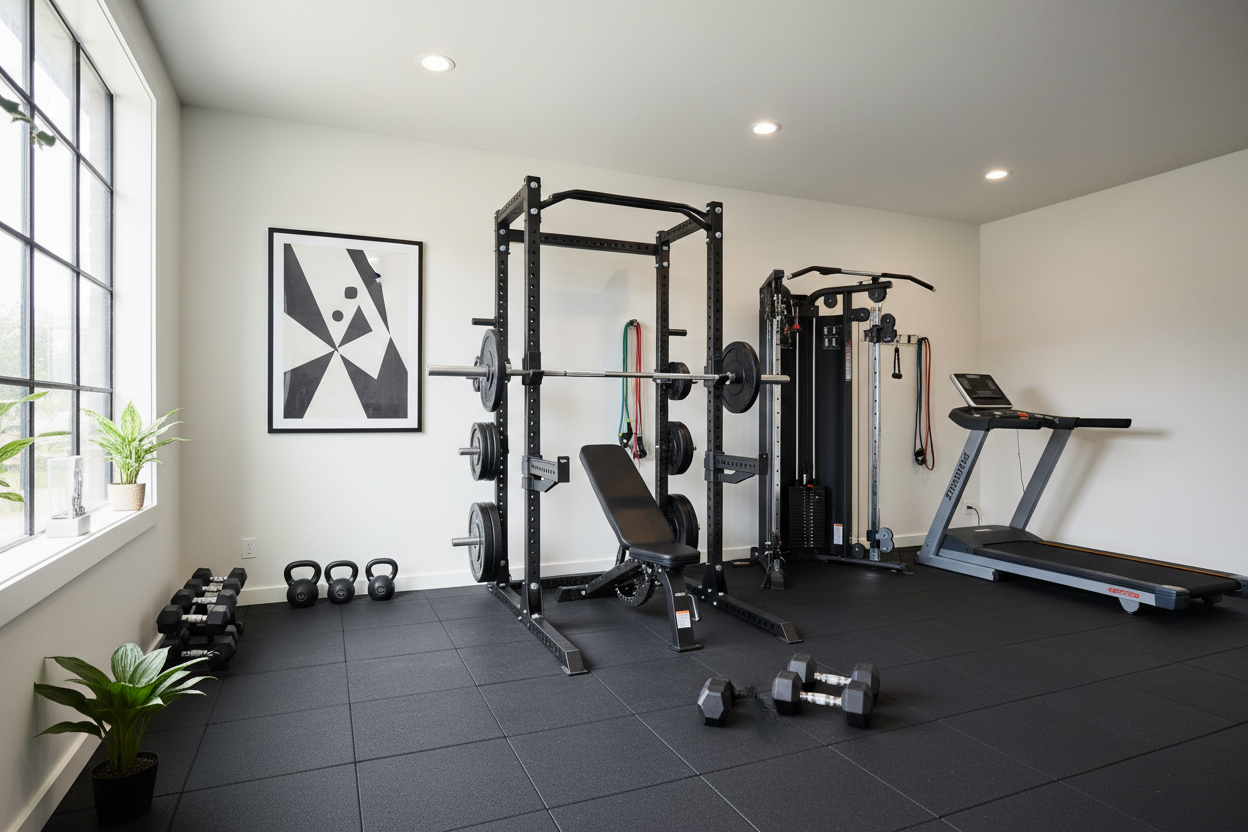
I remember the night I finally hit my breaking point. My local commercial gym had just bumped their monthly dues again, and the 'functional turf' area was perpetually occupied by people filming TikToks. I went home and spent six hours scrolling through reviews, trying to find the best exercise machine for home that wouldn't end up as a glorified clothes rack by February. I wanted something that felt like the heavy iron I was used to, not a flimsy piece of plastic that shook every time I broke a sweat.
Quick Takeaways
- Avoid 'infomercial' gadgets that promise 50+ exercises in a foldable frame; they usually lack the resistance needed for real progress.
- Heavy steel is your friend—if you can lift the machine with one hand, it won't handle a heavy squat.
- Decide on your primary goal (muscle growth vs. general movement) before looking at the price tag.
- Multi-gyms often neglect the lower body; plan for supplemental leg work.
The 'Do-It-All' Myth That Ruins Most Garages
Most marketing for the 'best indoor fitness machine' is built on a lie. They want you to believe that one single contraption can replace a 10,000-square-foot commercial facility. These machines usually arrive in a box that weighs less than a medium-sized dog and use resistance bands or 'power rods' that feel nothing like actual weight. If the machine is designed to be tucked under a bed, it’s not the best machine for exercise—it’s a toy.
The reality is that the best indoor exercise machines are the ones designed for high-intensity, specific movement patterns. You don't need a machine that does everything; you need a machine that does the three things you actually care about—usually pushing, pulling, and squatting—with enough stability to keep you safe. When you stop looking for a magic bullet, you can start looking for actual steel.
For the Hypertrophy Chaser: Cables vs. Fixed Bar
If your goal is to pack on size without needing a spotter every time you want to go to failure, you have two real paths. The first is a functional trainer with dual pulley systems. Cables provide constant tension throughout the entire range of motion, which is gold for muscle growth. However, if you prefer the feeling of a heavy barbell but want the safety of a self-spotting system, the cables vs smith machine debate usually ends with you picking the one that matches your lifting style.
For those who want to move heavy weight safely, a smith machine home gym station is hard to beat. It locks the bar into a fixed vertical path. This is huge for benching or overhead pressing alone in your garage at 6:00 AM. You don't have to worry about the bar drifting or pinning you to the bench. It’s about creating a controlled environment where the only thing you have to focus on is the contraction of the muscle.
Why Most All-In-One Setups Neglect Your Legs
Here is the dirty secret of the home gym industry: most 'best rated exercise machine' winners are basically just upper-body machines with a leg extension attachment tacked on as an afterthought. You’ll find twenty different ways to do a bicep curl, but try to get a decent stimulus for your glutes or hamstrings and you’re suddenly doing awkward, unstable movements that feel like a waste of time.
If you are serious about a complete physique, you have to look for dedicated lower body equipment to fill the gap. A standard multi-gym rarely offers the range of motion or the loading capacity to really challenge your legs. I’ve seen too many people buy a massive all-in-one unit only to realize three months later they still need a separate way to train their posterior chain properly.
The Weight Factor: Why Heavy Means Reliable
In the world of home equipment, mass is a proxy for quality. If a machine is light enough for you to slide across the floor while you're using it, it’s a failure. I always look at the shipping weight before I look at the features. High-quality heavy-duty exercise equipment uses 11-gauge or 12-gauge steel and weighs enough to stay anchored during your heaviest sets.
When you’re pulling 200 pounds on a lat pulldown, you don't want the frame tilting toward you. You want a machine that feels like it’s part of the foundation of your house. Heavy machines also tend to have better bearings and smoother guide rods. That smoothness isn't just a luxury; it’s what allows you to feel the muscle working instead of the friction of the machine.
Making Your Final Choice Based on Real Specs
Before you pull the trigger on what you think is the best exercise machine for home use, do a quick reality check. Measure your ceiling height—twice. I’ve known guys who bought beautiful 84-inch racks only to realize their basement ceiling was 82 inches. Check the footprint. Ensure you have at least two feet of clearance on all sides so you aren't hitting the wall during your reps.
Ultimately, building out your home gym is a marathon, not a sprint. You are better off buying one high-quality, heavy-duty machine that you’ll actually use than a 'complete' system that feels like it’s going to snap. Pick the machine that matches your hardest training days, not your easiest ones.
Personal Experience: The Wobbly Tower Lesson
A few years ago, I bought a budget power tower because it had '4.5 stars' and was on sale. The first time I tried to do weighted dips, the whole thing bowed inward like a piece of overcooked spaghetti. I ended up selling it for twenty bucks on Marketplace and buying a proper commercial-grade rack. It taught me that you can't cheat physics. If you want a machine to support 250 pounds of human plus 50 pounds of iron, the machine itself needs to have some serious meat on its bones.
Frequently Asked Questions
What is the best exercise machine for home if I have limited space?
Look for a functional trainer with a small footprint or a wall-mounted cable system. These provide the most exercise variety per square foot without requiring a massive 'swing' area for a barbell.
Is a Smith machine better than a power rack for home use?
It depends on your goals. If you train alone and want to push your limits safely without a spotter, a Smith machine is excellent. If you want to build the stabilizing muscles required for free-weight movements, a power rack is the gold standard.
How much should I expect to spend on a quality home machine?
For something that won't wobble or break, expect to spend between $1,500 and $3,500. Anything significantly cheaper usually cuts corners on steel thickness, bearing quality, or cable strength.
Share:
I Swapped My Rack for Adjustable Weights and Bench
Is a Full Dumbbell Set for Gym Use Actually Worth the Space?