
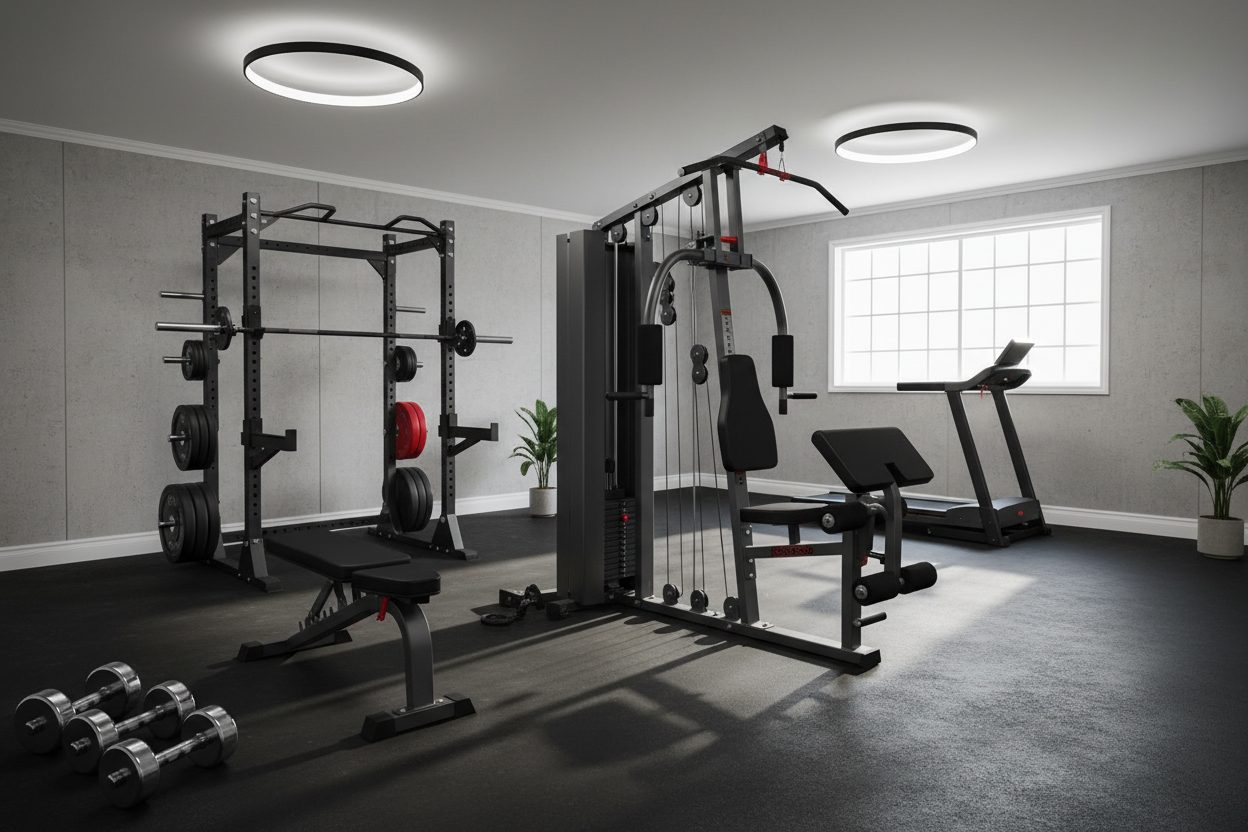
I remember the night I hit 'buy' on a massive, chrome-plated monstrosity. I was done with the 20-minute commute to the local club, done with waiting for the one functional cable crossover, and done with the weird smells. I wanted a gym machine for home that could do everything. What I got was a $1,500 lesson in physics and regret.
Quick Takeaways
- Avoid '50-in-1' marketing; most of those positions are biomechanically useless.
- Check your pulley ratios: a 2:1 ratio feels smoother and offers more travel than a 1:1.
- Prioritize linear bearings over plastic bushings if you want the machine to last more than a year.
- Measure your ceiling height twice; many home gym rigs require more clearance for pull-up bars than you think.
The Day I Decided I Needed More Than Just Barbell Training
For years, I was a barbell purist. If it didn't involve a rack and a pile of iron, I didn't want it. But eventually, the heavy triples started taking a toll on my joints. I hit a plateau that no amount of 'squatting more' could fix. I realized I needed isolation work—the kind of high-volume accessory lifts that are just easier on a dedicated machine for working out.
I started looking for an at home fitness machine that could replicate the chest presses and lat pulldowns I used to do at the commercial gym. I wanted the convenience of stepping into my garage and getting to work without the crowd. The dream was simple: a workout station that offered the variety of a full club in a 4x6 footprint. Little did I know, I was falling for the oldest trick in the fitness equipment playbook.
The '50 Exercises in One' Marketing Trap
If a manufacturer claims their workout machine for home can perform 50 different exercises, be skeptical. Usually, about 10 of those are legitimate, and the other 40 are variations that force your body into awkward, joint-straining ranges of motion. My first purchase was a multi-station unit that promised the world but delivered a chest press that felt like it was trying to dislocate my shoulders.
Cheap workout sets for home often compromise on biomechanics to save space. They use single pivot points that don't align with your natural movement patterns. Before you buy, look for red flags to look for like fixed handles that don't rotate or seats that don't adjust for height. If the machine doesn't fit your frame, you won't use it, and it'll eventually become the world's most expensive laundry rack.
Pulley Ratios and Cable Friction: The Silent Workout Killers
This is where my $1,500 went down the drain. I didn't understand pulley ratios. Most residential gym equipment uses either a 1:1 or a 2:1 ratio. In a 1:1 system, 100 lbs on the stack feels like 100 lbs in your hand. In a 2:1 system, that same 100 lbs feels like 50 lbs, but you get double the cable travel. For things like functional training and cable crossovers, 2:1 is king.
The real killer, though, is friction. My old machine used cheap nylon pulleys and plastic bushings sliding on square tubing. Every rep felt jerky, like I was pulling a sled through sand. After testing multiple all in one units, I realized that high-quality machines use aluminum pulleys and steel aircraft cables with a 2,000-lb tensile strength. If the movement isn't butter-smooth, your muscles won't get the consistent tension they need to grow.
When Does a Combo Unit Actually Make Sense?
I'm not saying all-in-one fitness machines for home are bad. They are incredible for bodybuilding and accessory work when built correctly. A high-quality indoor workout machine can replace five or six standalone pieces, saving you thousands of dollars and a ton of floor space. This is especially true if you're working in a tight basement gym or a single-car garage.
A solid Smith machine home gym station actually makes a lot of sense for solo lifters. It provides a safety net for heavy presses without needing a spotter. When you combine a Smith bar with a functional trainer and a pull-up station, you have a complete home fitness system that can handle 95% of your training needs. The key is ensuring the 'combo' doesn't sacrifice the quality of the individual movements.
The 3 Specs You Must Verify Before Handing Over Your Credit Card
Before you buy home gym equipment, stop looking at the paint job and start looking at the guts of the machine. First, check the guide rods. They should be solid steel and polished. If the weight plates are sliding on painted or powder-coated steel, the finish will flake off and cause sticking within months.
Second, look for linear bearings. If you're buying an all in one Smith machine, the bar should glide on actual bearings, not plastic sleeves. Third, verify the actual weight capacity. A lot of home sports equipment is rated for 300 lbs total—including the user. If you're a 200-lb guy planning to bench 225, you're going to exceed the structural limit of a cheap machine real fast. Stick to 11-gauge steel frames if you want something that won't wobble when you're mid-set.
FAQ
Is a cable machine better than free weights for home?
It's not better, it's different. Cables provide constant tension throughout the entire movement, which is great for hypertrophy. Free weights are better for raw strength. A good home setup usually has both.
How much space do I really need for a home gym machine?
Most all-in-one units need at least an 8x8 foot area. You need room to move around the machine and space for the cable extension. Don't forget to check your ceiling height for pull-ups.
Are plate-loaded machines better than selectorized weight stacks?
Plate-loaded machines are usually cheaper and easier to move. Selectorized stacks (with the pin) are much faster for drop sets and feel more 'commercial,' but they add significant cost and weight to the shipping.
Share:
Can the Day 1 Fitness Adjustable Bench Handle Real Weight?
The Hidden Catch With Most All-in-One Exercise Weight Sets