
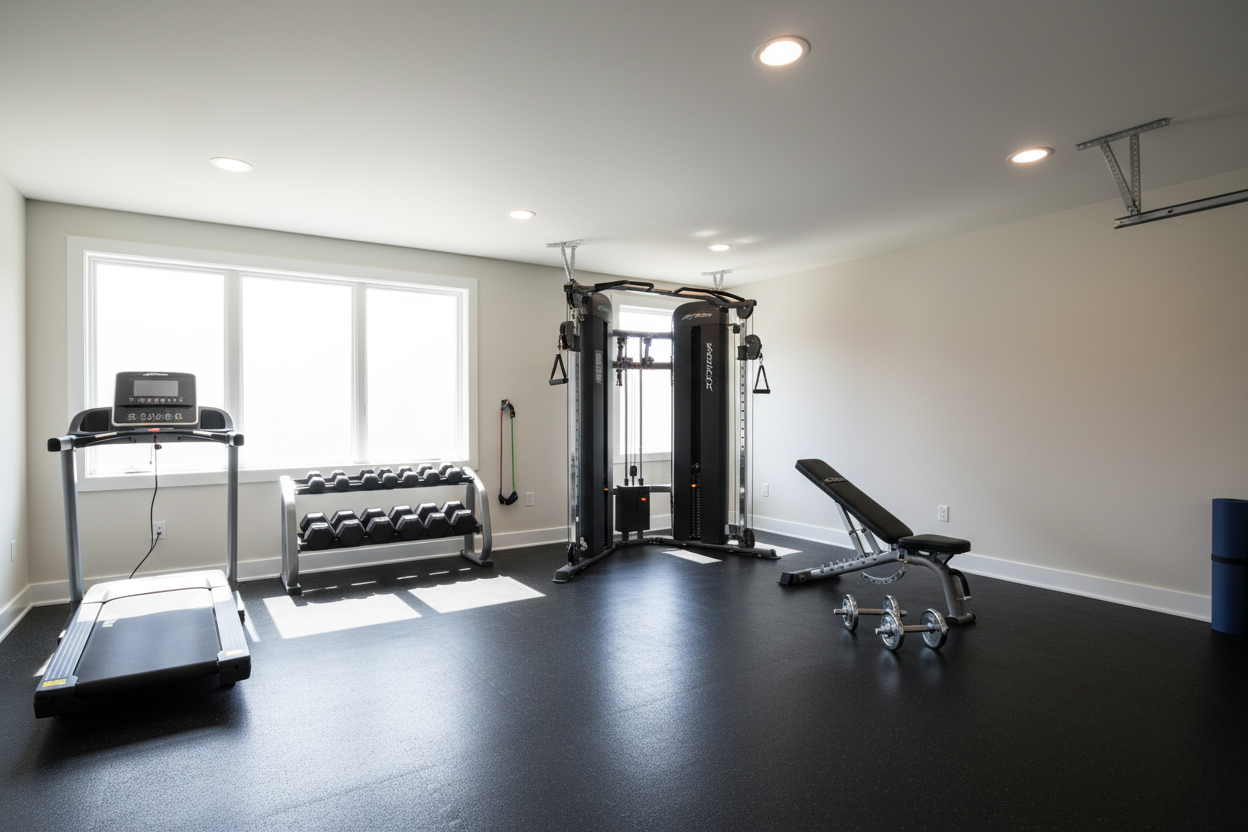
I remember walking into my first commercial gym and feeling like a total fraud. I stared at the dumbbell rack, saw a guy benching the 100s, and immediately turned around to find the nearest seated chest press. There is this weird elitism in the lifting world that says if you are not under a barbell, you are not really training. That is total garbage.
If you are just starting, a machine only workout program for beginners is actually the smartest move you can make. It removes the 'balance' variable, lets you hammer the target muscle without your ego getting in the way, and keeps you out of the physical therapist's office. You do not need a 45-lb bar crushing your spine to see results.
- Safety First: Fixed movement paths prevent common form breakdowns.
- Muscle Isolation: Easier to feel the 'pump' in specific muscle groups.
- Time Efficient: Just move the pin and go—no plate math required.
- Scalable: Perfect for tracking progress down to the exact pound.
The Dumbbell Rack Can Wait (Why Machines Rule for Now)
Most beginners quit because they feel awkward. Balancing a pair of 20-lb dumbbells while your elbows wobble like jelly is a recipe for frustration. Machines solve this by providing a fixed path of motion. This biomechanical guardrail allows you to focus 100% on the muscle contraction rather than worrying if your left arm is drifting six inches to the side.
An equipment workout routine built around selectorized stacks (those machines with the weight pins) allows you to build a baseline of strength. You are teaching your nervous system how to push and pull heavy loads without the high-stakes risk of dropping a bar on your neck. Once you have built some armor, then we can talk about the free weight room.
Building Your Machine Workout Schedule
You do not need to live at the gym to see a change in the mirror. In fact, doing too much too soon is the fastest way to burn out. A machine workout schedule should prioritize consistency over total volume. If you can commit to 45 minutes, three times a week, you are already ahead of 90% of the population.
The goal is to hit every major muscle group, allow 48 hours for recovery, and repeat. Your muscles do not grow while you are lifting; they grow while you are sleeping. If you are constantly sore, you are not training hard—you are just under-recovering.
The 3 Day Machine Workout Routine (Full Body)
This is the bread-and-butter approach. You will hit legs, chest, back, and shoulders in every session. This high-frequency approach is great because if you miss a day, you have not ignored a body part for an entire week. It is the most forgiving 3 day machine workout routine for a busy life.
If you have the space and budget, you can actually run this entire program at home. Investing in a Smith machine home gym station gives you a guided barbell and integrated pulleys that cover every movement in this guide without the monthly membership fee. At the gym, look for the chest press, seated row, leg press, and lat pulldown machines to form your core circuit.
The Push Pull Legs Machine Only Split (For Faster Growth)
Once you have been consistent for three months, you might want more. A push pull legs machine only split allows you to increase the volume on specific muscles by grouping them together. One day is for pushing (chest, shoulders, triceps), one for pulling (back, biceps), and one for legs.
This is a more advanced gym machine workout routine for muscle building because it allows you to hit each muscle from multiple angles in a single session. If you are making this jump, check out this guide on the beginner gym machine workout to understand how to transition your volume safely without hitting a plateau.
The Core Exercises You Actually Need
You do not need thirty different machines. You need five or six that you can get progressively stronger on. For a workout routine machines only approach to be effective, you need big, compound movements. The Leg Press is your king for lower body. The Chest Press and Lat Pulldown are your upper body essentials. Seated Rows build the thickness in your back that prevents the 'slumped shoulder' look.
Do not ignore the posterior chain, though. While the leg press is great, adding a specialized hip thrust machine to your leg day will do more for your glute strength and lower back health than almost any other movement. It is safer than the barbell version and much easier to set up.
How to Avoid the 'Going Through the Motions' Trap
The biggest downside to machines is that they are comfortable. Too comfortable. If you sit down, do 10 reps while scrolling Instagram, and never break a sweat, you will never change. You have to apply progressive overload. That means if you did 100 lbs for 10 reps last week, you better try for 105 lbs or 11 reps today.
If your goal is leaning out, you can also use these machines for a high-intensity weight loss machine workout by shortening your rest periods to 30 seconds. This keeps your heart rate spiked while you build the muscle that actually burns calories at rest. weight loss machine workout strategies often fail because people drop the weight too low; keep the weight heavy and the rest short.
Personal Experience: Why I Stopped Hating on Machines
I spent years as a 'barbell purist.' I thought if I was not back-squatting 400 lbs, I was a failure. Then I tore my labrum and had to rethink everything. I spent six months using nothing but cables and selectorized machines. Not only did my joints stop aching, but my quads actually grew more on a Hack Squat machine than they ever did with a barbell. The lesson? The muscle does not know if you are holding a fancy piece of iron or pushing a lever. It only knows tension.
FAQ
Can I really build muscle without free weights?
Absolutely. Your muscles respond to mechanical tension. As long as you are pushing close to failure and increasing the weight over time, your body has no choice but to grow.
What should I do if a machine is taken?
Most machines have a cable-based equivalent. If the Seated Chest Press is full, grab a cable crossover station or even a Smith machine. The goal is to mimic the movement pattern.
How long should I stay on a beginner machine program?
Stay on it as long as it works. If you are still adding weight to the stack every two weeks, there is no reason to change. Most people can ride a beginner machine split for 6-12 months before needing to switch things up.
Share:
I Wasted $1K on Garage Exercise Equipment (Buy This Instead)
I Tracked Every Gym Item Price for 6 Months (Here's When to Buy)