
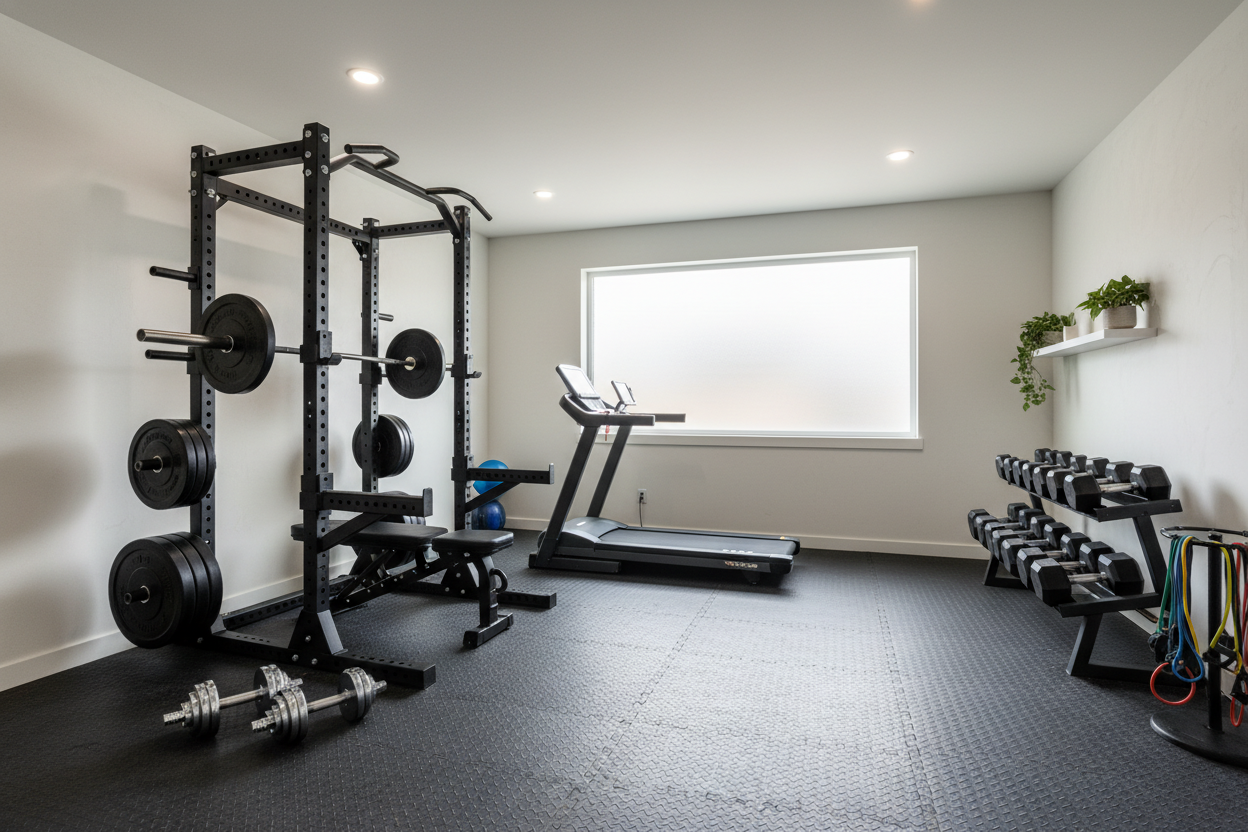
I remember the day I finally cleared the cardboard boxes and old paint cans out of my garage to make room for my first 'gym.' I was excited, so I hopped online and bought the first multi-station trainer I saw. It had pulleys, a butterfly press, and looked impressive in the 3D-rendered photos. Three weeks later, I was selling it for half what I paid because the frame shook every time I loaded more than 100 pounds. Most garage exercise equipment sold to beginners is basically overpriced scrap metal.
Quick Takeaways
- Avoid 'all-in-one' machines; they are usually flimsy and limit your range of motion.
- Invest 60% of your budget into a high-quality rack and barbell.
- Floor protection is mandatory—concrete will eat your equipment and your joints.
- Modular gear beats a massive 'complete' kit every single time.
The All-in-One Machine Trap
The biggest mistake I made was thinking I needed a machine for every body part. These massive workout stations promise 50 exercises in one footprint, but they usually do all 50 of them poorly. The cables are sticky, the weight stacks are too light, and they take up a massive 4×6 foot chunk of your garage workout equipment floor space. If you can't park your car because of a machine that only lets you do mediocre chest flies, you've lost the battle.
Garage fitness equipment needs to be versatile. A machine that only does one thing is a luxury for people with 3-car garages and deep pockets. For the rest of us, that space is better served by a setup that allows for natural, compound movements. I spent $600 on a cable machine that eventually became a very expensive coat rack for my lifting belt and hoodies. Don't be that guy.
The Core 3: Where Your Money Should Actually Go
If you want a garage gym system that actually produces results, you need the holy trinity: a rack, a bar, and plates. This setup covers 90% of your needs. Everything else is just accessory work. When you're shopping for gym equipment for garage use, focus on 11-gauge steel and a high weight capacity. You want gear that can handle a 400-lb squat, even if you're only at 135 right now. You're buying for the lifter you want to become.
A Rack That Won't Collapse on You
Safety is the only thing that matters when you're training solo in a garage at 6:00 AM. You need a rack with reliable safety pins or spotter arms. If you're worried about failing a rep and having a barbell crush your chest, you'll never train with the intensity required to actually get stronger. For those who want the stability of a fixed path, a smith machine home gym station is a solid alternative that provides built-in safety catches, making it a favorite for solo lifters who don't have a spotter on standby.
A Bench That Actually Stays Flat
I once bought a $50 bench that felt like a seesaw. Every time I tried to bench press, I spent more energy trying not to tip over than I did moving the weight. A sturdy adjustable weight bench is non-negotiable. You want something with a wide base and high-density foam that won't bottom out after three months of use. Look for a bench that offers multiple angles—flat, incline, and decline—so you can hit your muscles from every direction without needing five different pieces of gear.
Weight Plates: Navigating Iron vs. Bumper
The garage weight set market is a minefield of 'standard' vs. 'olympic' talk. Stick to Olympic (2-inch holes). Now, do you need bumpers? If you're doing cleans or snatches, yes. If you're just benching and squatting, cast iron is cheaper and takes up less room on the bar. I use a mix: two 45-lb bumpers on the inside to protect the floor, and cheap iron 'change plates' for everything else. It’s the best way to build a garage weights collection without draining your savings account.
Smart Garage Gym Accessories That Save Space
Once you have the big stuff, you need to fill the gaps. This is where garage gym accessories come into play. Instead of a full rack of fixed dumbbells, get a pair of high-quality adjustables. A set that goes from 5 to 50 lbs replaces 10 pairs of dumbbells and fits in a tiny corner. Resistance bands are another high-ROI item. They weigh nothing, cost twenty bucks, and can be used for everything from assisted pull-ups to face pulls. This is how you build a garage workout set that actually leaves room for you to move around.
Don't Confuse Your Concrete Garage With a Spare Room
I've seen people try to set up their gym on bare concrete or thin carpet. That is a recipe for cracked plates and a literal headache from the noise. You need 3/4-inch rubber flooring. Horse stall mats from a farm supply store are the gold standard here. Remember, indoor gym equipment for home is often built for aesthetics and floor protection in a bedroom, but garage gear is built for abuse. Treat your garage floor like the industrial space it is, and it will save your equipment from rusting and your foundation from cracking.
How to Build Your Setup Over Time
You don't need to buy a $5,000 garage gym kit on day one. In fact, you shouldn't. Buy a rack and a bar first. Use them for a month. See what's missing. Maybe you realize you really want a lat pulldown, or maybe you find you're doing more floor work than expected. As you get stronger, you can build out your home gym piece by piece. This modular approach ensures every dollar you spend is going toward gear you actually use, rather than a 'total package' that includes five attachments you'll never touch.
FAQ
Is a garage gym too loud for neighbors?
If you're deadlifting 500 lbs on bare concrete, yes. If you use rubber mats and bumper plates, it's no louder than a lawnmower. Keep the music at a reasonable level and nobody will care.
How do I prevent my gym garage equipment from rusting?
Garages are humid. Wipe your barbell down with a light coat of 3-in-1 oil once a month. Avoid buying 'naked' steel bars; look for zinc or cerakote finishes if you live in a damp climate.
Can I really fit a gym in a single-car garage?
Absolutely. A folding rack and adjustable dumbbells allow you to have a world-class setup while still being able to park your car when you're done training.
Share:
Is the PowerBlock Personal Trainer Adjustable Dumbbell Set Still Good?
Skip the Barbell: A Machine Only Workout Program for Beginners