
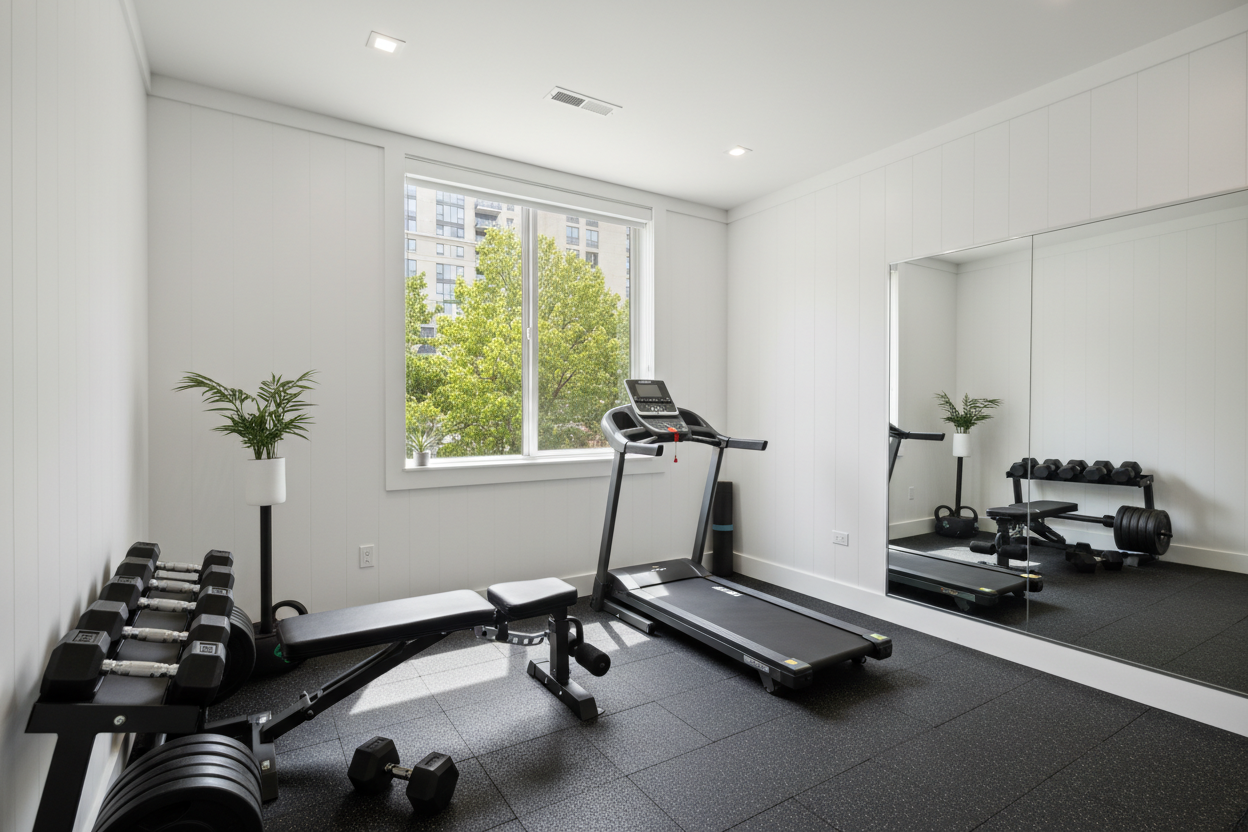
I remember the day I tried to drag my 3x3 power rack into my second-floor office. I felt the floorboards groan before I even loaded a single 45-pound plate. Finding the right indoor gym equipment for home isn't about buying the beefiest gear you see on Instagram; it's about making sure you don't end up in your downstairs neighbor's kitchen mid-squat.
Standard residential rooms aren't built like concrete garages. If you're tired of the local commercial gym raising prices while their cable machines stay broken, you're probably scrolling through equipment sites at midnight. But before you buy that 600-pound rack, we need to talk about floor loads and noise.
Quick Takeaways
- Residential floors have weight limits; aim for a distributed load, not a concentrated one.
- Cables and adjustable dumbbells are your best friends for noise reduction.
- Carpet is an unstable base for heavy lifting; you need a sub-floor.
- Multi-functional gear is the only way to keep a 10x12 room from feeling like a storage unit.
Why You Can't Treat a Spare Bedroom Like a Concrete Garage
Your garage floor is a slab of concrete. Your spare bedroom is likely held up by wooden joists. Most modern residential builds are rated for about 30 to 40 pounds of 'live load' per square foot. If you cram a heavy rack, 500 pounds of plates, and your own body weight into a 4x4 corner, you are testing those joists in a way they weren't designed for.
Then there's the acoustic nightmare. Drywall is essentially a drum. If you're clanking iron plates at 6:00 AM, the sound vibrates through the studs and wakes up everyone in the house. It's not just the 'clink' of the metal; it's the thud of the weight hitting the floor. Even a controlled deadlift sends a shockwave through a wooden frame that sounds like a car crash to the person in the room below.
Selecting Indoor Home Gym Equipment for Quiet Gains
If you want to keep the peace, stop looking at raw iron and start looking at smooth resistance. Cables are the king of interior setups. They provide constant tension and, more importantly, they are nearly silent. A high-quality Smith machine home gym station is a massive win here. It gives you that heavy barbell feel and allows for squats and presses, but the guided rails prevent you from accidentally dropping a loaded bar directly onto your floorboards.
For weights, skip the 10-pair dumbbell rack. It takes up six feet of wall space and looks cluttered. A pair of adjustable dumbbells—specifically ones that go from 5 to 50 or 80 pounds—takes up the footprint of two shoeboxes. Pair those with a bench that folds flat, and you've got a full-body setup that disappears when you're done. Indoor home gym equipment needs to be high-density; if it only does one thing, it doesn't belong in your guest room.
The Problem with Squat Racks on Carpet (And How to Fix It)
Placing a tall metal rack on top of plush carpet and a foam pad is a recipe for a wobbly, dangerous mess. The rack will lean, the bolts will loosen over time, and your footing will never feel 'planted.' You can't just throw a thin yoga mat down and call it a day.
The fix is a DIY 'raft' platform. Buy a sheet of 3/4-inch ACX plywood and a couple of 4x6-foot horse stall mats (the dense, 3/4-inch rubber kind). Lay the plywood down first to distribute the weight across the floor joists, then put the rubber on top. This creates a solid, non-slip surface that protects the carpet from grease and prevents the rack from sinking into the padding. It’s the difference between feeling like you're lifting on a mattress versus lifting on a professional platform.
Building Your Interior Setup Without Cluttering the House
The goal is to have a training space, not a dusty dungeon that makes you hate walking down the hallway. Start by choosing the bare minimum equipment for a home gym. You don't need a leg extension machine, a dedicated preacher curl bench, and a treadmill. You need a multi-functional trainer or a compact rack.
Vertical storage is your secret weapon. Wall-mounted strips for your resistance bands, a vertical barbell holder, and a small shelf for your chalk and fractional plates keep the floor clear. When the floor is clear, the room feels larger and stays cleaner. If you're struggling with a tight footprint, look for a home gym system that uses a fold-away design or a corner-fit footprint. I’ve seen 80-square-foot rooms that offer more utility than a 400-square-foot garage just because the owner was smart about the layout.
Personal Experience: The 'Wobble' Lesson
Early in my lifting journey, I bought a cheap, lightweight power tower for my apartment. I thought I was being smart by getting something 'light' for the second floor. Every time I did a pull-up, the whole unit swayed three inches to the left. It scratched the hardwood right through the thin mat I used and made so much noise my wife thought I was breaking furniture. I learned the hard way: if the equipment isn't heavy enough to be stable, the platform it sits on has to be. I eventually built a plywood sub-floor, and the difference in stability was night and day. Don't skip the foundation.
FAQ
Can I deadlift in a second-story spare room?
Technically yes, but I wouldn't recommend max-effort conventional deadlifts. Stick to Romanian deadlifts or use 'silencer pads'—thick foam blocks that soak up the impact. Your floor and your family will thank you.
What is the best flooring for indoor gyms?
High-density rubber stall mats (3/4-inch thick) are the gold standard. They don't compress like the cheap foam puzzle mats you find at big-box retailers, which are useless for anything heavier than yoga.
How do I stop my equipment from smelling like a locker room?
Airflow is everything. If you're in a room with one window, get a high-velocity floor fan. Wipe down your bench and vinyl upholstery after every session with a non-bleach disinfectant to keep the 'gym smell' from soaking into your curtains and carpet.
Share:
Local Gym Equipment Shops vs. Online: Who Actually Wins?
Why I Ditched My Adjustables for a Rubber Hex Dumbbell Set