
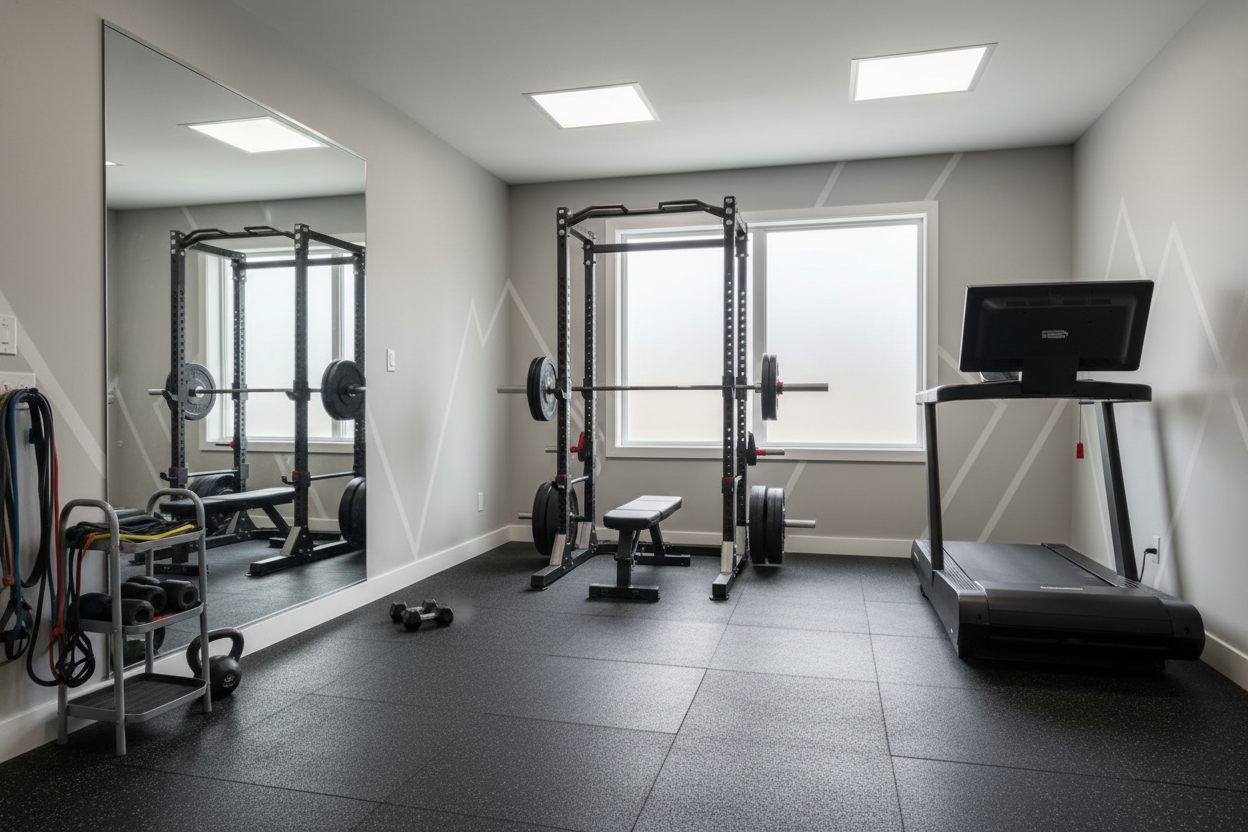
I remember the night I finally hit 'order' on my first power rack. I was tired of the $80 monthly membership and the guy who spent twenty minutes doing bicep curls in the only squat rack. I thought buying the gear was the hard part, but learning how to actually exercise at home gym setups is where most people—including me—fall flat on their faces.
- Friction is the ultimate workout killer; minimize equipment changes.
- Stop copying commercial 'bro-splits' and use garage-specific programming.
- Define your lifting zone physically with proper flooring.
- Invest in multifunctional gear to keep the pace fast.
The Garage Gym Motivation Myth
People think a shiny new barbell is a magic pill. It isn't. When the couch is twenty feet away and the fridge is calling your name, your brain fights the workout. You need a ritual. I put on my lifting shoes and my belt before I even walk into the garage. It signals to my brain that the 'dad' version of me is off-duty and the 'lifter' version is on.
If you do not treat your gym training home sessions like a scheduled appointment, you will end up using your rack as a very expensive coat hanger. The novelty of training in your underwear wears off after three days. Discipline beats novelty every single time.
Why Your Commercial Routine Fails in the Garage
You cannot do a circuit that requires four different machines when you only have one rack and a pair of dumbbells. Trying to replicate a six-day body part split often leads to a logistical nightmare of moving benches and swapping out cable attachments. A real exercise routine for home gym users focuses on supersets that use the same piece of equipment. Think: floor presses immediately followed by rows using the same bar weight.
A successful workout in home gym environments requires you to think like a minimalist. If your program calls for leg extensions, leg curls, and leg press, but you only have a rack, you're going to spend forty minutes rigging up bands and boxes. That is not training; that is procrastinating.
Friction is the Enemy of Hypertrophy
If it takes you five minutes to find your collars and another three to swap plates for a minor accessory move, your heart rate is going to tank. I have seen guys lose their entire pump because they had to move a lawnmower just to get to their pull-up bar. Sequence your home gym exercise selection so you are not constantly adjusting heights or moving heavy benches. Keep the bar loaded and the rest periods short.
Designing the Ultimate Low-Friction Flow
Your layout matters more than your brand of plates. I wasted months tripping over a DIY deadlift platform before I realized I needed a unified floor. Investing in a gold standard for home training surface like high-density rubber mats creates a dedicated 'zone.' This is not just about protecting the concrete; it is about psychological boundaries.
When my feet hit the rubber, the workout starts. Organize your weights by increment and keep your most-used attachments at eye level. If you have to dig through a plastic bin to find your tricep rope, you probably won't do the exercise.
Equipment That Actually Keeps You Lifting
Stop buying single-use machines. You do not need a dedicated leg extension unit that eats twelve square feet of your precious floor. Look for a multifunctional training station that combines a rack, cables, and pull-up bar into one footprint. It reduces the time spent walking across the room, which is where the phone-scrolling habit usually creeps in.
When building a functional home gym, prioritize versatility. I'd take a solid set of adjustable dumbbells and a heavy-duty adjustable bench over five different cardio machines any day. You want gear that stays out of your way until you need it, and then performs without you having to 'tinker' with it mid-set.
How to Stop Getting Distracted by Your House
The laundry can wait. The dog barking at the mailman is just background noise. I had to tell my family that if the garage door is shut, I am 'at the gym.' No 'quick questions' about where the spare keys are. Treating your home gym training with the same sanctity as a commercial facility is the only way to make progress. Leave the phone in the house or put it on airplane mode. The moment you check an email between sets of squats, the workout is over.
My Personal Lesson in Cheap Gear
I once bought a 'budget' rack that wobbled every time I racked more than 225 lbs. I was so scared of it collapsing that I stopped squatting heavy for three months. It was a total waste of money and killed my progress. I eventually sold it for half what I paid and bought a 3x3-inch steel rack with 11-gauge steel. Buy once, cry once. If you don't trust your gear, you won't use it.
FAQ
Do I need a heater in the winter?
Yes, if it is below 40 degrees, your motivation will die. A simple propane or electric space heater changes the game and keeps your joints from feeling like rusty hinges.
How much space do I really need for a full workout?
A 10x10 area is the sweet spot for a full rack and some floor space, but you can make a 4x8 corner work if you use a folding rack and adjustable dumbbells.
Is a mirror necessary for home training?
It sounds vain, but seeing your form helps when you do not have a coach or a spotter. It is a safety tool first and a vanity tool second.
Share:
How to Survive Working Out at Planet Fitness If You Lift Heavy
The Only Beginner Gym Machine Workout You Actually Need