
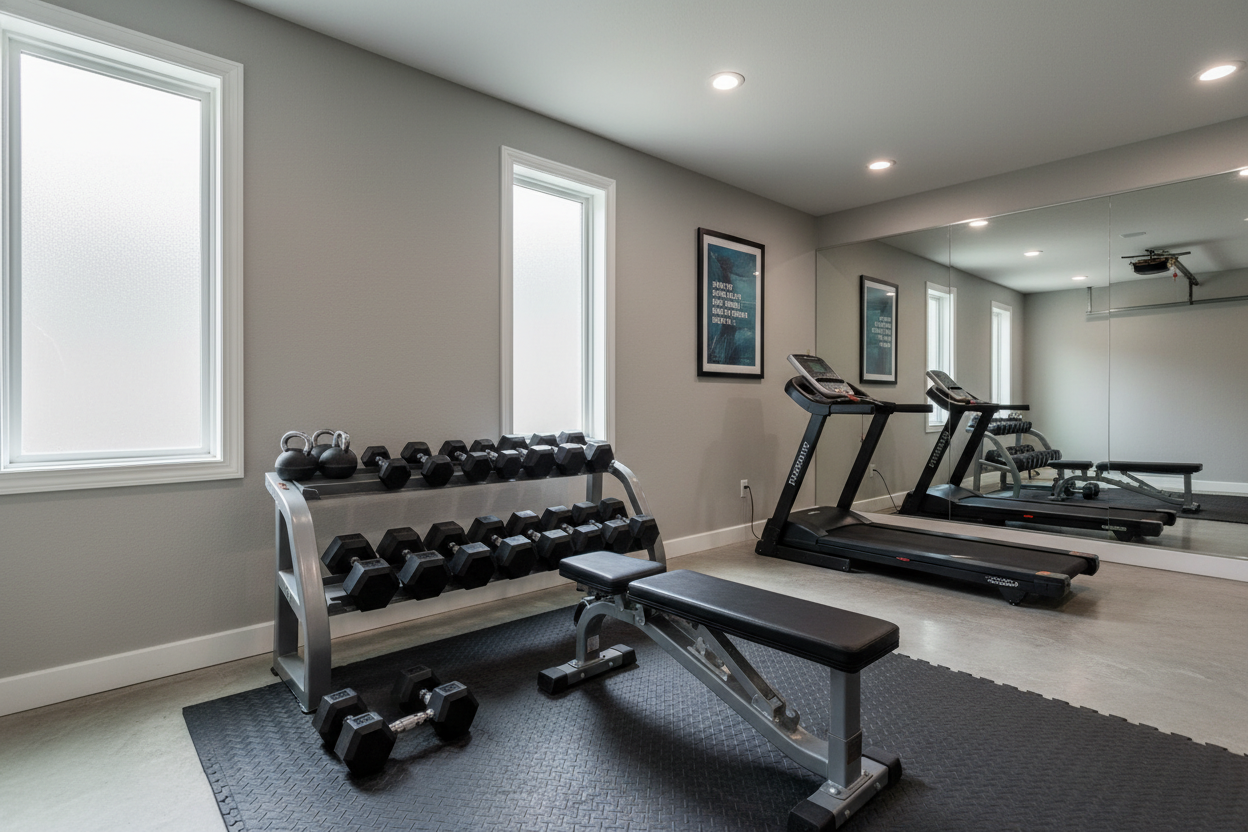
I remember the day my 'space-saving' adjustable dumbbells finally gave up on me. I was mid-set on a heavy incline press when the internal dial jammed, leaving me holding a lopsided 50-lb block that refused to release its extra plates. It is a common story for home lifters: we buy into the marketing of a single hand dumbbells set that supposedly replaces thirty pairs of weights, only to realize we have traded performance for a pile of fragile plastic gears and rattling metal.
- Adjustable blocks are often too wide for natural ranges of motion.
- Fixed hex weights offer superior balance and zero rattle.
- Steel knurling provides a grip that neoprene or plastic cannot match.
- A small collection of fixed weights is more durable and faster for drop sets.
The Adjustable Dream vs. The Clunky Reality
The biggest lie in home fitness is that one pair of adjustable blocks is just as good as a rack of fixed weights. It isn't. Most adjustable sets are roughly 16 to 18 inches long regardless of whether you are lifting 10 lbs or 50 lbs. This awkward bulk ruins the mechanics of a bicep curl or an overhead press because the ends of the weights constantly clang together or hit your thighs.
Then there is the noise. If you have ever used them, you know that 'clack-clack' sound of loose plates shifting during a movement. It is distracting and, frankly, a bit sketchy when that weight is hovering over your face. When you are pushing for a PR, you need a solid piece of equipment, not a mechanical puzzle that feels like it might fall apart if you set it down too hard.
Why a Fixed Hand Dumbbells Set Just Works Better
A traditional hand weight set does not require a manual or a prayer. You grab the handle and you lift. This simplicity is vital for high-intensity training like drop sets. If I am burning out my lateral raises, I do not want to spend 20 seconds wrestling with a dial or a pin; I want to drop the 20s and grab the 15s instantly. The flow of your workout stays intact.
Beyond the speed, there is the ergonomics. A fixed weight is balanced perfectly around your hand. Investing in a rubber hex dumbbell set means you get weights that stay put on the floor and won't shatter your floor tiles or themselves if you have to bail on a rep. The rubber coating also deadens the noise, which your neighbors or sleeping family will appreciate during those 6 AM sessions.
Neoprene vs. Rubber Hex: Don't Buy the Wrong Hand Weight Set
Avoid those colorful neoprene or 'dipped' weights you see at big-box retailers unless you only plan on doing light cardio. Once you start sweating, those smooth surfaces become as slippery as bar soap. You need real knurling—that diamond-patterned texture etched into the steel handle. It bites into your palm so you can focus on the muscle contraction rather than preventing a 40-lb projectile from flying across the room.
Cheap plastic-coated weights also tend to peel and crack over time. I have seen countless 'budget' sets end up in the trash because the outer shell split, exposing the rusted iron underneath. If you are serious about training, buy the equipment that is built to survive a garage environment.
The Only 3 Pairs You Actually Need to Start
You do not need a 5-to-100 lb commercial rack to get results. In fact, I usually recommend a 'power trio' to start. Get one light pair (10-15 lbs) for rear delt work and warm-ups, one medium pair (25-35 lbs) for rows and curls, and one heavy pair (50+ lbs) for your primary presses. This micro-collection takes up almost no space but covers the vast majority of your needs.
When you pair these three sizes with a sturdy adjustable weight bench, you unlock about 90% of the movements you would find in a commercial gym. You can hit every angle of the chest, shoulders, and back without the footprint of a massive multi-gym or the headache of adjusting dials every two minutes.
When to Put the Free Weights Down
Dumbbells are king for building stabilizers and fixing muscle imbalances, but they do have a ceiling. When you are pushing for absolute muscular failure—especially on legs or heavy chest movements—the 'setup' often becomes the hardest part of the lift. Trying to kick 100-lb dumbbells into position for a chest press is a workout in itself and a recipe for a shoulder tweak.
If you have maxed out your current home stash and find that the weights are becoming too cumbersome to safely maneuver, consider swapping to weight machine exercises for your heaviest sets. This allows you to push your muscles to the brink without the risk of a heavy weight crashing down on you when your stabilizers give out.
My Personal Take: The Dropped Weight Test
I once owned a pair of 'premium' adjustable dumbbells that cost me nearly $400. One morning, I fumbled a 40-lb setting from about waist height. A small plastic tab inside the mechanism sheared off instantly. The set was useless, and the company didn't sell individual replacement parts for the internal gears. That was the day I went back to rubber hex. I have dropped my current hex set more times than I can count, and the worst I have is a small scuff on the rubber. Reliability beats 'cool' features every single time.
Frequently Asked Questions
Are hex dumbbells better than round ones?
For a home gym, yes. Hexagonal heads prevent the weights from rolling away between sets or when you are using them as handles for floor-based movements like renegade rows.
Will the rubber smell?
Cheap, low-grade rubber can have a 'recycled tire' smell. High-quality sets might have a slight scent for the first 48 hours, but it dissipates quickly if you leave them in a ventilated space.
Can I get a full workout with just three pairs?
Absolutely. By varying your tempo, reps, and rest periods, you can make a 35-lb dumbbell feel like 50 lbs or 20 lbs. It is about how you use the weight, not just the number on the side.
Share:
Stop Wandering: A 4-Day Life Fitness Workout Routine That Works
Can Machines That Exercise For You Actually Build Muscle?