
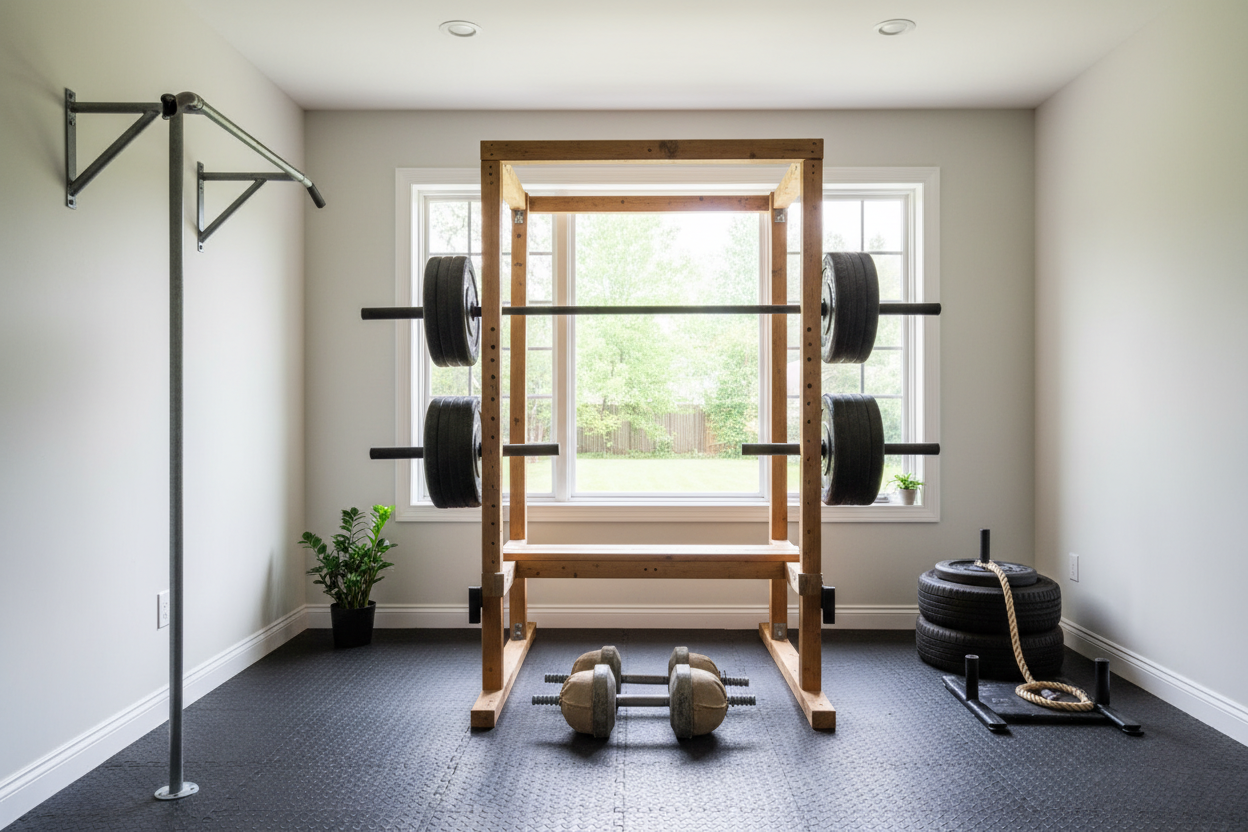
I remember looking at a $1,200 power rack and then looking at my bank account. It is tempting to grab some 4x4s and a drill to save a buck. Building a homemade gym sounds like a badge of honor, but I have seen too many custom setups end in a pile of splinters and a trip to the chiropractor.
- Build for conditioning, buy for safety.
- Wooden racks are a liability, not an asset.
- Sandbags and concrete are the kings of DIY gym equipment.
- If it holds more than 100 lbs over your head, do not DIY it.
The Allure (and Danger) of the DIY Workout Setup
People love the idea of a diy home gym because lumber is cheaper than steel. I get it. I have been that guy at Home Depot at 9:00 PM buying pipe fittings for a pull-up bar. But there is a massive gap between being resourceful with diy home gym ideas and being a reckless engineer. Most do it yourself gym equipment projects fail because people underestimate the dynamic forces of a moving weight.
Homemade fitness equipment is great for odd-object training, but trying to replicate a heavy-duty rack with home built gym equipment often ignores the sheer physics of a failing 400-lb squat. Wood rots, screws shear, and glue fails. You want to spend your time training, not wondering if your diy gym is going to collapse during your third set of overhead presses.
3 Homemade Gym Projects That Actually Make Sense
If you want to build your own homemade gym equipment, stick to the stuff that thrives on being rough. First up: the heavy sandbag. Grab a couple of contractor bags, some play sand, and a roll of Gorilla Tape. Stuff it into an old duffel bag. You now have a 150-lb tool for carries and loads that cost you $25. It is arguably better than most retail versions because you can adjust the density yourself.
Second, concrete Atlas stones or homemade exercise machine alternatives like concrete-filled basketballs. It is messy, but pouring concrete into a mold gives you a indestructible piece of diy home exercise equipment. Third, a 20-inch plyo box. If you can cut a straight line in 3/4-inch plywood, you can build a box that is just as sturdy as the $150 versions online. You do not need a million gadgets, the best home gym fitness equipment is often just a few solid basics that allow for high-intensity work without the fluff.
Please Stop Building Wooden Squat Racks
I am going to be the buzzkill here: stop trying to build a homemade workout machine or a squat rack out of 2x4s. I have seen the 'Pinterest racks' that look great for a photo but would fold like a lawn chair if you actually dropped a loaded barbell on the safeties. Steel is predictable; wood is not. A diy workout equipment failure during a heavy squat is a life-altering event.
If you are training solo and pushing your limits, you need gear that has been stress-tested. Instead of risking a homemade exercise machine failure, look into a real Smith machine home gym station or a bolted-down power rack. People often try to replicate military exercise equipment with PVC pipe and hope, but those tactical setups are usually built with over-engineered steel for a reason. Your safety is worth more than the $200 you save on lumber.
How to Blend DIY Hacks With Real Iron
The smartest way to handle a diy gym at home is a hybrid approach. Spend your money where it matters: the barbell, the plates, and the rack. These are your trusted home gym essentials that should last a lifetime. Then, use your diy exercise equipment skills for the accessories. Build your own farmer’s walk handles out of gas pipe or make a loading pin for belt squats.
I once tried to make a DIY cable pulley using a clothesline and a bucket of rocks. It worked for two days until the line snapped and the bucket nearly crushed my foot. That taught me a lesson about how to make homemade gym gear: if it involves pulleys, cables, or weight-bearing structures over your body, buy the retail version. If it is something you can drop on the grass without it breaking, go ahead and build it.
Is homemade gym equipment safe?
It depends on the project. Sandbags, plyo boxes, and concrete weights are very safe. Wooden squat racks and diy weight equipment involving cables or pulleys are generally high-risk and not recommended for heavy lifting.
What is the cheapest diy workout equipment to start with?
A sandbag is the gold standard. For under $30 in play sand and tape, you can have a piece of homemade workout equipment that builds more 'real-world' strength than almost any machine in a commercial gym.
Can I build my own homemade sport equipment for conditioning?
Absolutely. Dragging a tire with a cheap tow strap or building a wooden step-up bench are great ways to add variety to your diy workout without spending a fortune on specialized retail gear.
Share:
I Squeezed a Heavy-Duty Corner Home Gym Into an 8x8 Space
I Abused the Vibespark Adjustable Weight Bench for 30 Days