
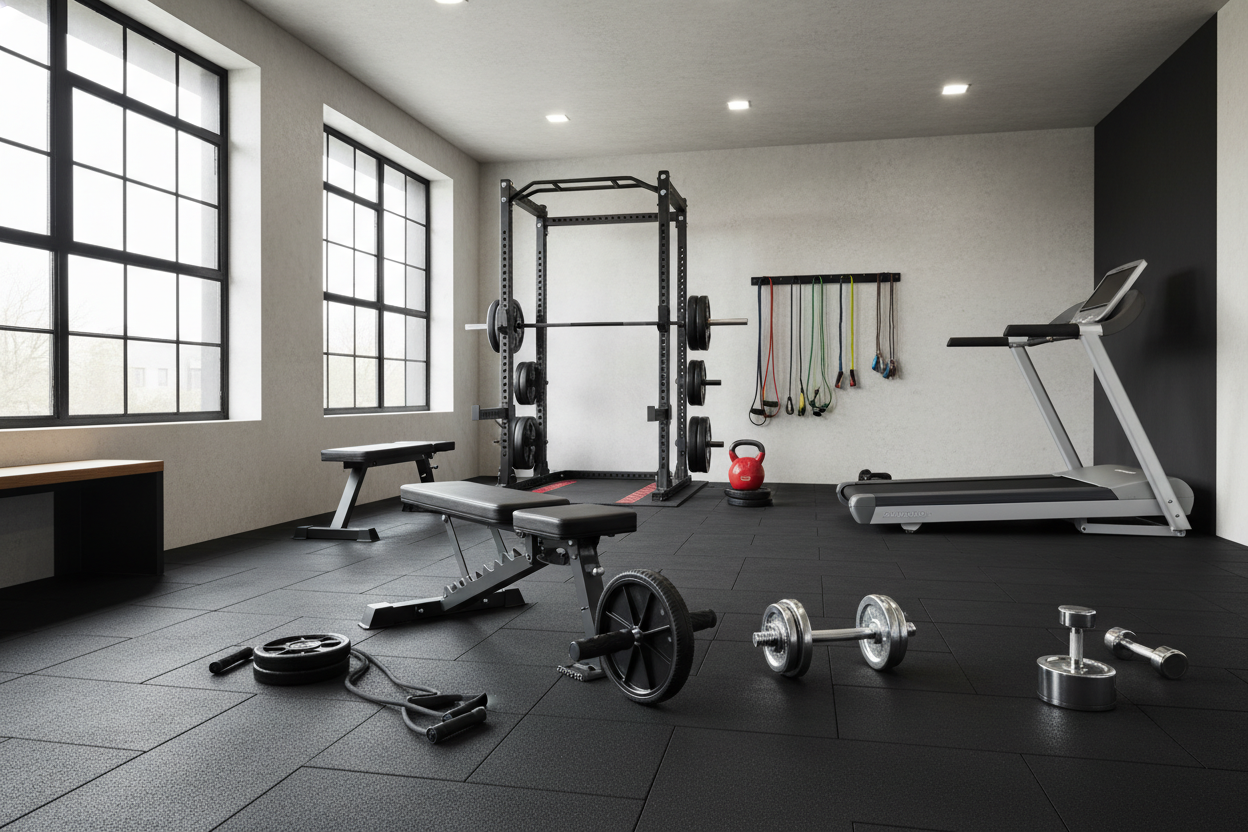
I’ve spent too many late nights scrolling through Amazon, looking at plastic ab rollers that look like they’d snap the second I put my body weight on them. If you’ve ever bought one of those 'as seen on TV' gadgets only to have it become a very expensive doorstop, you know the pain. Most core fitness machines are designed to sell units, not to build a bulletproof trunk. In my experience, if it weighs less than 40 lbs and comes in a box the size of a toaster, it isn't going to help you brace for a heavy squat.
- Most cheap ab rollers are plastic junk; get a weighted wheel or a barbell.
- The GHD is the gold standard for midline stability but takes up a massive footprint.
- Multi-functional benches are the sweet spot for garage gyms under 200 sq ft.
- You can get 90% of the way there using your existing power rack or cable station.
Why Most Dedicated Ab Gadgets Belong in the Trash
Walk into any big-box store and you'll see rows of flimsy plastic 'core fitness equipment' that promises a six-pack in six minutes. It’s all garbage. These devices usually isolate the abs in a way that ignores how the human body actually moves. More importantly, they lack the structural integrity to handle progressive overload. If you can't add weight or increase the lever arm significantly, your progress will stall faster than a rusted treadmill.
I’ve seen 'ab coasters' made of thin-walled tubing that wobbles the moment you break 180 lbs. That’s not a tool; it’s a liability. You need equipment that feels like it was forged in a tank factory. When you understand the reality of home core fitness, you realize that a heavy barbell or a piece of 11-gauge steel is infinitely more effective than a spring-loaded wheel from an infomercial. Real strength requires resistance, and you can't get that from a device that weighs less than your gym bag. If it rattles when you move it, it doesn't belong in your garage.
The Heavy-Duty Core Fitness Machines Actually Worth Buying
If you are serious about trunk stability, you need to stop thinking about 'abs' and start thinking about 'core gym equipment' that integrates the posterior chain. Your core isn't just the front of your stomach; it's the 360-degree support system for your spine. The best machines allow you to train flexion, extension, and rotation under significant load. Look for 2x3 or 3x3 steel construction and high-density foam padding that won't bottom out after three months of use.
When shopping for heavy-duty core and back equipment, prioritize machines that offer adjustable angles. A fixed-angle machine is a one-trick pony. You want something that lets you scale the difficulty as you get stronger. A piece of equipment that handles a 300-lb user without budging is the baseline. We are looking for stability, not portability. If I can pick it up with one hand, I don't want to do heavy sit-ups on it.
The Undisputed King: The Glute-Ham Developer (GHD)
The GHD is a beast. It’s arguably the most effective tool for midline stabilization and developing the anterior core. When you do a GHD sit-up, you aren't just crunching; you’re training your entire trunk to resist extension. It’s a staple in high-level strength programs because it works. Most units feature a massive footprint—usually around 60 to 70 inches long—so you need to be sure you have the space before pulling the trigger.
The secret is in the eccentric loading. Lowering yourself slowly on a GHD puts a demand on your core fitness systems that a floor crunch can never replicate. Look for a unit with a heavy base and adjustable footplates. If the GHD tips when you’re at full extension, it’s a piece of junk. I prefer models with wheels on the back, because moving a 150-lb steel frame without them is a recipe for a bad back.
Multi-Functional Benches for the Space-Starved
Not everyone has a 1,000-square-foot warehouse. For most of us in a single-car garage, every inch is a premium. This is where multi-functional units win. A dedicated Nordic curl bench or a 45-degree hyper is great, but a unit that combines these functions is better. You get the benefits of heavy-duty back extensions and core work without losing half your floor space to a single-use machine.
I personally use a 3-in-1 core and back trainer because it handles Nordics, back extensions, and weighted sit-ups in one footprint. It’s built with the same 11-gauge steel you’d find in a power rack. When you’re doing Nordics, you’re putting massive torque on the machine; you need that heavy frame to keep you pinned to the floor. It’s the smart play for anyone who wants high-end functionality without the clutter of three different machines.
Hacking Your Existing Setup for Heavy Ab Work
If you already have a rack, you might not even need a standalone core machine. A heavy power rack or a Smith machine home gym station can be the foundation for some of the most brutal core work imaginable. By using the fixed path of a Smith machine or the stability of a rack, you can perform movements like the dragon flag or weighted decline sit-ups with much more control than on a floor mat.
One of my favorite hacks is using the bar on a Smith machine as an adjustable anchor for leg raises or sit-ups. Because you can set the height exactly where you need it, you can create the perfect leverage for your body type. If you’re bored of the same three exercises, I highly recommend trying a weighted Smith machine ab workout. It allows you to add plates just like you would for a bench press, ensuring you’re actually getting stronger over time rather than just doing endless reps of nothing.
Don't forget your cable system either. Standing cable crunches and Woodchoppers are elite for rotational strength. If your home gym has a functional trainer, you already have one of the best core machines on the planet. The key is to treat your core like any other muscle group: load it, track it, and don't be afraid to go heavy.
The Final Verdict on Garage Space vs. Ab Gains
I once bought a cheap 'ab tower' from a big-box store for $40. It rattled so much I thought the bolts were made of pewter, and it eventually became a drying rack for my gym towels. Don't make that mistake. If you have the room, get a GHD. If you don't, invest in a high-quality multi-functional bench that won't wobble when you're mid-set. Your core is the bridge between your upper and lower body; don't build it with cheap materials. Buy once, cry once, and stick to the heavy-duty stuff that actually moves the needle.
FAQ
Is a GHD too big for a one-car garage?
Usually, yes. It has a massive footprint. If you're tight on space, look for a 3-in-1 bench or a foldable 45-degree hyper instead. Only get the GHD if you have a dedicated 6x4 foot area to spare.
Can I just use a barbell for core work?
Absolutely. Barbell rollouts and Landmine rotations are incredible. However, dedicated machines like a GHD or a Nordic bench allow for specific angles of isolation that are hard to replicate with just a bar.
Why is 11-gauge steel important for core machines?
Because core work often involves 'leveraging' your body weight away from the machine's center of gravity. Thinner steel will flex or tip, which is dangerous when you're upside down or at full extension.
Share:
No Room for a Leg Sled? My Hack Squat on Smith Machine Setup
Why Your Exercise Equipment for Flabby Arms Isn't Working