
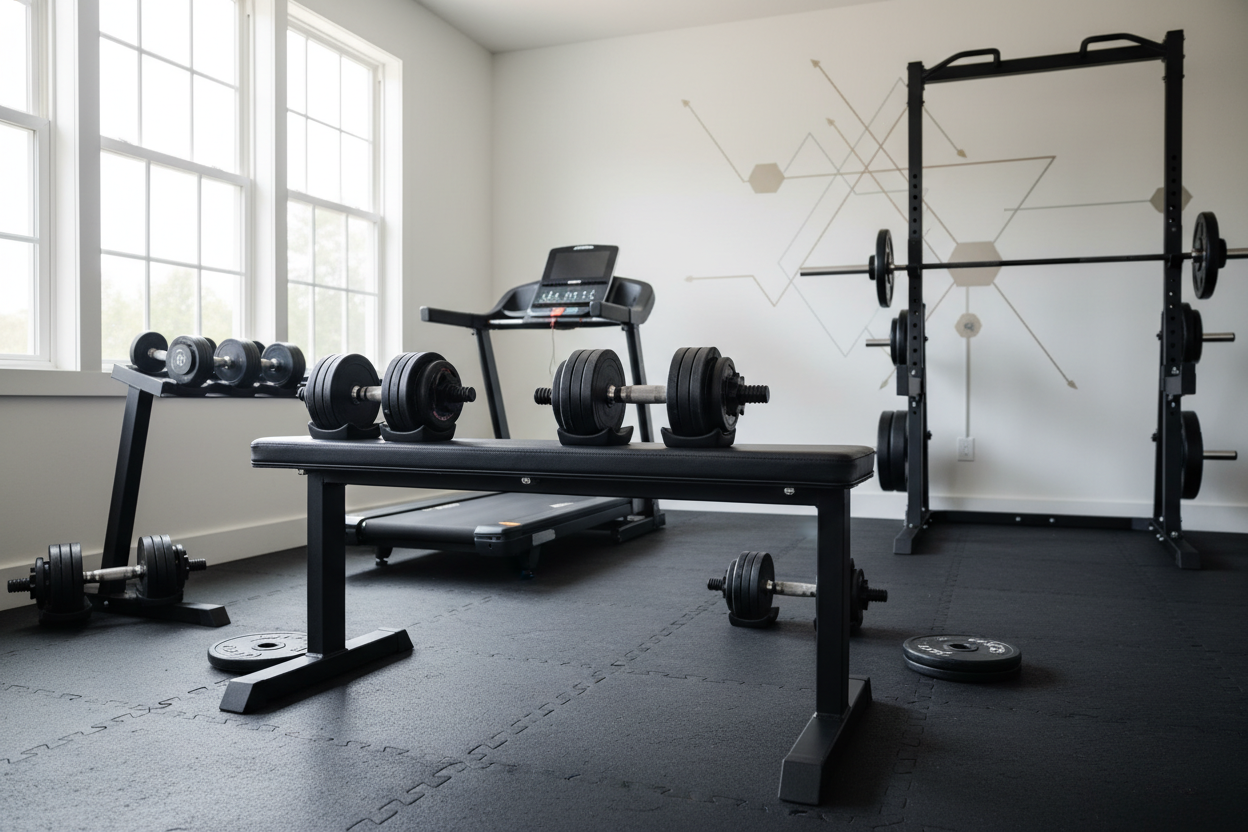
My local commercial gym just hiked their monthly dues again, and I finally hit my breaking point. I spent a rainy Tuesday midnight scrolling through budget gear, trying to find a way to train heavy without spending a mortgage payment on a rack. That is how I ended up with a set of j bells dumbbells sitting in my driveway. I wanted to see if these old-school, cast-iron weights could actually hold up to a real program or if they were just glorified paperweights.
Quick Takeaways
- Durability: Practically indestructible iron plates, but the paint chips if you breathe on it too hard.
- Noise Level: High. If you have sleeping kids or sensitive neighbors, the clanking will be an issue.
- Adjustment Speed: Slow. This is a manual labor process, not a quick-click dial system.
- Value: High for the budget-conscious lifter who doesn't mind a little extra work between sets.
Why I Decided to Test This Budget Setup
When you start looking for garage gym dumbbells, you quickly realize that the market is split into two camps: the high-end adjustable blocks that cost $600+ and the cheap, manual spin-locks. I picked up a j/fit dumbbell set specifically because it represents the absolute basement of the price bracket. I wanted to know if a lifter who actually trains hard—someone doing heavy rows and high-rep presses—could survive with a budget setup.
There is a certain honesty in cast iron. You do not have to worry about a plastic gear snapping or a delicate internal mechanism jamming because you dropped it after a PR attempt. I wanted to see if the trade-off in convenience was worth the savings in cash. Most reviews of this gear are written by people who use them twice and then let them gather dust. I planned to beat them up for a month to see where the seams started to show.
First Impressions Out of the Box
The first thing you notice is the smell. It is that distinct, greasy, factory-floor scent of fresh cast iron and cheap black paint. The jfit adjustable dumbbell handles are standard 1-inch chrome bars. The knurling is surprisingly decent—not so sharp that it will cheese-grate your palms, but aggressive enough that you do not need a gallon of chalk to hold onto a 50-pounder.
The plates themselves are standard fare. They are not precision-machined. You can see the casting marks, and the weight accuracy is 'close enough' for home use, though I noticed one of my 5lb plates was actually 4.8lbs. For a budget set, that is expected. The finish is a basic black enamel that looks okay from five feet away, but it started flaking off the edges of the plates the moment they bumped together in the box. It is a tool, not a centerpiece, so I did not care much about the aesthetics.
The Spin-Lock Collar Reality Check
This is where the jfit adjustable dumbbell experience either wins or loses you. Unlike modern adjustable dumbbells that use a dial or a pin, these use a threaded collar. You slide the plates on, spin the star-shaped nut down the threads, and hope it stays put. In theory, it is simple. In practice, it is a constant battle against physics.
During heavy overhead presses, I found that the vibration of the plates would slowly loosen the collars. By the third set, I was hearing a rhythmic 'clack-clack-clack' above my head. It is not dangerous—the collars are not going to fly off—but it is distracting as hell. I ended up having to tighten them between every single set. If you are the type of person who wants to flow through a workout without stopping, this mechanism will eventually drive you to drink.
The Real-World Workout Test (And The Annoying Clank)
I took these j bells dumbbells through a standard push/pull split. For bench presses and rows, they perform fine. The flat ends of the bars are a bit uncomfortable if you like to rest the dumbbells on your thighs before kicking them back into position for a chest press. The threaded rod sticks out past the plates, and it will dig into your quads if you are not careful.
The biggest hurdle is the transition time. If you are doing a drop set—say, going from 50lbs to 30lbs—you are looking at a 45-second interruption to unscrew four collars, swap plates, and screw them back on. By the time you are ready for the next set, your heart rate has dropped and the pump is fading. Compared to a dial system that takes three seconds, this feels like an eternity. However, the 105lb set I tested allows for a lot of weight in a small footprint, which is the main selling point here.
How They Compare to High-End Alternatives
If you have the money, an adjustable dumbbell bar set with a quick-change mechanism is superior in 90% of use cases. But there is one area where the J/Fit style wins: durability. I have seen expensive dial-style weights break because they were dropped from six inches onto a rubber mat. You can drop these iron plates onto concrete, and the only thing that will break is the concrete. They are built for abuse.
When you compare these to something like a Powerblock Personal Trainer adjustable dumbbell set, the difference in 'gym feel' is massive. The Powerblocks are balanced and fast. The J Bells are front-heavy and slow. But the J/Fit set is usually a third of the price. If you are building a 'scrappy' gym where you care more about moving weight than having the latest tech, the manual labor of the spin-lock might be a fair trade for the extra $400 in your pocket.
Final Verdict: Are They Worth the Savings?
After a month of this j fit adjustable dumbbell review, my opinion is split. If you are a beginner or someone who just needs a set of weights for occasional accessory work, these are a steal. They provide a lot of resistance for a very low price. They will last longer than you will, and they don't require any maintenance beyond the occasional wipe-down.
However, if you are a serious lifter who relies on supersets, drop sets, or fast-paced metabolic conditioning, you will hate these. The constant tightening of the collars and the slow plate changes become a mental tax that makes you want to skip your workout. The j/fit dumbbell set is a great starter kit, but most people will eventually find themselves upgrading to something faster once they realize how much time they are wasting spinning collars.
FAQ
Do the collars stay tight during a whole workout?
Usually, no. You will need to give them a quick tighten every 1-2 sets, especially during movements with a lot of rotation or vibration like hammer curls or overhead presses.
Can I add standard 1-inch plates from other brands?
Yes. That is the best part about these. As long as the plates have a 1-inch hole, you can stack any brand's iron on these handles to go heavier than the stock set allows.
Is the paint on the plates safe?
It is standard enamel. It will chip and flake over time, which is normal for budget cast iron. If you want them to stay pretty, don't buy these. If you want to lift, the chips don't matter.
Share:
The Best Home Weight Equipment Isn't What Influencers Sell You
Why Your Next Mens Hand Weights Need to Be a Square Weights Set