
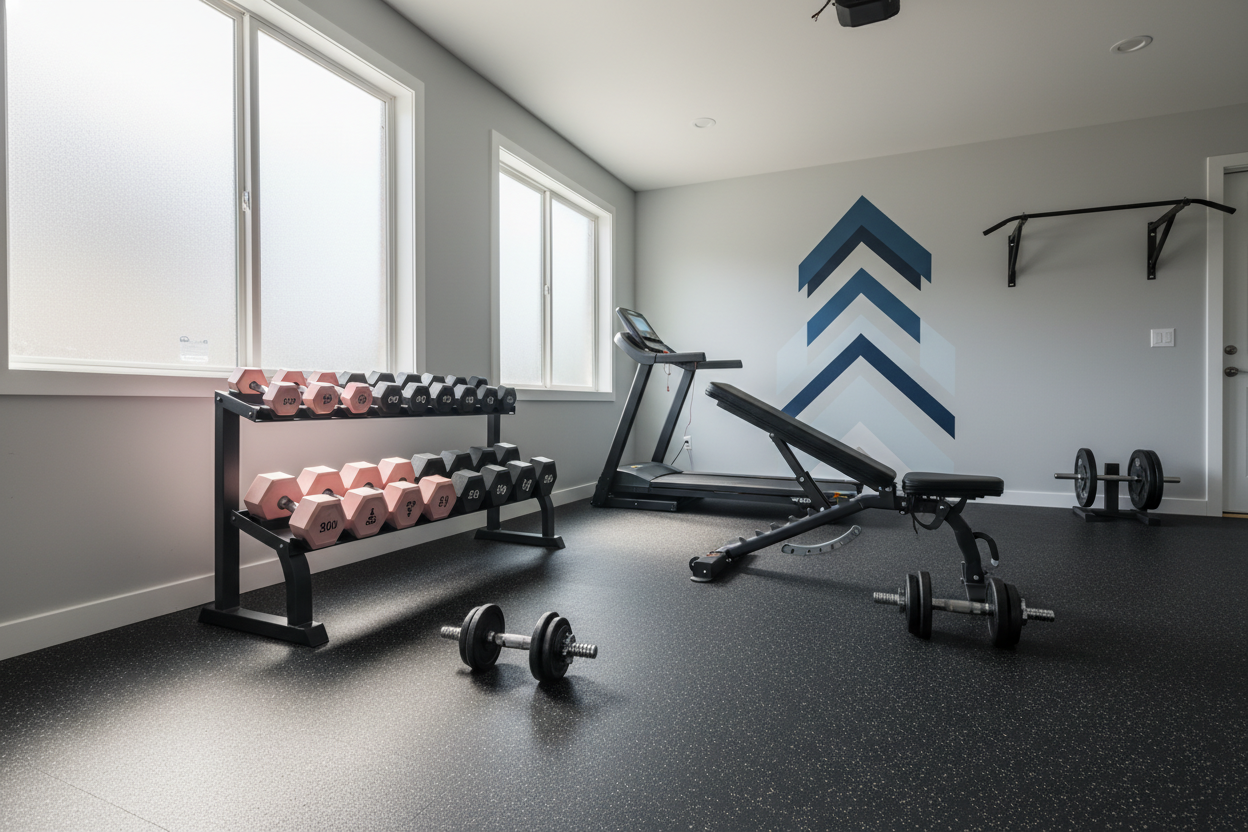
I remember staring at my first set of dumbbells in my garage, feeling like I had finally made it. It was a classic 5-to-50lb run of rubber hex bells. I felt invincible until I finished a solid block of training with the 20s and tried to move up. The 30s felt like they were made of lead, my form collapsed, and my shoulders started clicking like a Geiger counter.
- Standard 10-pound jumps represent a massive percentage increase that kills progressive overload.
- Buying a 'light' neoprene set is usually a waste of cash for anyone serious about strength.
- Intermediate weights like 17.5lb and 22.5lb are the secret to breaking plateaus.
- Adjustable systems solve the 'gap' problem without eating up your entire floor plan.
The Brutal Reality of Standard Weight Jumps
Let’s do some quick gym math that most equipment manufacturers hope you ignore. When you move from a 50lb dumbbell to a 60lb dumbbell, that is a 20% increase. It is heavy, but usually manageable for big movements like rows or bench presses. But look at what happens on the lower end of the rack. Jumping from a 15lb dumbbell to a 25lb dumbbell is a staggering 66% increase in load.
Your lateral delts and triceps do not care about your ego; they care about physics. You cannot expect a small muscle group to suddenly move 66% more weight with the same technical proficiency. This is why you see guys in commercial gyms 'cheating' their lateral raises by swinging their hips—they are trying to bypass a weight gap their muscles literally cannot bridge yet. If you are stuck at 8 reps with the 20s and cannot even get one clean rep with the 30s, you are not weak; you are just a victim of bad equipment increments.
Why Starting With a Dumbbell Set Light Usually Backfires
I see it every New Year: someone buys a 'dumbbell set light' bundle consisting of 3lb, 5lb, and 8lb neoprene bells. Unless you are strictly doing high-rep aerobic work or specialized physical therapy, you will outgrow these in about three weeks. It is a 'starter' trap. You spend $50 on colorful foam-covered weights only to realize you need actual iron to see a change in your physique.
Instead of buying those toy-like weights, you should shop for new dumbbells that actually offer a ceiling for growth. A pair of 10s and 15s is a much better starting point than a bucket of 3lb weights. Once you can do 15 reps with a weight, it is time to move on. If your set stops at 8lbs, you are effectively paying for a paperweight by the end of the month. Invest in gear that challenges you, not gear that matches your yoga mat.
How to Strategically Piece Together Set Dumbbells
Most people think they have to buy a full rack in one go. That is a mistake. You end up with a bunch of 'filler' weights you never touch. The smarter move is to buy set dumbbells in stages, focusing on the 'in-between' sizes that retailers usually hide. I am talking about the 17.5s, 22.5s, and 27.5s. These 2.5lb micro-jumps are the holy grail of shoulder and arm training.
If you are looking for a solid foundation, I usually recommend starting with something like the Rubber Hex Dumbbell Set Ds01. It gives you the core weights you need, but the trick is to supplement it. When you hit a wall between the 20s and 25s, do not just keep banging your head against the wall. Go out and buy a single pair of 22.5s. That 2.5lb difference is the bridge that allows you to maintain perfect form while still pushing the intensity.
When to Ditch Fixed Iron for Adjustables
If you do not have a 20-foot wall to dedicate to a commercial rack, you need to look at adjustables. This is where you solve the gap problem once and for all. Modern systems like the Adjustable Dumbbells Ab01 allow you to toggle weights in small increments. Instead of jumping from 20 to 30, you can hit 22.5, 25, and 27.5 all with the same handle.
I have tested dozens of these, and the tech has finally caught up to the demands of a real lifter. You want a system that feels like a real dumbbell—no rattling, no plastic dials that feel like they will snap if you set them down too hard. Being able to micro-load your weights in a 6x8 ft corner of your garage is a massive advantage. It keeps your sessions fluid and ensures you are always hitting that sweet spot of 'difficult but doable.'
The Smarter Way to Build Your Rack Over Time
Stop buying weight you do not need. I have seen guys drop two grand on a 5-100lb set, and three years later, the 85s still have the factory oil on them. Build your rack based on your current lifts. If you are curling 25s, you do not need 70s yet. You need 27.5s and 30s.
Focus on the 'working range' of your training. For most home lifters, that is the 15lb to 50lb range. If you want to dive deeper into why a massive rack is often overkill, check out this guide on why the best dumbbell set is probably only 3 pairs. Buy for the lifter you are today, with just enough room for the lifter you will be in six months. Your wallet and your rotator cuffs will thank you.
How do I fix a 10lb gap if I already own the dumbbells?
Use 'micro-loading' magnets or weighted wristbands. You can stick a 1.25lb or 2.5lb magnetic weight to the ends of your steel or iron dumbbells to bridge the gap without buying a whole new pair.
Are rubber hex dumbbells better than adjustable ones?
It depends on your style. If you do supersets or HIIT where you need to drop weights and move fast, fixed hex is better. If you are doing traditional strength training and have limited space, adjustables win every time.
Should I buy 17.5lb dumbbells?
Absolutely. If you find yourself stuck between 15s and 20s on movements like overhead presses or curls, the 17.5lb pair is often the only way to keep making progress without sacrificing form.
Share:
Stop Overspending on Iron: A Brutally Honest Titan Dumbbells Review
Why the Row Machine Planet Fitness Picked Isn't a Concept 2