
I was flipping through a ragged spiral notebook from three years ago, trying to figure out how much I’d progressed on my accessory lifts. I saw an entry that read: 'Seated arm pushy thing – 3 sets of 12.' I had no idea if that was a shoulder press, a chest press, or a tricep extension. I’d wasted months of data because I didn't know gym equipments and their names.
It’s an ego thing for some. We like to pretend we’re too focused on the 'grind' to care about the labels on the machines. But if you can't name it, you can't track it accurately. If you can't track it, you’re just exercising, not training. I finally got tired of the guesswork and decided to learn the difference between a hack squat and a smith machine once and for all.
Quick Takeaways
- Standardized terminology ensures your workout log remains useful years later.
- 'Selectorized' machines use a weight stack and pin; plate-loaded machines require manual loading.
- Knowing the specific name helps you find instructional videos to fix your form.
- Most machines are named after the muscle they target or the movement pattern they mimic.
Why I Stopped Calling It 'The Chest Pushy Thing'
The breaking point came when I switched gyms. My old place had a vintage leverage press that I called 'the big red pusher.' My new gym had fifteen different pressing stations. I realized that my 'big red pusher' stats meant nothing because I hadn't recorded the actual mechanics of the lift. Was it an incline? A decline? Was it a converging grip?
Precision matters. When you write down 'Chest Press,' you’re better off than 'pushy thing,' but you’re still not quite there. Learning the names of weight machines in gyms allows you to note the specific brand or resistance profile. This is the difference between guessing your progress and knowing you’ve added 10 pounds of real strength to your mid-chest.
The Core Free Weight Setup Explained
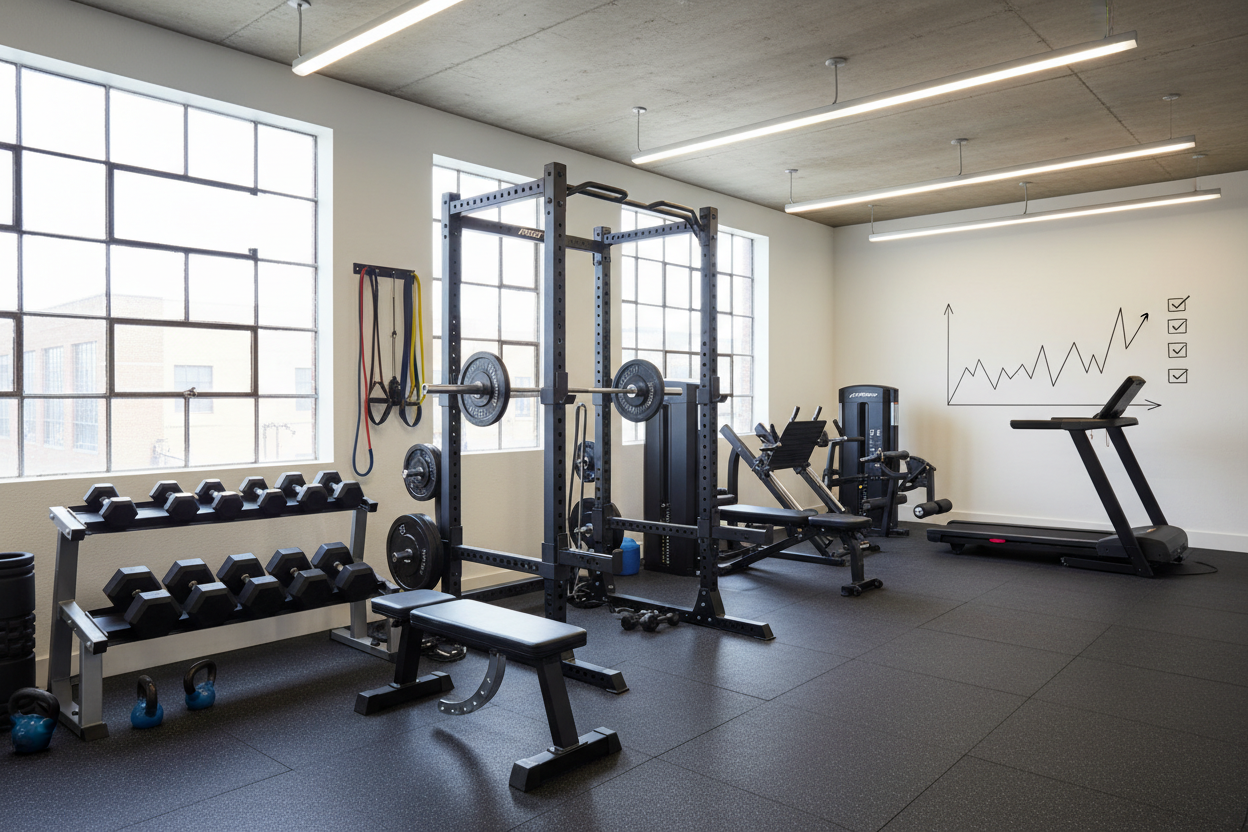
Before you get lost in the sea of cables, you have to master the basics. The free weight area is the heart of the room. You’ve got your power racks for squats, your lifting platforms for deadlifts, and the dumbbell rack. But the piece that ties everything together is the weight bench. It’s the most versatile tool in the room.
I’ve used cheap benches that felt like they were made of cardboard and pro-grade benches that felt like they were bolted to the earth's core. A solid bench allows for everything from flat bench presses to seated curls. If you’re training in a commercial space, you’ll likely see 'FID' benches—which stands for Flat, Incline, and Decline. Knowing these common gym equipment names helps you set up your station without looking like a tourist.
Decoding the Names of Weight Machines in Gyms
Walking into the machine section can feel like looking at a flight of stairs you don't know how to climb. Most of these units fall into two categories: selectorized (the ones with the pin and the stack) and plate-loaded (the ones where you bring the plates over yourself). Plate-loaded machines usually offer a more 'natural' feel because they use a physical pivot point rather than a pulley system.
Upper Body: Common Gym Machine Names
For the upper body, you’re usually looking at rows, pulls, or presses. You’ll see common gym machine names like the Lat Pulldown or the Seated Row. The Lat Pulldown is that tall tower where you pull a long bar down to your chest—don't call it the 'hanging bar thing' in your log.
Then you have the more specialized gear. Take the Weight Bench Chest Press Machine Independent Arms Z1 Pro as an example. The name tells you exactly what it does: it’s a chest press with independent arms. 'Independent arms' means one side doesn't help the other, which is the best way to find out if your left pec is slacking off. This kind of specific terminology makes your training much more intentional.
Lower Body: Gym Leg Machines Names With Pictures (Or At Least Mental Images)
Leg day is where the vocabulary really gets messy. I spent years calling the Leg Press 'the sled,' which is fine until you realize there are vertical leg presses, 45-degree leg presses, and seated horizontal leg presses. If you’re searching for gym leg machines names with pictures online, you’re likely trying to distinguish between a Leg Extension and a Leg Curl.
The Leg Extension hits the quads on the front of your thigh, while the Leg Curl hits the hamstrings on the back. In smaller setups or home gyms, you’ll often see a leg extension curl station. This is a combo unit that lets you do both. I once tried to max out a leg extension at a hotel gym that wasn't bolted down, and the whole machine tipped toward me. Lesson learned: always check the stability of the frame before you start chasing a PR.
Cable Stations vs. Plate-Loaded: Common Gym Equipment Names
Cable stations, often called Functional Trainers or Cable Crossovers, use a pulley system to provide constant tension. This is different from common gym equipment names associated with plate-loaded gear. Plate-loaded machines, like a Hack Squat or a Leverage Row, have a strength curve that changes throughout the rep—usually getting harder at the top.
I prefer cables for isolation work (like lateral raises or face pulls) and plate-loaded machines for heavy compound movements. Cables are great for 'time under tension,' but nothing beats the raw feel of a plate-loaded press. Just make sure you’re logging which one you’re using, as 100 lbs on a cable stack is rarely the same as 100 lbs of iron plates due to the pulley ratios.
The Gym Weight Equipment Names You Actually Need to Know
You don't need to learn every obscure piece of 1980s circuit equipment. Focus on the big ten: Power Rack, Leg Press, Lat Pulldown, Seated Row, Smith Machine, Leg Extension, Leg Curl, Pec Deck, Shoulder Press, and the cable tower. These are the gym weight equipment names that will make up 90% of your progress.
Once I mastered these names, I stopped feeling like a guest in the gym and started feeling like a regular. It even helped me when I decided to stop paying for memberships. Because I knew exactly what I liked and what worked for my body, I Missed the Weight Machines at the Gym (So I Built My Own) by selecting the specific pieces that gave me the most bang for my buck in a garage setting.
How to Stop Guessing Weight Room Machines Names
Mastering weight room machines names isn't about being a know-it-all; it's about being a better athlete. When you know the equipment, you can follow programs more effectively, you can communicate with coaches, and you can track your growth with surgical precision. No more 'arm pushy things' in the notebook.
Next time you’re at the gym, take five minutes to actually read the stickers on the machines. Note the brand, the movement path, and whether it’s cable or plate-loaded. Your future self—the one looking back at your logs to see how you got those massive quads—will thank you for the clarity.
FAQ
What is the difference between a Smith Machine and a Power Rack?
A Power Rack is a cage for free weight barbell movements where the bar is loose. A Smith Machine has a barbell fixed within steel rails, moving only in a vertical (or slightly angled) path. Smith machines are better for isolation; racks are better for overall athleticism.
Why do some machines feel heavier than others with the same weight?
It’s all about the pulleys and leverage. A machine with a 2:1 pulley ratio will feel twice as light as a 1:1 ratio. This is why you should always log the specific machine, not just the number on the weight stack.
What does 'selectorized' mean?
Selectorized equipment refers to machines where you select the weight by inserting a pin into a pre-set stack of plates. It’s the standard for most commercial gym circuits because it’s fast and doesn't require carrying heavy plates around.
Share:
The Brutal Truth About Buying a Home Gym Machine Used
Why Good At Home Exercise Equipment Rarely Has 5-Star Reviews