
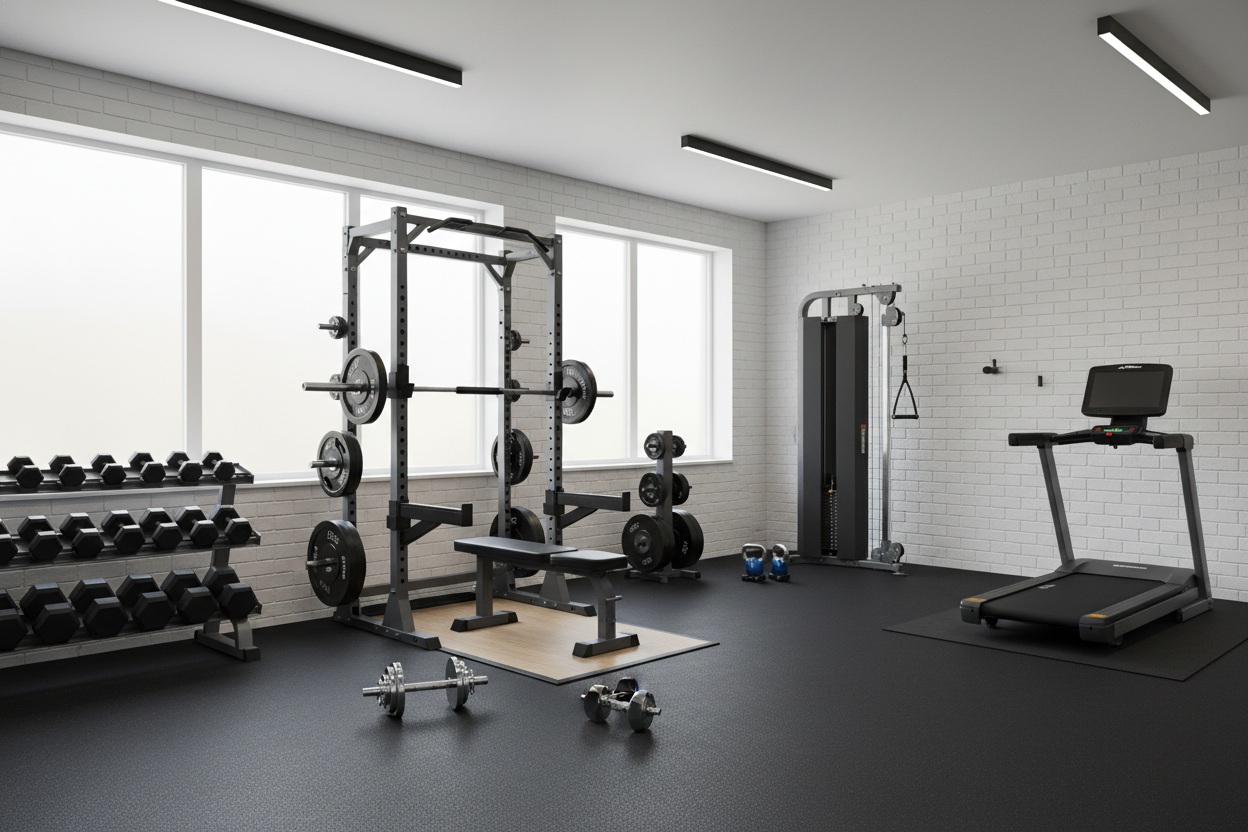
I spent three months scouring local listings for a 'pulley workout thing' before I realized why I was only seeing rusty junk. I was looking for a high-end functional trainer, but my search terms were so vague the algorithm thought I wanted clotheslines and rehab bands. Learning proper workout machines names isn't just about sounding smart at the juice bar; it is about saving hundreds of dollars on the secondhand market.
- Specific names beat generic descriptions for marketplace algorithms.
- Commercial-grade gear is often listed by its technical name (e.g., 'Functional Trainer' vs. 'Cable Machine').
- Knowing the difference between plate-loaded and selectorized can save you a 2-hour drive.
- Setting alerts for exact terms is the only way to beat resellers.
The Day I Missed a $50 Cable Crossover
A few years back, I saw a listing for a 'double arm weight puller' for fifty bucks. By the time I realized it was a commercial-grade Body-Solid cable crossover—a unit that retails for over a grand—it was already marked as sold. The guy who bought it knew his workout machines names and probably had a saved search alert for 'cable crossover.'
I was searching for 'gym equipment' like a total amateur. If you search for 'gym equipment,' you get 4,000 results for pink 2-lb dumbbells and broken treadmills. If you search for 'selectorized lat pulldown,' you find the gym owner who is liquidating a studio and just wants the heavy steel out of his sight. That mistake cost me a centerpiece for my gym.
Why Gym Machines and Names Actually Matter Now
When you are at a commercial gym, you just walk up to the big silver thing and pull the pin. When you start building a home gym, you become the facility manager, the head scout, and the assembly crew all at once. You cannot buy the right gear if you cannot name it.
The market has shifted. Brands are making smaller, more compact versions of gym machines and names that used to only exist in massive health clubs. If you want a piece of gear that fits in a 10x10 spare bedroom, you need to know if you are looking for a 'half rack' or a 'functional trainer.' One uses a barbell; the other uses cables. Buying the wrong one because the photo looked 'kind of like what I wanted' is a recipe for a very expensive coat rack.
The 'Cable Things': Selectorized Stations Translated
Let's get the terminology straight for the cable-obsessed. A 'Functional Trainer' is that big unit with two adjustable pulleys that you can move up and down. It usually has two independent weight stacks. It is the king of versatility, but it takes up a footprint of at least 5x4 feet.
Then you have the 'Lat Pulldown' and 'Low Row' stations. Sometimes these are combined into a 'Lat Tower.' If you are hunting for these, look for 'selectorized' if you want to use a pin to pick the weight, or 'plate-loaded' if you want to use your own Olympic plates. Plate-loaded units are usually 40% cheaper and way easier to move into a basement because they don't have 200-lb blocks of solid iron to carry.
The 'Leg Things': Lower Body Heavy Hitters
Leg machines are where people get ripped off the most because they don't know the specs. A 'Leg Press' moves the weight away from you at a 45-degree angle. A 'Hack Squat' has you standing on a platform and moving your body weight plus the load. They are not the same thing, though some high-end units are 'Combo' machines.
If you are tight on space, you shouldn't be looking for a standalone unit at all. You should be searching for a leg extension curl station that attaches to a bench or a rack. I once bought a standalone leg extension that took up 15 square feet of my garage just to realize I could have gotten the same stimulus from a bench attachment. Total waste of floor space.
Multi-Station Rigs vs. All-in-One Trainers
This is where the jargon gets thick. Manufacturers love words like 'Monster,' 'Ultimate,' and 'Apex.' Ignore the marketing. You are usually looking for a smith machine home gym station if you want guided barbell movements. A Smith machine has the bar fixed on tracks, which is great for solo lifting without a spotter.
A 'Power Rack' is just a four-post steel cage. A 'Half Rack' only has two main posts and two smaller ones for plate storage. If you see something called an 'All-in-One,' it usually means it combines a rack, a Smith machine, and a functional trainer. These are massive. Make sure you have at least 8 feet of ceiling clearance before you pull the trigger on one of these beasts.
Stop Searching for Generic 'Gym Equipment'
The pros don't browse; they hunt. If you want to find the best workout gym machines worth buying, you need to set up alerts on Facebook Marketplace and Craigslist using the exact workout machines names we just covered. Set an alert for 'GHD' (Glute Ham Developer) instead of 'back exercise bench.' Set an alert for 'Bumper Plates' instead of 'weights.'
My biggest regret was buying a cheap 'multi-gym' from a big-box store. It used plastic pulleys and felt like it was going to snap every time I loaded more than 100 pounds. I could have had a commercial-grade lat pulldown for the same price if I had just known what to type into the search bar. Don't be the person buying the 'pulley thing.' Be the person who knows exactly what they are looking for.
What is the difference between a functional trainer and a cable crossover?
A functional trainer is usually more compact with two adjustable pulleys close together, designed for a variety of movements in a small space. A cable crossover is much wider, often 8 to 12 feet across, designed specifically for chest flyes and wide-angle pulls.
Is plate-loaded better than selectorized?
Selectorized (pin-loaded) is faster and more convenient for drop sets. Plate-loaded is significantly cheaper, easier to transport, and allows you to use the plates you already own. For a garage gym, plate-loaded usually wins on value.
How much ceiling height do I need for a lat pulldown?
Most standard lat pulldowns require at least 82 to 84 inches of height. If you have low 7-foot ceilings in a basement, you need to look specifically for 'short-stature' or 'low-profile' racks and towers.
Share:
Can an All In One Trainer Machine Actually Replace a Power Rack?
I Finally Found Cardio Equipment at Home That Actually Gets Used