
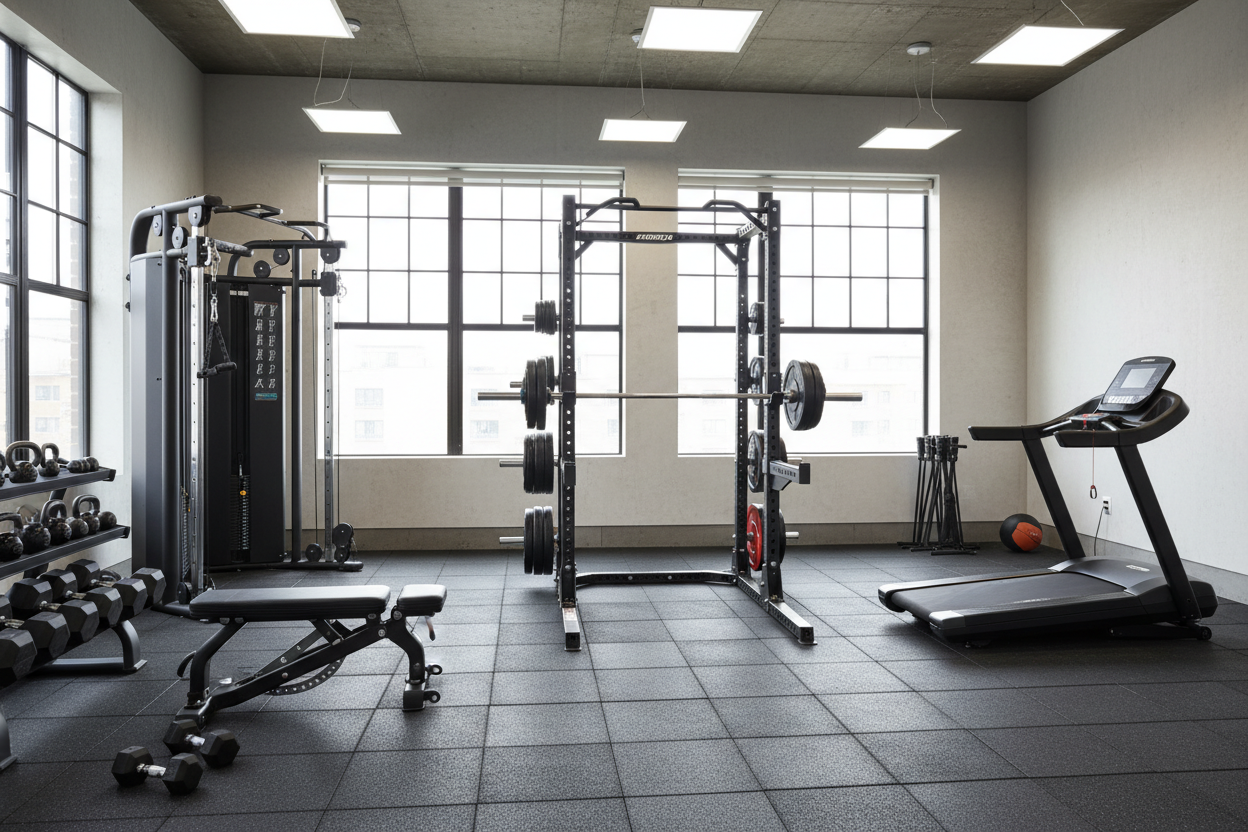
I have spent the last decade in warehouses, garage gyms, and high-end commercial clubs, and I have seen it all. I have seen 10,000-dollar machines that felt like they were grinding sand, and I have seen rusted-out 1980s iron that felt smoother than silk. When you are looking for the best workout gym machines, you have to stop looking at the paint job and start looking at the bearings.
- Steel Gauge: Look for 11-gauge or 12-gauge steel; anything thinner will flex and wobble under heavy loads.
- Pulley Ratios: Understand the difference between 1:1 and 2:1 ratios to know how much weight you are actually moving.
- Bearing Quality: Sealed ball bearings beat plastic bushings every single time for long-term smoothness.
- Adjustability: If the machine does not allow for micro-adjustments to the seat or handles, it was not built for your body.
Stop Falling for Flashy Plastics and Touchscreens
The fitness industry is obsessed with selling you a giant iPad attached to a mediocre pulley system. They want you to focus on the 'experience' because the actual mechanical engineering is expensive to produce. I have seen people drop three grand on a machine that has more plastic than a Lego set, only to realize the resistance feels 'choppy' after six months.
When I test a piece of gear, I do not care about the Wi-Fi connectivity. I care about the frame. If I can shake the machine with one hand, it is not going to hold up to a heavy set of rows. Serious lifters need to look past the marketing fluff. You want raw mechanical performance—thick steel tubing, heavy-duty cables, and a weight stack that actually challenges you without sticking.
What Are the Best Machines to Use at the Gym?
People constantly ask me, 'what are the best machines to use at the gym?' The answer usually comes down to the resistance curve. Free weights are great, but a well-designed machine provides tension in the spots where a barbell falls short. Compound machines like a functional trainer or a high-end leg press should be the anchor of any serious facility.
If you are limited on space but want that commercial feel, a high-quality smith machine home gym station is a massive win. It provides a fixed path that allows you to push to failure safely on movements like incline presses or split squats, effectively replacing three or four single-use commercial pieces. It is about maximizing utility without sacrificing that rock-solid stability.
The Three Non-Negotiable Rules of Good Equipment
The first rule is structural integrity. A solid home gym foundation requires 3x3 or 2x3 inch steel tubing. If the frame is flimsy, the pulleys will never stay aligned, and your cables will fray within a year. I have made the mistake of buying 'budget' towers before, and I spent more time tensioning the cables than actually lifting the weights.
The second rule is the pivot point. If the axis of rotation on a chest press machine does not align with your shoulder joint, you are asking for an injury. The third rule is the cable ratio. A 2:1 ratio means 100 lbs feels like 50 lbs, which is great for functional work, but for heavy strength gains, you want a 1:1 ratio where the weight on the stack is the weight in your hand.
Identifying the Best Workout Machine at Gym Facilities
To find the best workout machine at gym floors, you need to test it under load. Don't just do a light warm-up set. Load it to 70% of your max and feel for 'drag.' If the weight feels heavier on the way down than the way up, there is too much friction in the system. I have built multiple rigs to test these exact variables side-by-side.
The best machines have a 'cam' system that adjusts the resistance as you move through the rep. In a bicep curl, you are weakest at the very bottom and strongest in the middle. A machine with a properly engineered cam will feel lighter at the bottom and heavier as you reach that peak contraction. If the resistance is linear and clunky, it is a poorly designed tool.
When Should You Invest in Single-Use Isolation Gear?
I am usually the guy telling you to buy versatile gear, but sometimes a specialized machine is the only way to get the job done. For example, a dedicated hip thrust machine is one of those rare single-purpose items that justifies its footprint. Setting up a 400-lb barbell on your lap with a bench and a foam pad is a logistical nightmare.
A dedicated machine allows you to strap in and hit the movement with 100% focus on the muscle. If you have the floor space and a specific weak point you are trying to hammer, isolation machines are a luxury that pays off in gains. Just make sure the footplate is oversized and has a non-slip grip—there is nothing worse than your feet sliding mid-set.
Final Verdict: Trust Iron, Cables, and Gravity
At the end of the day, the best machine is the one you will actually use until the cables snap. Forget the bells and whistles. Look for a machine that feels like it was built in a tank factory. If it has thick padding, smooth travel, and a frame that doesn't budge when you rack the weight, you have found a winner. Trust the iron, trust the cables, and don't let a fancy screen distract you from a mediocre pulley system.
FAQ
Is a 2:1 pulley ratio better than 1:1?
It depends on your goal. A 2:1 ratio offers more cable travel and smoother movement, which is better for 'functional' training and isolation. A 1:1 ratio is better for heavy strength training because it provides more raw resistance.
How can I tell if a gym machine is high quality?
Check the welds and the pulleys. Smooth, consistent welds and aluminum pulleys are usually signs of a premium build. If you see plastic pulleys and sloppy welding, stay away.
Do machines build as much muscle as free weights?
Yes, especially for hypertrophy. Machines allow you to train closer to failure with better stability, which can lead to more mechanical tension on the target muscle without being limited by your balance or grip.
Share:
The Only 3 Times Pro Exercise Equipment Is Worth the Upcharge
I Wasted Thousands Before Finding the Best Equipment for Muscle Building