
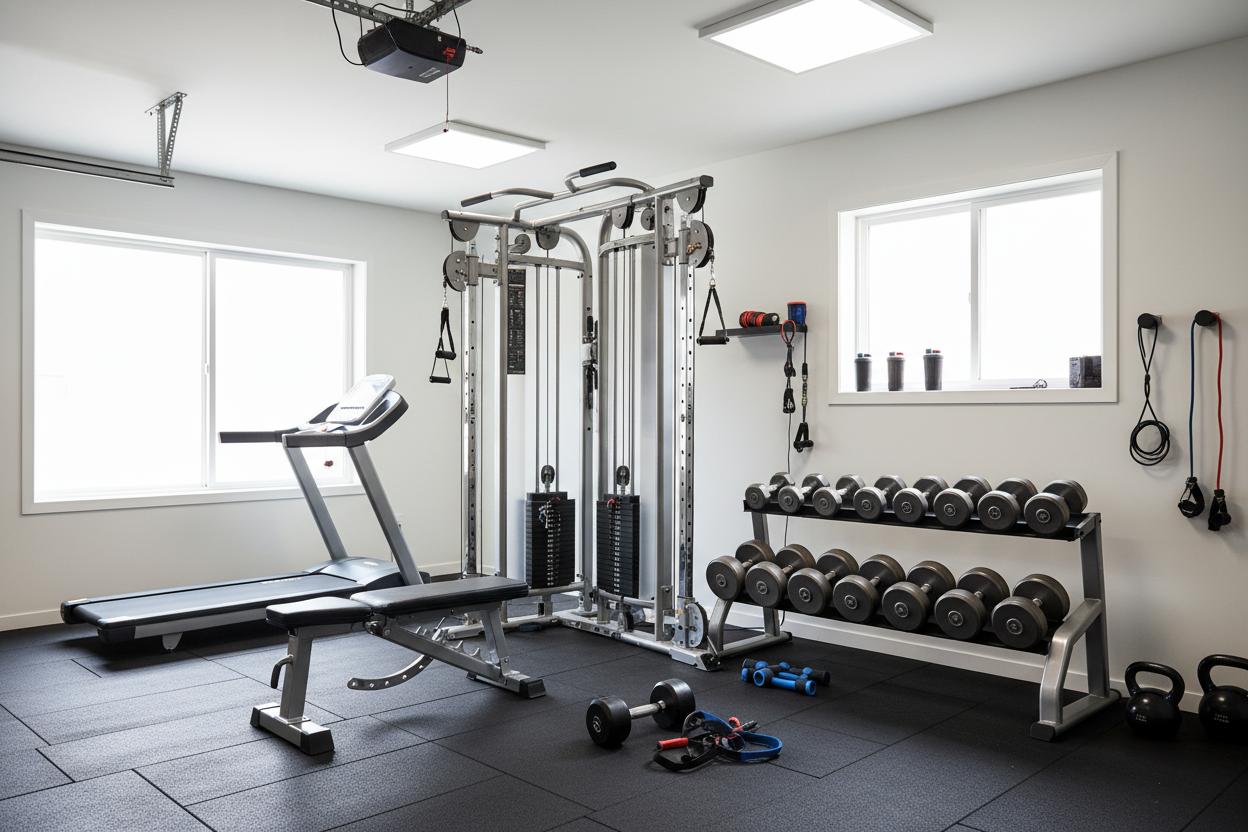
There is a specific, metallic 'clack' that happens when you reach the bottom of a selectorized weight stack. At first, it feels like a badge of honor. You have officially reached your exercise machine max. Then, the realization hits: your progress is about to stall because you have literally run out of iron.
I have been there. I remember maxing out the seated row in my garage and feeling like I needed to drop five grand on a commercial-grade unit just to keep my back growing. Before you start browsing Craigslist for a 400-lb monster that won't fit through your door, realize that hitting the limit on your max exercise machine is a math problem, not an equipment failure.
- Buy a weight stack extender pin to add Olympic plates safely.
- Switch to unilateral movements to instantly double the effective load.
- Use pre-exhaustion sets to make 'light' weights feel heavy.
- Slow down your eccentrics to 4 seconds to increase time under tension.
The Frustrating Reality of Outgrowing Your Gear
Most home gym cable machines top out at 150 or 210 pounds. For a beginner, that is plenty. For anyone who has spent a year or two training hard, that 210-lb stack becomes a warm-up on lat pulldowns or tricep pushdowns. It is tempting to think you need a massive, commercial-grade max exerciser to keep making gains, but that is rarely the case.
The problem is often the pulley ratio. A 2:1 ratio means your 200-lb stack only provides 100 lbs of actual resistance. Instead of buying a whole new machine, we need to get creative with the physics of the one you already own. You do not need more floor space; you need more mechanical tension.
Why a $30 Gym Pin Will Save You Thousands
The absolute easiest way to bypass your weight limit is a weight stack extender pin, often called a 'Gym Pin.' This is a solid steel pin that replaces your selector pin. It has a long sleeve sticking out the side where you can slide on standard Olympic plates.
I use one that has a 10-inch sleeve. It allows me to add two or three 25-lb plates to a stack that is already maxed out. Just make sure your cables are rated for the extra load. Most home gym cables are 3/16-inch aircraft grade with a 2,000-lb breaking strength, so adding an extra 50 lbs usually is not an issue, but check your manual first.
The Unilateral Trick That Doubles Your Machine's Lifespan
If you can leg press the entire stack for 20 reps, stop using both legs. Switching to single-leg variations instantly doubles the resistance each limb has to handle. It also fixes strength imbalances you didn't know you had. For example, shifting to a single-leg stance on a leg press hack squat combo can humble even advanced lifters who think they have outgrown the machine.
This works for almost every max exercise machine in your arsenal. Single-arm lat pulldowns, single-arm rows, and single-leg extensions turn a 'too light' machine back into a brutal muscle-builder. It requires more core stability and focus, which usually leads to better contractions anyway.
Pre-Exhaust Your Muscles to Make Light Weight Feel Heavy
If the stack feels light, stop starting your workout with it. Change your machine exercise routine so that the machine movement comes last. If you hit 3 sets of heavy dumbbell flyes to failure and then go to your maxed-out chest press machine, those plates will feel like they are made of lead.
Pre-exhaustion is a classic bodybuilding tactic for a reason. By fatiguing the target muscle with an isolation move first, you remove the need for massive external loads on the follow-up compound lift. You get the same hypertrophic stimulus with 150 lbs that you used to get with 250 lbs.
Manipulating Tempo: Pauses, Negatives, and Pain
Most people move the weight too fast. If you are using momentum to clear the stack, you aren't actually strong enough for it yet. Try this: 4 seconds on the way down (eccentric), a 2-second hard pause at the peak contraction, and a controlled 2-second drive. This eliminates the 'bounce' at the bottom of the rep.
This is especially effective on a hip thrust machine. Holding a 3-second squeeze at the top of a hip thrust negates the need for stacking on extra plates. You will feel a level of glute activation that you simply can't get by just ego-lifting the heaviest weight possible as fast as you can.
When Is It Actually Time to Upgrade?
Hacks only go so far. If you are using a Gym Pin, doing unilateral work, and slowing down your reps, and you are still hitting 20+ reps with ease, it is time to move on. This usually happens with compound movements like squats and presses where cable tension just cannot compete with raw gravity.
When you reach that point, look into a plate-loaded Smith machine. Plate-loaded equipment has a much higher ceiling because the 'max' is limited only by how many iron plates you can fit on the pegs. It is the logical next step when you have truly beaten the max exerciser in your garage.
How much extra weight can I safely add to a cable stack?
Generally, adding 20-25% of the total stack weight is safe for most mid-tier home gym machines. If you have a 200-lb stack, adding 40-50 lbs via a pin is usually fine, provided the cables aren't frayed and the frame is bolted down.
Will using a weight stack pin void my warranty?
Almost certainly. Most manufacturers do not want you exceeding the engineered weight limit. If you decide to go the hack route, you are doing so at your own risk. Inspect your cables weekly for any signs of wear or 'bird-caging' of the steel strands.
What is the best way to increase intensity without adding weight?
Shorten your rest periods. If you usually take 2 minutes between sets, drop it to 45 seconds. The cumulative fatigue will make the exercise machine max feel significantly heavier by the third set.
Share:
Does Planet Fitness Have Weight Lifting Equipment You Can Use?
Why Your Weight Bench With Pull Up Bar Wobbles Like Crazy