
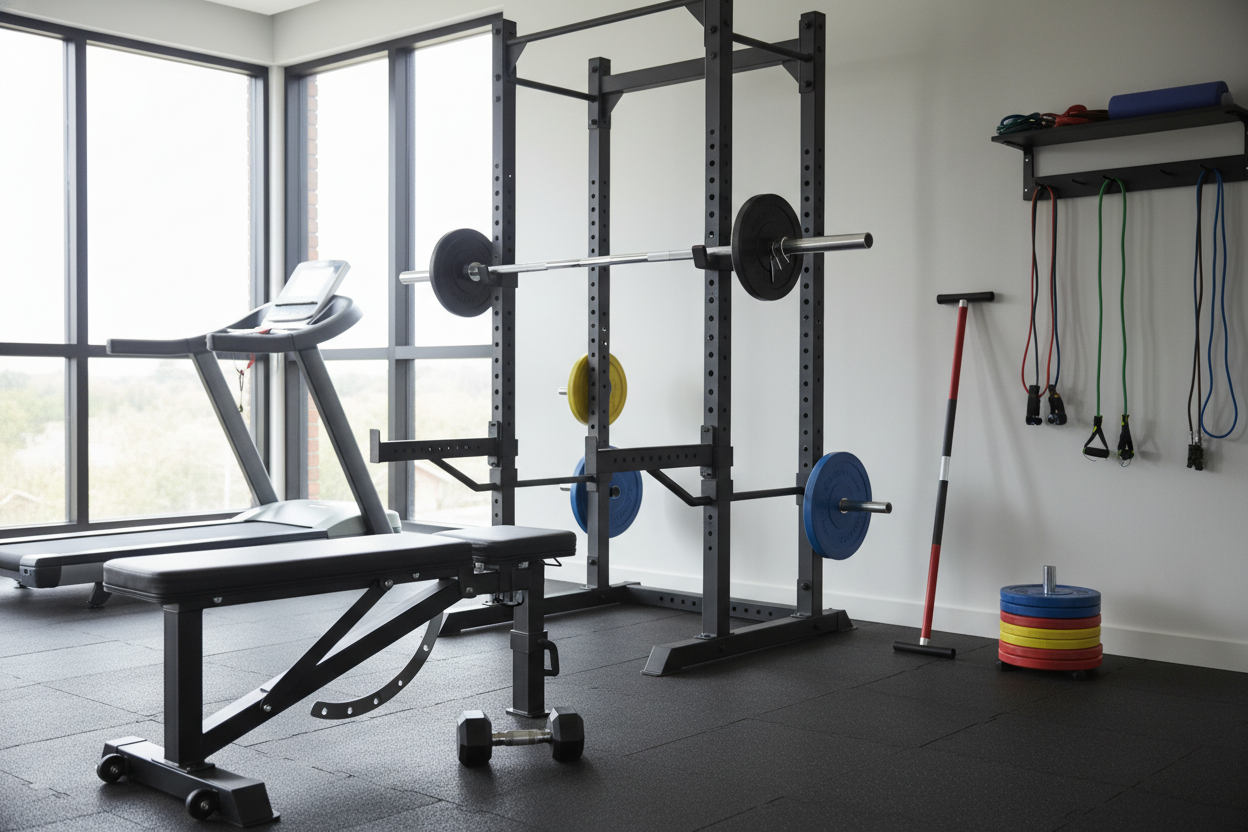
I remember the first time I tried to build a 'gym' in my spare bedroom. I was tired of the $80 monthly membership and just wanted something simple. I almost clicked 'buy' on a colorful bodypump barbell set because it looked familiar and approachable. It was cheap, it came with plates, and I’d seen people use them in classes for years. It felt like a safe bet.
I’m glad I didn't. If you’re looking to actually change your physique or get stronger, that lightweight studio bar is going to become a very expensive laundry rack within a month. Here is the cold, hard truth about why the barbell pump setup is a trap for home gym beginners.
Quick Takeaways
- Body pump bars are designed for high-rep cardio, not for building muscle through progressive overload.
- Most studio bars have a weight capacity that you will exceed within your first three leg workouts.
- The non-standard diameter (usually 1 inch or 30mm) makes it nearly impossible to find affordable heavy plates later.
- Hollow steel construction is a safety hazard if you try to treat it like a real barbell.
The Studio vs. The Garage: Setting the Record Straight
We need to distinguish between 'exercise' and 'training.' A body pump bar is an exercise tool. It’s designed for Les Mills-style classes where the goal is to keep your heart rate up by doing 100 reps of a single movement. The bar is usually hollow, coated in foam, and weighs almost nothing on its own.
A real piece of strength equipment, like a standard 20kg bar, is a training tool. It’s built to handle hundreds of pounds and provide a stable surface for your hands. When you buy a body pump barbell, you aren't buying a barbell; you're buying a cardio accessory. It lacks the knurling (the textured grip) and the sleeve rotation necessary to protect your wrists during cleans or presses.
Why You Will Outgrow a Barbell for Body Pump in 14 Days
Strength training is built on the principle of progressive overload. To get stronger, you have to lift more weight over time. The problem with the barbell bodypump set is the ceiling. Most of these bars max out at 40 to 60 pounds. For a bicep curl, that might last you a while. For a squat or a deadlift? You’ll be stronger than the bar's maximum capacity by the end of your second week.
Once you hit that 60-lb limit, you're stuck. You can't just go to a local sporting goods store and buy more plates because these bars typically use 'standard' 1-inch holes, while the rest of the world uses 2-inch Olympic plates. You end up with a piece of equipment that is too light to challenge your legs but too bulky to be useful for anything else.
The Danger of Trying to Go Heavy on Hollow Steel
I’ve seen people try to 'hack' their cardio sets. They find some old 25-lb standard plates in a garage sale and try to slide them onto that thin, hollow steel bar. Please, don't do this. These bars are not rated for heavy loads. They are often held together by plastic internal components or thin-walled tubing.
Much like treating a Smith barbell like a regular Olympic bar, using a cardio bar for heavy compound lifts is asking for a mechanical failure. I’ve seen these bars bow and permanently bend under as little as 80 pounds. If that bar snaps or the collar slips while it's over your face during a floor press, the money you saved on the purchase will go straight to your dental bill.
Does This Cardio Bar Actually Have Any Place at Home?
I’m not saying the bar is useless for everyone. If you are 100% committed to streaming high-rep aerobic classes and you have zero interest in ever lifting more than 50 pounds, then sure, buy the studio set. It’s compact and the vinyl plates won’t scuff your hardwood floors.
But if you have any ambition to get 'toned' (which is just code for building muscle and losing fat), you need resistance. Real resistance. A barbell for body pump is a specialized tool for a very specific, high-rep niche. It is not the foundation of a home gym.
What You Should Actually Buy to Get Strong at Home
If you want to buy equipment once and never have to replace it, skip the plastic sets. You should be looking for a standard Olympic barbell. A real bar has a 2-inch sleeve diameter, weighs 15kg or 20kg on its own, and is made of solid steel that can support anywhere from 500 to 1,000 pounds.
Specifically, an entry-level 20kg Olympic barbell is the smartest investment you can make. It gives you room to grow for years. You can start with just the bar—which is already heavier than most bodypump sets—and slowly add plates as you get stronger. It’s safer, more versatile, and has a resale value that a plastic cardio bar will never have.
Personal Experience: My $150 Mistake
I once bought a 'complete' 100-lb weight set from a big-box store that used a thin, three-piece threaded bar. I thought I was being thrifty. Within a month, the threads stripped, and the bar felt like a pool noodle when I tried to squat. I ended up giving it away for free on Facebook Marketplace and buying a real Olympic bar anyway. I wasted $150 trying to save $50. Don't be me.
FAQ
Can I use Olympic plates on a body pump bar?
No. Most body pump bars have a 1-inch (25mm or 30mm) diameter, while Olympic plates have a 2-inch hole. They will wobble dangerously or slide right off.
Is a body pump bar good for weight loss?
It can help burn calories during a workout, but building muscle with a heavier barbell is more effective for long-term metabolic health and fat loss.
What is the standard weight of a body pump bar?
Usually, the bar itself weighs between 2 and 5 pounds. In contrast, a real training barbell weighs 45 pounds (20kg). That weight difference alone tells you everything you need to know about the build quality.
Share:
Why Most Home Exercise Weight Machines Feel Like Wobbly Trash
Don't Waste $50: The Best Cheap Weight Benches That Actually Survive