
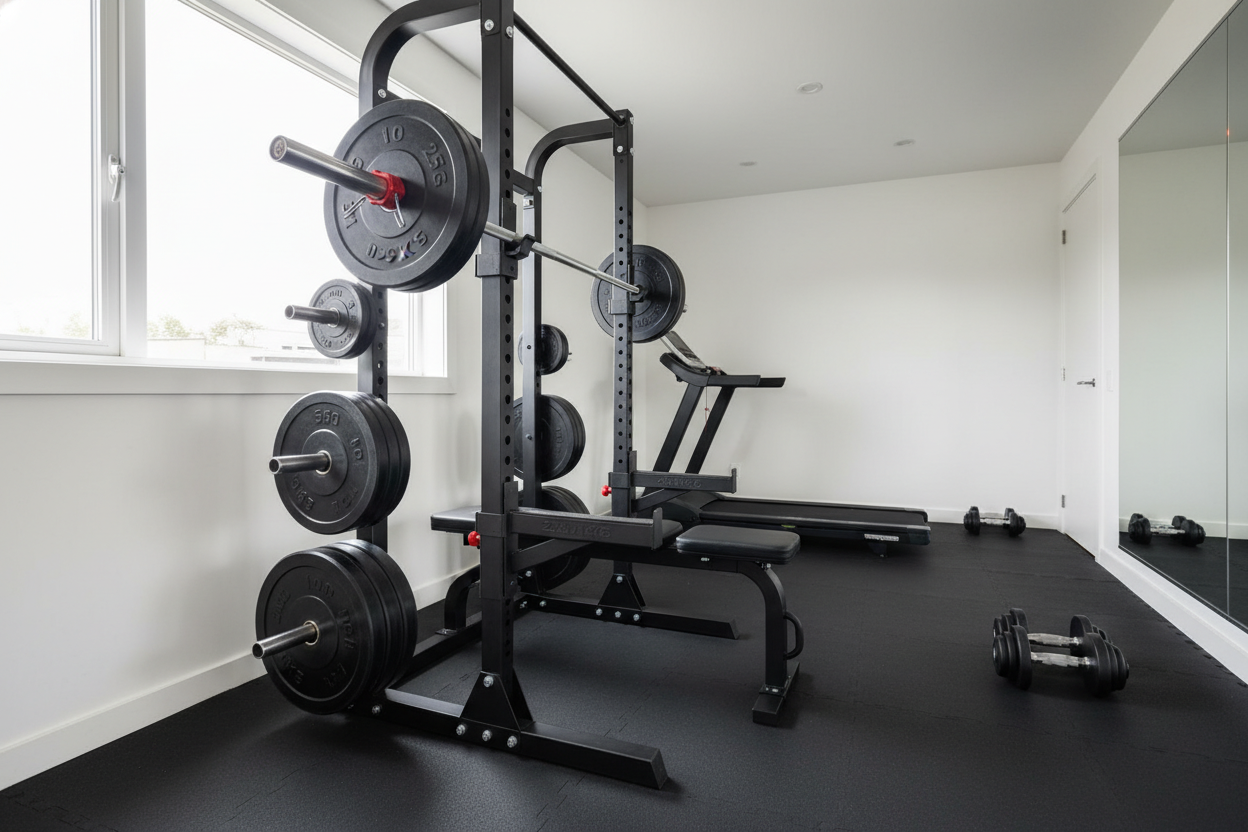
I remember standing in the aisle of a big-box sporting goods store, staring at a 300-pound barbell set with weights and thinking I’d hacked the system. For less than the price of a decent pair of lifting shoes, I could have a full gym in my garage. It felt like a steal.
The reality hit about three weeks later when the bar started to bow under a 225-pound squat and the 'iron' plates started chipping like cheap ceramic. Most people shopping for a barbell weights set are looking for convenience, but what they usually get is a collection of gear that won't survive a year of serious training.
Quick Takeaways
- Big-box bundles usually feature low-tensile strength bars that bend permanently under moderate loads.
- The plate selection often includes redundant 35-pound plates instead of the extra 45s you actually need.
- Pinned sleeves on cheap bars create a loud, distracting rattle and offer zero spin for Olympic lifts.
- You are almost always better off buying a high-quality bar and sourcing used iron plates separately.
The Allure of the All-in-One Box
It is incredibly tempting to grab a single box and call it a day. That weight and bar set looks like a complete solution for a couple hundred bucks. You see the '300 lbs' on the box and think that will last you forever. For a beginner, 300 pounds feels like a mountain.
But the 'all-in-one' convenience hides a frustrating truth: you're buying a ticking clock. A cheap barbell with weights usually ends up costing double because you'll be replacing the bar the moment you can deadlift more than 250 pounds. The metal is soft, the tolerances are loose, and the overall experience is just... clunky.
The Truth About the Bar Inside That Bundle
The barbell is the most important piece of gear in your gym. It’s your primary interface with the weight. In a standard weights and barbell set, the bar is almost always an afterthought. Manufacturers use 'pot metal' with a low tensile strength—often under 130,000 PSI—which means it has no 'whip' and no memory. If it bends, it stays bent.
Check the sleeves. On a real bar, the sleeves rotate smoothly on bushings or bearings. On a bundle bar, the sleeves are often pinned or bolted on. They don't spin, which puts massive torque on your wrists during cleans or even heavy presses. This is why I'm a huge advocate for investing in a premium barbell even if it means you have to start with fewer plates.
You're Paying for Plates You Might Never Use
The math in a standard weights set barbell bundle is usually weird. You get two 45s, two 35s, two 25s, and a mix of 10s, 5s, and 2.5s. Here is the problem: nobody likes 35-pound plates. They are the 'middle child' of the weight room. Once you can lift 115 pounds (a 35 on each side), you're usually only a week or two away from 135 pounds (a 45 on each side).
When you piece together your own kit, you skip the 35s and buy extra 45s or more 10s. This allows for better progressive overload. Most big-box bundles also use plates with a smaller diameter than the standard 450mm, which means the bar sits lower to the floor, messing up your deadlift mechanics from day one.
Are Any Bundles Actually Worth the Money?
I’m not saying every bars and weights set is garbage. If you go to a dedicated fitness company—the kind that supplies CrossFit boxes or powerlifting meets—their bundles are actually legit. They are essentially just a shipping discount on high-quality individual items.
Look for sets that specify the PSI of the bar (look for 190k or higher) and use 'deep dish' iron or urethane-coated plates. If the description doesn't tell you the tensile strength of the steel, it's because they're embarrassed by the number. Move on.
How to Build Your Own Starter Setup Instead
If I were starting over today with a $500 budget, I wouldn't touch a pre-packaged bundle. I’d buy a 20kg multi-purpose bar from a reputable brand for around $200. Then, I’d hit Facebook Marketplace or Craigslist for used iron plates. You can usually find old plates for 50 to 70 cents a pound if you’re patient.
By saving money on the plates, you can put that extra cash toward a sturdy weight bench that won't wobble when you're trying to press. You'll end up with a bar that lasts a lifetime and a setup that actually grows with your strength rather than holding you back.
Personal Experience: My First 'Bargain'
I bought a 300-lb 'Gold's Gym' set from a local retailer back in 2015. Within six months, the chrome was flaking off the bar and slicing my palms open. The 'iron' plates actually had air pockets in the casting, meaning one '45' weighed 42 pounds and the other weighed 47. Trying to squat with an uneven load is a fast track to a physical therapy appointment. I ended up giving the whole set away and starting over from scratch.
FAQ
Is a 300lb set enough for a home gym?
For many, it's a good start, but the quality of the bar usually fails before you even reach the 300lb limit. You're better off with a 200lb set of high-quality plates and a bar that can handle 1,000lbs.
Why do people hate 35lb plates?
They take up space on the bar and make the math annoying. Most lifters jump from 25lb plates straight to 45lb plates. In a bundle, 35s are often just 'filler' to hit that 300lb total weight mark.
What should I look for in a budget barbell?
Look for a 28mm to 28.5mm diameter, at least 190,000 PSI tensile strength, and bronze bushings. If it has 'bolts' at the ends of the sleeves instead of snap rings, stay away.
Share:
I Replaced 5 Common Workout Machines With Just One Rack Setup
I Traded My Squat Rack for a Leg Machine Press (No Regrets)