
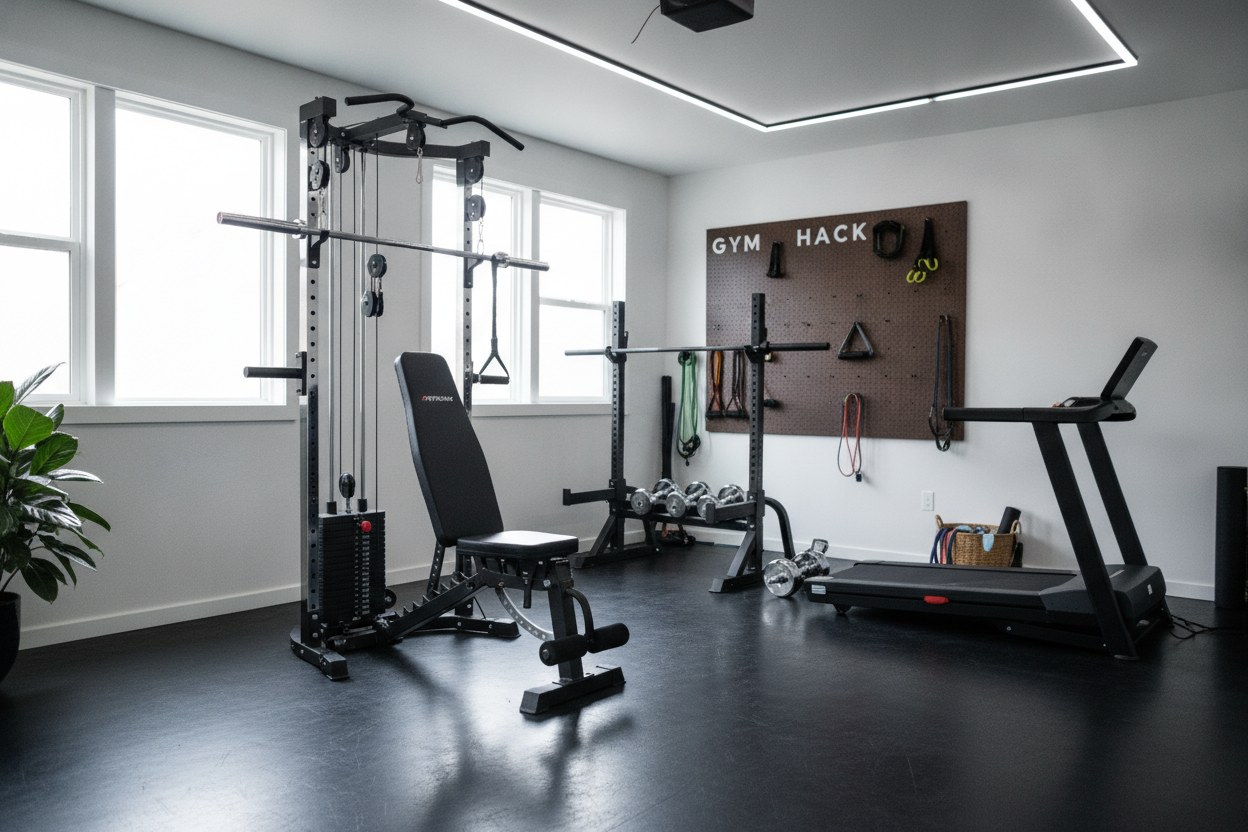
I remember the first time I bought a budget combo unit. I was living in a third-floor apartment with exactly 40 square feet of 'gym space' and a landlord who hated noise. I thought I had hacked the system by getting a weight bench with pulley that promised to do everything from bench press to lat pulldowns in a single footprint. I was wrong.
- Budget pulleys use plastic bushings instead of ball bearings, creating massive friction.
- The 1:1 ratio means you feel every stutter and hitch in the cable.
- Most towers are too short for anyone over 5'8' to get a full lat stretch.
- Maintenance with silicone spray is mandatory, not optional.
The Space-Saving Dream vs. The Jerky Reality
The marketing images always look so clean. You see a guy with perfect lats getting a deep stretch on a weight bench with barbell rack combo, and you think, 'That is all I need for a complete garage gym.' It solves the footprint problem, but the compromise is built into the steel.
The reality of a weight bench with pulley system is often a stuttering mess of metal-on-metal friction. These units are built to a price point, not a performance standard. When you try to pull 100 pounds, the cable doesn't glide; it fights you the whole way down, making your back workout feel more like a struggle against physics than a muscle-building session.
Why Your Cables Feel Like They're Filled With Sand
Most of these units use nylon pulleys with zero ball bearings. They are literally just plastic wheels spinning on a Grade 5 bolt. Every time the wheel turns, it creates heat and friction. If the cable isn't perfectly aligned—and on a $200 bench, it never is—the steel cable starts sawing into the plastic housing.
Then there is the guide rod. High-end functional trainers use chrome-plated solid steel rods. Budget benches use square-tube steel painted with a thick, sticky powder coat. As the weight carriage slides up and down, that paint creates a 'grabbing' sensation that ruins your tempo.
The 1:1 Pulley Ratio Trap
Standard commercial machines often use a 2:1 ratio, which cuts the felt friction in half. These bench attachments are almost always 1:1. This means if the carriage binds for even a millisecond, you feel 100% of that hitch in your hands. It makes 50 pounds feel like 80 on the way down, but then it drops like a stone on the way up because the friction works against you in both directions.
The Height Problem: Can You Even Get a Full Stretch?
This is the secret killer of back gains. Most of these lat towers are only 70 to 80 inches tall. If you are sitting on a bench that is 18 inches off the ground, and you have average-length arms, your hands are already nearly touching the pulley at the start of the rep. You end up doing these weird 'half-pulldowns' because the weight carriage hits the floor before your arms are fully extended.
Using a standalone adjustable weight bench with a higher, dedicated wall-mounted pulley is usually the only way to get a real stretch. If you're tall, you'll find yourself sitting on the floor just to get the range of motion the machine was supposed to provide in the first place.
3 Ways to Actually Make Your Bench Pulley Usable
If you already own one of these units, don't throw it on Craigslist just yet. First, buy a can of dry PTFE silicone spray. Do not use WD-40; it attracts dust and turns into a sticky paste. Coat the guide rods and the pulley axles. It won't make it feel like a Rogue Rhino, but it will stop the 'stutter.'
Second, swap the stock carabiners for heavy-duty climbing-rated ones. The cheap ones that come in the box often bend under load, which pulls the cable off-center. Third, if the cable track is completely unsalvageable, consider whether a bench with resistance bands might actually provide a smoother strength curve for your accessory work.
Should You Just Buy a Separate Cable Machine?
If you have the extra 4 feet of wall space, buy a standard weight bench and a separate wall-mounted plate-loaded pulley. It’s better to have two pieces of gear that do one thing well than one combo unit that makes you hate your back day. The price difference is often less than $150, but the difference in workout quality is night and day.
Personal Experience: The 'Bolt-On' Mistake
I once spent three hours assembling a 'pro' bench with a lat attachment only to realize I couldn't actually do a pulldown without my knees hitting the barbell hooks. I ended up hacksawing the tower off and mounting it to a 4x4 post in my garage. It was a mess. I learned the hard way that 'all-in-one' usually means 'none-at-all' for serious lifting.
FAQ
Can I upgrade the pulleys on my weight bench?
Yes. You can buy aluminum pulleys with actual ball bearings on Amazon for about $15 each. Just make sure the diameter matches your current wheels so the cable doesn't jump the track.
What is the best lubricant for gym cables?
Always go with a dry silicone or PTFE spray. Anything 'wet' or 'greasy' will eventually collect gym chalk and dust, creating a grinding paste that destroys the cable sheathing.
Is a 1:1 ratio better for strength?
Not necessarily. While it allows for more total weight, the increased friction usually results in a jerky movement that makes it harder to maintain time-under-tension, which is what actually drives muscle growth.
Share:
Why I Sold My Modern Hex Rack for Vintage York Dumbbells
I Used the Core Dumbbell Set for a Year (Here's What Broke)