
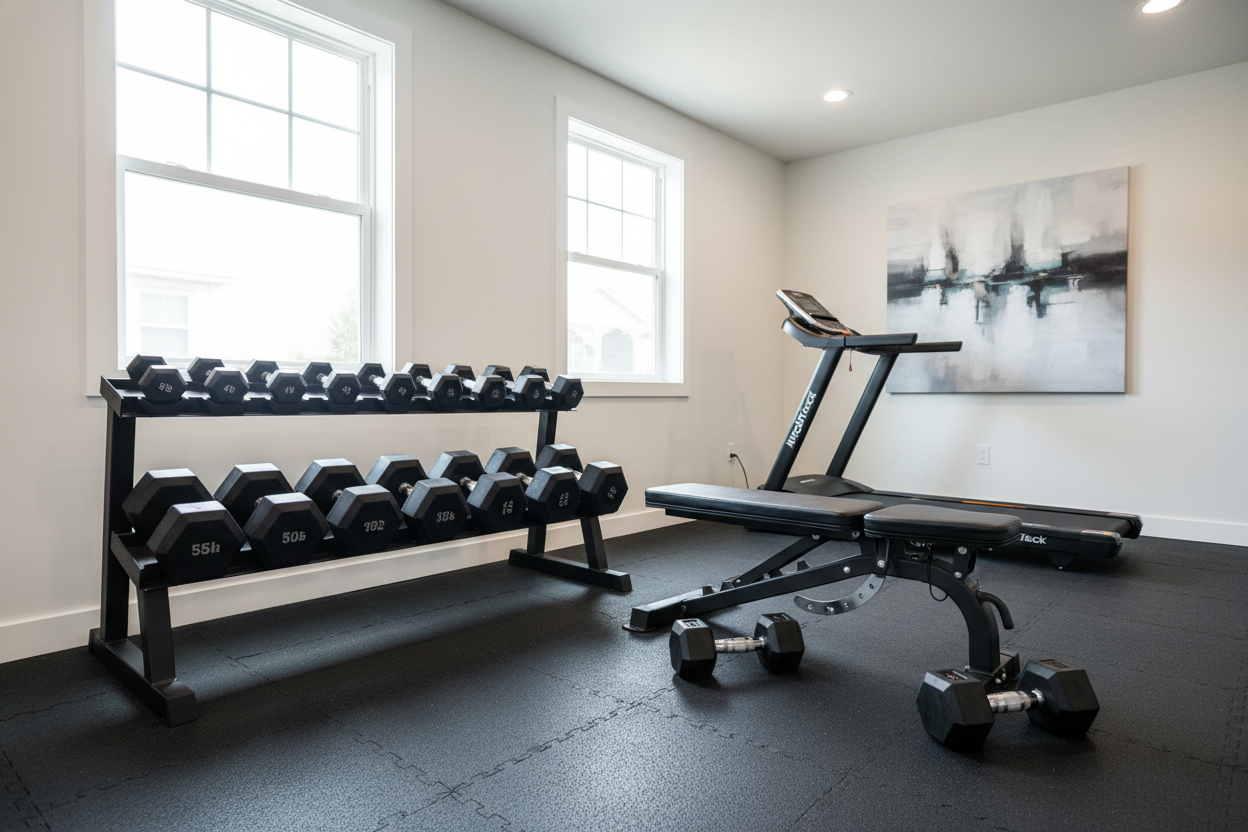
I remember the exact moment I realized my fancy adjustable dumbbells were a mistake. I was mid-workout, heart rate pinned at 160, trying to drop from 50s to 30s for a burnout set of lateral raises. Instead of just grabbing the next pair, I spent forty-five seconds fumbling with a plastic dial that refused to click into place. By the time I got it locked, my pump was gone and my temper was flared.
Looking back, I fell for the marketing. We all do. The idea of owning a complete dumbbell set that fits in the corner of a closet is seductive. But after three years of garage gym experimentation, I realized that for most people who train hard, the 'space-saving' benefits do not outweigh the mechanical headaches and the constant fear of breaking a $400 piece of equipment.
Quick Takeaways
- Adjustables save space but kill workout momentum during drop sets.
- Fixed rubber hex weights are virtually indestructible and safer to drop.
- You only need 3-4 key pairs to handle 90% of your training needs.
- Mechanical failure in dial-weights is a matter of 'when,' not 'if.'
The Allure of the Space-Saving Dumbbell Kit
Let's be real: space is the ultimate currency in a home gym. When you're trying to fit a rack, a bench, and a rower into a one-car garage, a traditional dumbbell weight set looks like a massive floor-space hog. The promise of replacing 15 pairs of weights with two handles and a small cradle is hard to ignore.
I bought into it. I wanted that clean, minimalist aesthetic. For about a month, it was fine. I did my slow, controlled presses and kept the weights off the floor. But as soon as my training intensity ramped up, the limitations of the 'kit-in-a-box' model started showing their cracks. You realize quickly that a gym is meant for movement, not for gingerly placing items back into a plastic tray like they are fine china.
Why Dialing in Weights Ruins Your Workout Flow
If you follow any high-intensity program, you know that rest intervals are non-negotiable. When the clock says 60 seconds, you go. With a standard dumbbell weight set, you just reach down and grab the next pair. It takes two seconds. It is mindless, which is exactly what you want when your brain is foggy from a heavy set of Bulgarian split squats.
With adjustables, you have to rack the weight perfectly, align the plates, turn the dial (and hope it doesn't jam), and then pull it out. If one plate is slightly tilted? Good luck. You are now fighting a piece of machinery instead of fighting the iron. It is a rhythm killer that turns a 45-minute session into an hour of tinkering. For anyone who loves supersets or EMOMs, this delay is a dealbreaker.
The Plastic Durability Problem Nobody Mentions
Most consumer-grade adjustables rely on plastic internal gears or thin nylon spacers. Here is the problem: weights are meant to be moved, and occasionally, they get dropped. Whether it is a failed rep on a heavy bench press or just setting them down firmly after a set of rows, that impact energy has to go somewhere.
In a fixed dumbbell kit, the energy vibrates through the steel handle and rubber head. In an adjustable, it hits those plastic internals. I have seen handles shatter, pins bend, and plates get stuck permanently. Once that locking mechanism fails, you do not just have a broken weight—you have a dangerous paperweight that could drop a 10lb plate on your foot mid-press. I stopped trusting them the moment I heard a suspicious 'crunch' after a standard set of overhead extensions.
The Return to Fixed Iron: Why a Dumbbell Set Just Works
I eventually sold my adjustables on Marketplace and invested in a rubber hex dumbbell set. The difference in my training was immediate. There is a psychological freedom in knowing you can drop your weights without a repair bill. The knurling on a solid steel handle feels better in the hand than the bulky, oversized grips found on most dial-up units.
Plus, rubber hex designs do not roll. If you are doing 'man-makers' or renegade rows, you need a flat edge that stays put. My old adjustables were rounded and wobbled every time I put weight on them. The fixed weights feel like an extension of my arm, not a clunky tool I am trying to pilot. They are simple, heavy, and honest.
You Don't Need the Whole Rack (Start With a Dumbbells Set of 2)
You do not have to spend thousands on a full commercial rack to get results. To build a functional dumbbell kit, I recommend starting with three key weights: a light pair for accessories, a medium pair for high-rep work, and a heavy dumbbells set of 2 for your primary presses.
For most lifters, a pair of 25s, 45s, and 70s covers 90% of your needs. You can always add more as you get stronger, but starting with just a few pairs saves you the massive footprint of a 5-100lb rack while giving you the bulletproof reliability of fixed iron. You can stack them in a corner or under a bench, keeping your floor clear without sacrificing the quality of your lifts.
The Final Verdict: Which Style Belongs in Your Gym?
If you are living in a 400-square-foot studio apartment, buy the adjustables. But if you have even a sliver of garage or basement space, go with the hex weights. The durability and the 'just pick it up and go' factor will keep you training more consistently over the long haul.
If you absolutely must go the space-saving route, skip the cheap plastic models. Invest in heavy-duty adjustable dumbbells that use all-metal construction. They cost more upfront, but they won't shatter the first time you get aggressive with a set of shoulder presses. For me? I'll stick to the rubber hex. They're the only things in my gym that I know will still be working in twenty years.
Personal Experience
I once spent twenty minutes trying to pry a stuck plate out of an adjustable handle with a flathead screwdriver because I set it down too hard on a rubber mat. That was the day I realized I spent more time maintaining my gear than actually lifting it. My current rubber hex set has been through three moves, thousands of drops, and still looks brand new. Simplicity wins every time.
FAQ
Are rubber hex dumbbells better than iron?
Yes, for home gyms. The rubber coating protects your floors and significantly dampens the noise. Pure iron clangs and chips over time, eventually rusting if your garage gets humid.
How do I stop my dumbbells from smelling?
New rubber weights often have an 'off-gassing' smell. Wipe them down with a simple soap and water solution and leave them in a ventilated area for 48 hours. It fades quickly.
Can I store fixed dumbbells without a rack?
Totally. You can stack hex dumbbells in a pyramid on the floor or just line them up against a wall. Because they are hexagonal, they won't roll away like round plates.
Share:
Your Spare Room Isn't a Garage: Indoor Gym Equipment for Home
The Best Machines at the Gym You Should Actually Copy at Home