
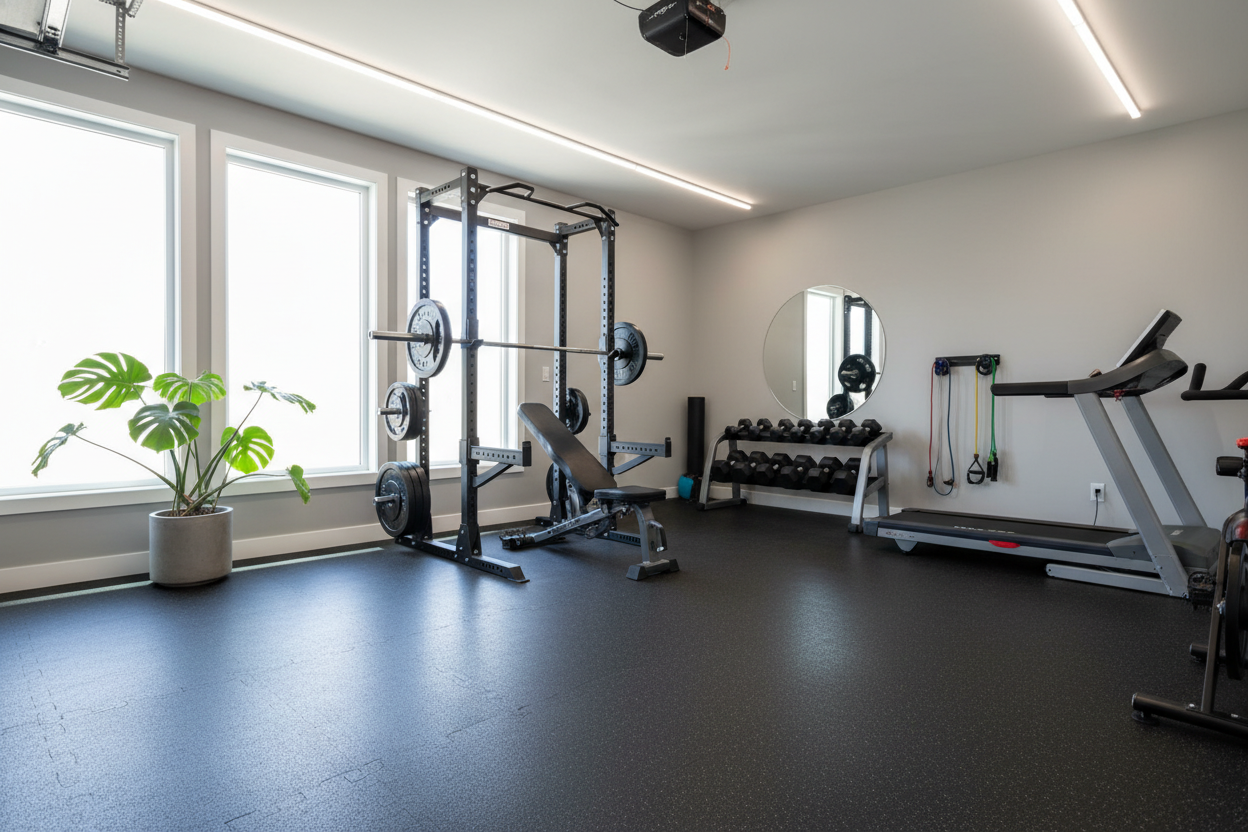
I remember the last time I set foot in a local gym machines store. I was hunting for a functional trainer that wouldn't wobble when I did heavy chest flies. The showroom was pristine—polished rubber floors, overhead spotlights that made every chrome adjustment pin pop, and a salesman who hadn't lifted a weight since the Bush administration. It felt more like a high-end jewelry boutique than a place to buy iron. I walked out that day with a 'deal' on a machine that started squeaking three weeks after I dragged it into my garage.
Quick Takeaways
- Showroom lighting and silicone-slicked guide rods mask low-quality components.
- Physical retailers bake high rent and commission costs into every price tag.
- A five-minute test drive in street shoes tells you nothing about long-term durability.
- Direct-to-consumer brands usually offer 11-gauge steel for the price of retail 14-gauge.
The Showroom Illusion: Why Everything Looks Better Under Retail Lights
Walk into any shop with gym machines for sale and you'll notice the same thing: it's spotless. They use industrial-grade silicone spray on every exercise workout machine to make the travel feel like butter. In reality, that smoothness often disappears the moment a little dust and real sweat hit the guide rods. Those bright LEDs are strategically placed to hide thin welds and plastic pulley wheels that would look cheap in the honest sunlight of your driveway.
When you're testing an exercise equipment gym piece in a store, you're usually doing it without a pump, in your street clothes, and without any intensity. You aren't checking for frame sway during a max-effort set of rows. You're just pulling a handle a few times. That isn't testing; it's window shopping for something that needs to survive a decade of abuse.
What Actually Happens to Prices on the Showroom Floor
Every time you buy from a fitness retailer, you aren't just paying for the steel. You're paying for the prime real estate they're renting, the electricity to keep those spotlights on, and the commission for the guy who followed you around for twenty minutes. This overhead can easily add 30% to 50% to the cost of a standard Home Gym setup.
I’ve seen gym fitness gym equipment marked up by hundreds of dollars simply because it has a recognizable brand name on the shroud. When you buy a workout gym set from a physical store, you're paying for the convenience of seeing it in person, but that convenience is a tax on your training budget. I'd rather put that extra five hundred bucks into better flooring or a higher-quality barbell.
The Five-Minute Test Drive Myth
Testing fitness gym machines in a store is a trap. You aren't allowed to load the stack to the max or drop the handles to see if the frame vibrates. Most retailers stock latest gym equipment that is 'prosumer' grade—it looks heavy-duty but uses thin-walled tubing. I Asked a Fitness Equipment Designer Why Cheap Gym Machines Suck, and the answer was simple: retail buyers prioritize aesthetics over internal bearing quality every single time.
The Weight Stack Deception
Many fitness equipment gym floor models use 2:1 or even 4:1 pulley ratios. This makes the weight feel incredibly light and the movement feel effortless. It’s a trick to make you feel stronger than you are. When you get that gym machinery equipment home and realize the 200-lb stack feels like 50 lbs because of the cable routing, the buyer's remorse hits hard. You want a machine that challenges you, not one that lies to you about your strength.
Flimsy Attachments Hiding in Plain Sight
Notice how every machine exercise equipment piece in a showroom is bolted to a perfectly level, reinforced floor? They do that to hide structural issues. In your garage, on a slightly sloped slab, that same machine fitness equipment will reveal every shortcut the manufacturer took. If the frame isn't 3x3 inch, 11-gauge steel, it’s going to move. Retailers rarely stock the heavy stuff because it’s too expensive to ship and move around the floor.
Direct-to-Consumer vs. The Local Sales Rep
The modern reality is that the best workout equipment machines are sold online. By cutting out the middleman, brands can put more money into the actual build quality. For example, a heavy-duty All In One Smith Machine With Cable Crossover S1 V4 would cost double if it were sitting in a brick-and-mortar shop. Online, you get the actual specs—the steel thickness, the bearing type, and the real weight capacity—without a sales rep trying to hit a monthly quota.
Yes, freight shipping for all workout equipment can be pricey, but it's usually still cheaper than the 'delivery and installation' fees a local fitness facility equipment provider will tack onto your bill at the register. Plus, you get to build it yourself, which is the only way to truly know if every bolt is torqued correctly.
The Only 2 Reasons You Should Still Visit a Local Retailer
I’m not saying gym fitness machines stores are completely useless. There are two scenarios where I’ll still go. First: used commercial trade-ins. If a local shop gets a refurbished Life Fitness or Hammer Strength piece from a club closure, you can find a steal. Second: small stuff. If I need a bottle of chalk or a single resistance band today, I’ll drop in.
But for a major Smith Machine Home Gym Station, the local store usually doesn't even have it in stock. They'll take your money and tell you it’s a six-week lead time. You’re essentially paying a premium to have a local guy place an online order for you. Skip the middleman and buy direct.
Personal Experience: The Leg Press Disaster
A few years back, I bought a leg press from a local 'fitness trainer equipment' specialist. It felt great in the store with two plates on it. Once I got it home and loaded it with six plates per side, the carriage started to bind. The 'linear bearings' they bragged about were actually just plastic bushings hidden inside a metal sleeve. I couldn't return it because 'it functioned as intended.' That was the day I stopped trusting showroom floors and started reading spec sheets instead.
FAQ
Is it cheaper to buy gym equipment online?
Almost always. Without the costs of a physical storefront and sales commissions, online brands can offer higher-grade steel and better components for significantly less money.
How can I tell if a machine is high quality without seeing it?
Check the specs for '11-gauge steel' and 'sealed ball bearings.' If the listing doesn't mention the steel thickness or uses terms like 'heavy-duty' without numbers, it’s probably thin-walled retail junk.
Do local stores offer better warranties?
Rarely. Most warranties are provided by the manufacturer, not the store. Whether you buy it in person or online, you'll likely be dealing with the same customer service department if a cable snaps.
Share:
Stop Pinching Your Hands: Why Olympic Weight Benches Win
Why Googling 'Exercise Equipment Stores in My Area' Usually Backfires