
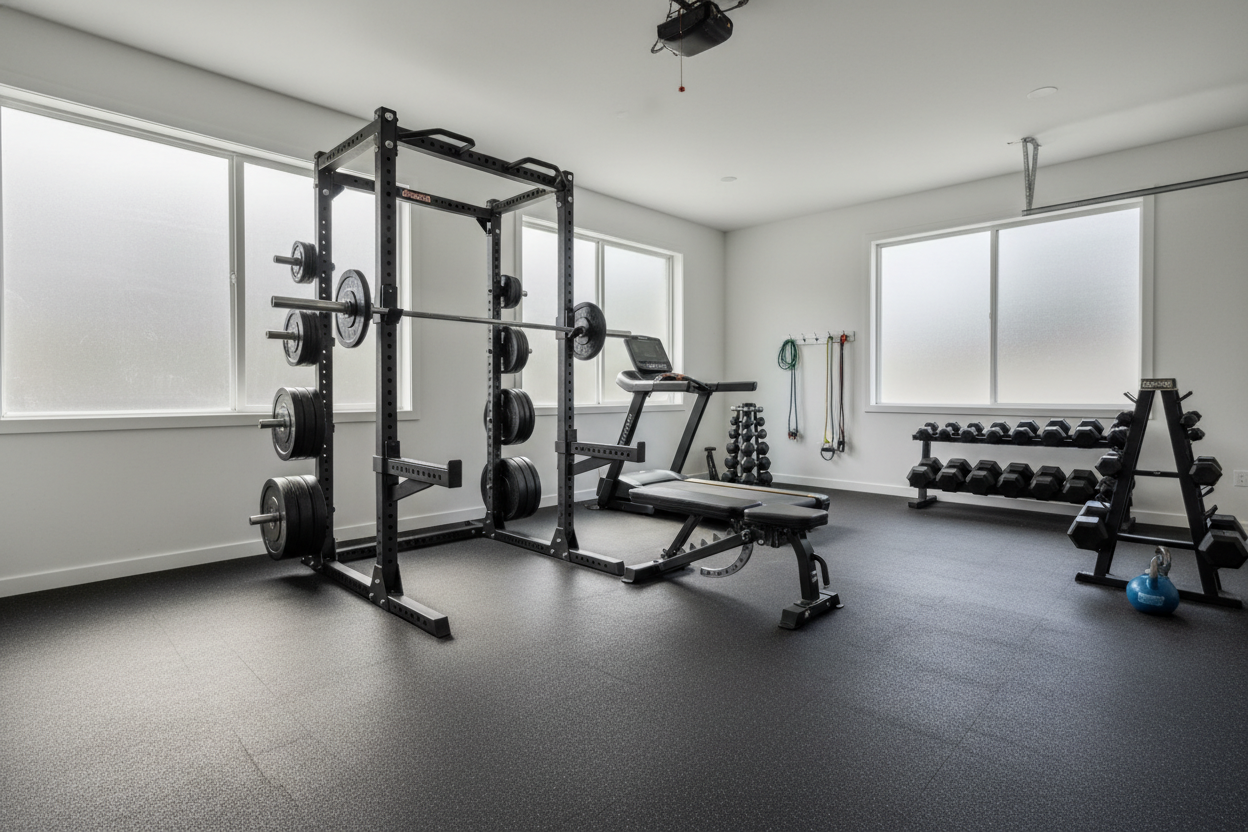
I remember staring at a $1,200 power rack in my digital cart, convinced it was the only way to safely hit a 400-pound squat. I thought buying top of the-line fitness equipment was a prerequisite for serious gains, a sort of tax you paid to prove you were 'hardcore.' Three years and a lot of rusted bolts later, I realized I was often paying for a logo and a marketing budget, not a better workout.
The truth is, my garage isn't a Gold's Gym. It doesn't have 500 members a day cycling through the leg press. Once I stopped treating my 20x20 space like a commercial facility, my training actually improved because I had more money for the gear that actually matters.
Quick Takeaways
- Cables and bearings are where you should spend your money for smoothness.
- Iron is iron; don't pay a premium for basic weight plates.
- Most home lifters will never reach the failure point of mid-tier 11-gauge steel.
- Focus on the contact points—the bar knurling and the bench pad.
The Lie Behind the 'Buy Once, Cry Once' Rule
We’ve all heard it. The 'buy once, cry once' mantra is the favorite weapon of high-end manufacturers. They want you to believe that if you don't buy the $1,500 stainless steel barbell, you’re basically throwing your money in the trash. It’s a clever way to upsell you on over-engineered features designed for 24-hour commercial gyms.
Take steel gauges, for example. A lot of premium brands boast about 7-gauge steel frames. That is thick enough to stop a bullet. In a home setting, where only you and maybe a training partner are using the rack, 11-gauge or even 14-gauge steel is more than enough to handle a 500-lb drop. You are paying for structural integrity you will literally never test.
I’ve seen guys spend $5,000 on a rack and then realize they can't afford the actual weights to put on it. That’s not an investment; that’s a trophy. Unless you’re planning on hosting a powerlifting meet in your driveway, 'over-built' is just another word for 'over-priced.'
When Top of the-Line Fitness Equipment Actually Saves You Money
I’m not saying you should buy the cheapest junk on Amazon. There is a middle ground where quality meets reality. Spending more on top of the line gym equipment makes sense when it involves your safety or the mechanical longevity of the tool. A cheap bar with a snap-ring that fails mid-clean isn't just a bad purchase; it's a trip to the ER.
I learned this the hard way with a budget rack I bought years ago. The welds looked like they were done by a distracted middle-schooler. After six months of heavy re-racking, I noticed hairline fractures near the J-cups. I broke the top home gym equipment to see what actually lasts, and the result was clear: spend on the welds and the steel quality of your primary lifting station, but don't feel forced into the 'luxury' tier.
The Moving Parts Test (Why Bearings Matter)
If it spins, slides, or pivots, buy the good stuff. This is the one area where a higher budget is mandatory. Cheap pulleys use plastic bushings that feel like pulling a sled through sand. High-end gear uses needle bearings or high-grade linear bearings that provide a frictionless feel.
This is especially true if you are looking at a smith machine home gym station. If the bearings on those guide rods aren't premium, the bar will catch and stutter. That jerky movement ruins your mind-muscle connection and, worse, puts uneven torque on your joints. When it comes to cables and rods, the 'prosumer' price point is the sweet spot.
Where Splurging on Top of the Line Gym Equipment is a Waste
Weight plates are the biggest racket in the industry. A 45-lb cast iron plate from a local flea market weighs the same as a $200 calibrated plate from a boutique brand. Unless you are competing in a sanctioned meet where grams matter, paying for 'precision' plates is a vanity project.
The same goes for flat benches. As long as the tripod base is stable and the pad isn't made of cheap kitchen sponge, a $150 bench performs 95% as well as a $600 one. You can save a massive amount of cash by keeping these foundational pieces simple. Keeping these items budget-friendly is how you fund the rest of your home gym without taking out a second mortgage.
How to Build an Elite Setup on a Mid-Tier Budget
The secret is finding 'prosumer' brands. These are companies that use the same 3x3 steel tubing as the big names but skip the fancy laser-cut logos and custom powder coating colors. You want the specs, not the status symbol. Look for 5/8-inch or 1-inch hardware and a powder coat that feels tactile, not slick.
I always tell people to look for the best places to buy gym equipment when you're tired of wobbly junk. You want gear that has a weight capacity of at least 800 lbs—not because you'll lift that much, but because it ensures the unit won't shake when you're doing pull-ups or aggressive racking. That stability is what makes a gym feel 'elite,' not the price tag on the invoice.
Personal Experience: My $800 Mistake
I once bought a 'commercial grade' adjustable bench that weighed 125 pounds. It was a beast. It was also a nightmare to move. Every time I wanted to switch from bench press to rows, I had to wrestle this massive piece of steel across my floor. I eventually sold it for a loss and bought a mid-tier bench that weighs 60 pounds and has wheels. It's just as stable for my 300-lb bench press, and I don't break a sweat just setting up the movement. More expensive is often just more 'heavy,' and in a small garage, heavy is a headache.
Frequently Asked Questions
Is 11-gauge steel enough for a home rack?
Yes. 11-gauge steel is the standard for high-quality home and light commercial gear. It can easily handle 1,000+ lbs. Anything thicker is usually just adding weight and cost for no practical benefit to a solo lifter.
Should I buy used equipment?
For 'dumb' equipment like plates, dumbbells, and storage racks, absolutely. For 'smart' equipment with bearings or cables, buy new so you have a warranty and know the history of the maintenance.
What is the most important piece of gear to splurge on?
The barbell. It is your primary interface with the weight. A bar with bad knurling or a permanent bend will ruin every single workout. Spend your 'top of the line' budget here first.
Share:
Is That Box Store Gold's Gym Machine Actually Worth the Hassle?
Stop Treating Your Multi Weight Machine Like a Barbell