
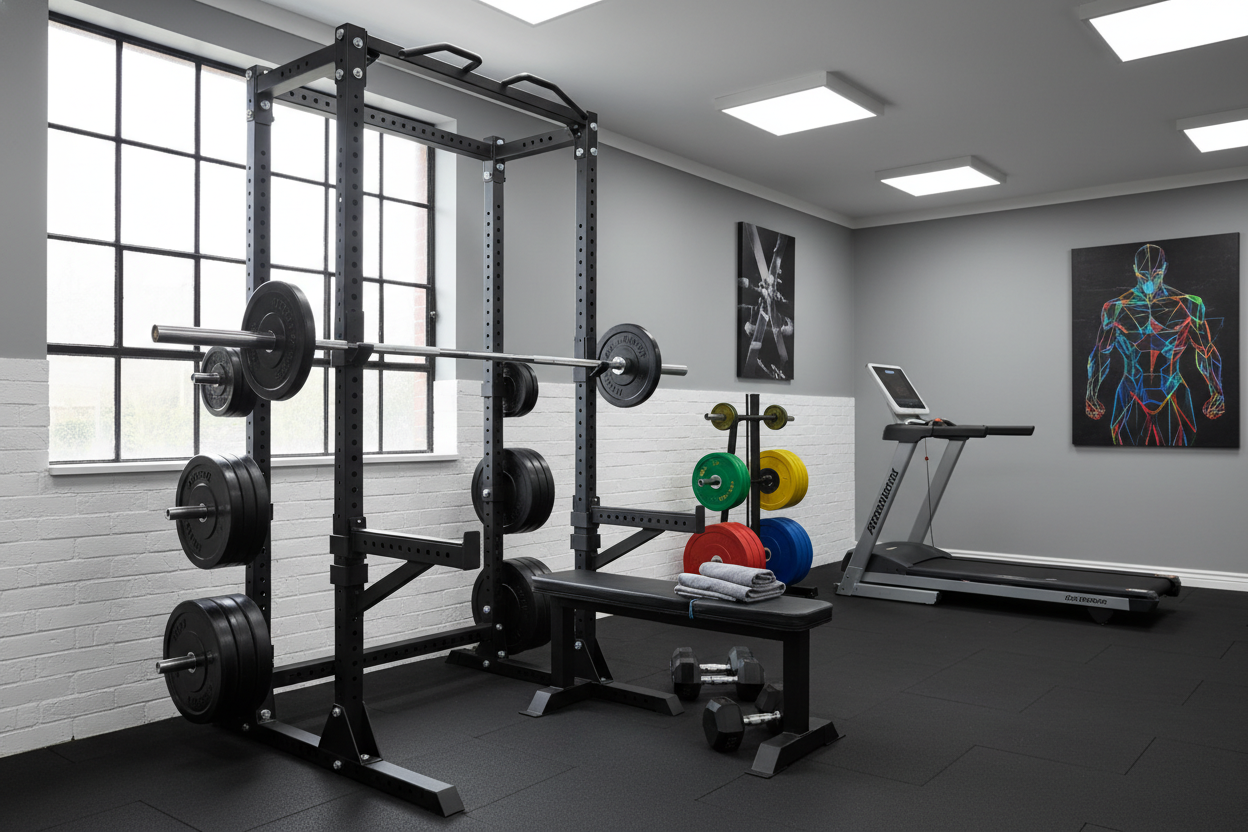
I remember the exact moment I realized my $90 'bargain' bar was a mistake. I was midway through a set of heavy squats when I noticed the bar didn't just have 'whip'—it had a permanent frown. It stayed bent. That is the reality of hunting for budget barbells for home gym setups on sites that also sell kitchen spatulas. If you are serious about outfitting your home gym, the barbell is the one piece of kit where you absolutely cannot afford to be a cheapskate.
- Tensile Strength: Aim for 190,000 PSI to ensure the bar returns to straight after every lift.
- Knurling: Look for a 'volcano' or 'mountain' pattern so the bar stays in your hands without tearing them open.
- Sleeve Design: Bronze bushings are the gold standard for durability and a smooth, consistent spin.
- Finish: Zinc or stainless steel beats decorative chrome, which will eventually flake off into your palms.
The Hidden Cost of Buying a Cheap Beater Bar
Buying a mystery-metal bar off Amazon is a gamble you will lose. These bars are usually made from low-grade carbon steel with a tensile strength that barely hits 130k PSI. Load 300 pounds on that and drop it once? You now own a very expensive, very awkward piece of scrap metal. A bent shaft is not just an eyesore; it is a safety hazard that creates uneven torque on your wrists and elbows during every rep.
Then there is the issue of the sleeves. Cheap barbells for home often use plastic shims or low-grade steel bolts that seize up after a few months of garage dust. When the sleeves stop spinning, the rotational force of the plates is transferred directly into your joints. I have seen more 'budget' bars end up in the trash than I have seen them reach their first birthday. You will end up buying a second, better bar within a year, meaning you actually paid a 'cheap tax' that cost you double in the long run.
Knurling on these bars is usually a joke. It is either so passive it feels like smooth PVC pipe, or it is a sharp, jagged mess that feels like grabbing a cheese grater. When you are sweating through a heavy triple, you need a knurl that bites back just enough to stay secure without requiring a gallon of chalk.
The Only 3 Specs That Actually Matter for Garage Lifters
Marketing departments love to throw around words like 'military-grade' or 'precision-engineered,' but most of that is noise. When I am looking at home gym barbells, I filter out everything except tensile strength, knurling depth, and the internal rotation mechanism. These are the mechanical realities that dictate how the bar feels when it is moving and how it holds up after five years of abuse.
Don't get distracted by fancy colors or 'limited edition' coatings. A Cerakote finish looks cool, but it won't keep a low-quality steel shaft from snapping. Focus on the bones of the bar. You want a shaft diameter that matches your training style—usually 28.5mm for a general-purpose bar—and a sleeve that does not rattle like a spray paint can when you drop it.
Tensile Strength: Why 190k PSI is the Sweet Spot
Tensile strength is the measurement of how much force it takes to pull the bar apart. In the lifting world, it is our best proxy for 'stiffness.' If a bar is under 150k PSI, it is going to be soft. It will bend under load and stay bent. On the flip side, you do not need a 230k PSI powerlifting bar unless you are squatting 800 pounds and need zero whip.
For most of us, 190k PSI is the sweet spot. It provides enough stiffness for heavy benching and squats, but it still has a little life in it for cleans or snatches. It is the 'Goldilocks' zone of durability. You want a bar that can take a beating, hit the floor, and spring right back to perfectly straight every single time.
Bushings vs. Bearings (Save Your Money)
This is where people overspend. Needle bearings are beautiful; they spin forever with a flick of the finger. But unless you are a competitive Olympic weightlifter chasing a spot on the national team, they are overkill. Bearings are expensive and sensitive to dirt. In a garage environment, they are more trouble than they are worth.
High-quality bronze bushings are the smarter play. They provide a smooth, reliable spin that is perfect for 99% of home gym owners. They are incredibly rugged and require almost zero maintenance. Save the $150 price jump and put it toward a better rack or more plates.
Picking the Right Olympic Barbell for Home Gym Spaces
Space is the final frontier in a garage gym. I have seen guys buy a 7-foot bar and realize they can't actually load plates on the left side because it hits the water heater. Before you buy, measure your rack and add at least two feet on each side for plate clearance. A solid 20kg Olympic barbell is the universal standard for a reason. It is built to fit standard power racks and uses 2-inch sleeves for Olympic plates.
Please, for the love of your progress, stop looking at 1-inch 'standard' bars. They belong in the trash or a 1980s basement. They can't handle the weight, the plates are annoying to find, and they feel like toys. Stick to an olympic barbell for home gym use if you want equipment that grows with your strength instead of limiting it. A 28.5mm diameter is the best all-rounder, giving you a solid grip for pressing without being too thick for deadlifts.
Should You Ever Ditch the Free Weights Entirely?
I am a barbell guy through and through, but I am also a realist. If you are dealing with chronic disc issues or you are training in a 6x8 foot shed, a full-sized bar might be a nightmare. Some lifters find they actually get better hypertrophy results and less joint pain when they have swapped barbells for a fit home gym approach using high-end functional trainers or heavy dumbbells.
Barbell training is a skill. It takes time to master the form and even more time to warm up. If your goal is strictly aesthetics and you find that back squats leave you crippled for three days, there is no shame in moving toward machines or cables. However, if you want the most 'bang for your buck' in terms of raw strength and total-body recruitment, nothing beats a heavy piece of steel across your back.
Personal Experience: The Chrome Flake Incident
Early in my lifting career, I bought a cheap chrome-plated bar because it looked shiny and professional. Within six months, the chrome started to micro-crack. I didn't notice until I finished a set of deadlifts and realized my palms were bleeding from tiny, razor-sharp flakes of chrome that had embedded themselves in my skin. It was a miserable lesson in why 'looks' don't matter in a garage. Now, I only buy zinc or stainless steel. They might patina over time, but they won't stab you.
FAQ
How often should I oil my barbell?
If you live in a humid area, once a month. Use 3-in-1 oil and a plastic bristle brush to scrub the knurling, then wipe it dry. It takes five minutes and prevents rust from eating your investment.
Can I use a 15kg bar instead of a 20kg bar?
Sure, but remember that 15kg bars (standard women's bars) are usually thinner (25mm). If you have large hands, they can feel like holding a pencil during heavy presses. Most home lifters should stick with the 20kg standard.
What is the best way to store a bar?
Vertical or horizontal racks are fine, just don't leave it loaded with weights on the rack. Over time, that constant pressure can contribute to a permanent bend, especially on lower-PSI bars.
Share:
I Stripped My Garage Down to Just These Home Workout Necessities
I Survived on These Space-Saving Home Gym Corner Ideas for 2 Years