
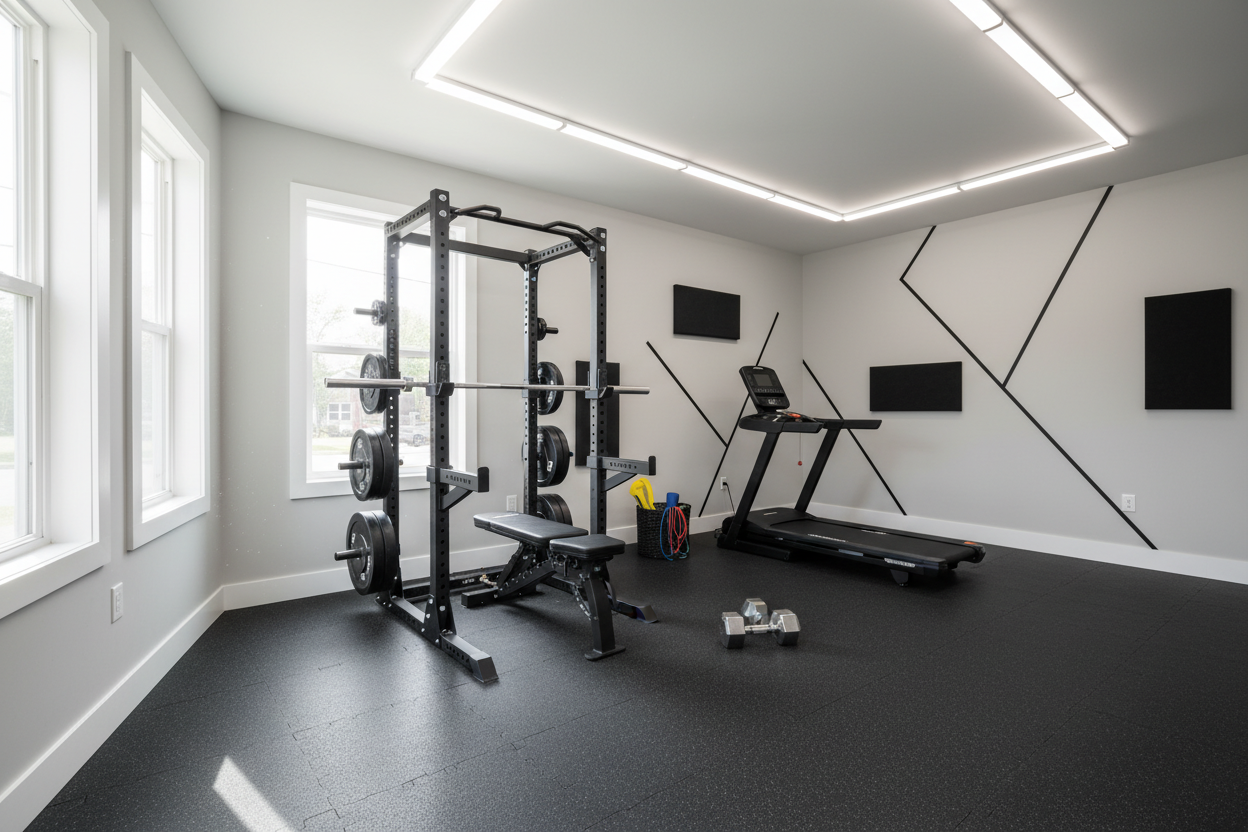
I spent three years buying every 'as seen on TV' gadget and cheap Amazon accessory that promised a six-pack. My garage looked like a fitness graveyard where foam rollers went to die. I finally got fed up, listed the junk on Marketplace, and focused on the true home workout necessities that actually move the needle on a squat or a press.
- Stability is king; if your rack wobbles, your confidence drops.
- A 1,000-lb capacity bench is better than a 300-lb one you're afraid to sit on.
- Cables offer constant tension that free weights can't replicate.
- Stop buying 'innovative' plastic junk; stick to steel and iron.
The Trap of Buying 'Just One More Thing'
We've all been there. You see a $30 door-frame pull-up bar or a set of sliding discs and think, 'This is the missing piece.' It isn't. Most of that stuff ends up holding your laundry. If it doesn't weigh 50 pounds or bolt to the floor, it's probably not going to help you hit a new PR.
The problem is that cheap gear is designed to sell, not to last. It's built with thin-walled tubing and plastic pulleys that skip when you add more than two plates. I learned the hard way that buying five $50 gadgets is a $250 mistake that could have been half of a decent barbell.
Focus on the foundation first. If you can't perform the big three lifts safely, your home gym is just a storage unit for regret. Strip away the fluff and build around things that can survive a decade of abuse.
The Core 4: My Non-Negotiable Home Workout Necessities
When I cleared the floor, I realized I only needed four categories of gear. These workout at home essentials provide 99 percent of the results you're after. You don't need a dedicated machine for every muscle group; you need tools that allow for heavy, progressive loading and safety.
1. A Rack That Doesn't Sway When You Rack
A rack is your insurance policy. I once tried to squat 315 in a cheap, thin-walled rack that swayed when I breathed on it. Never again. Look for 11-gauge steel and 3x3 posts. You want something that doesn't move when you slam the bar back after a grueling set of five.
If you're tight on space or training solo, a smith machine home gym station offers that rock-solid stability without needing a spotter to bail you out when your legs give up. It gives you the fixed path you need for hypertrophy work while keeping the footprint manageable in a standard garage corner.
2. An Adjustable Bench That Actually Locks In
A wobbly bench is a bench press killer. If the back pad shifts half an inch when you're trying to drive your shoulders in, your power leak is massive. I look for a bench with a wide tripod base and minimal gap between the seat and the backrest.
It needs to feel like a tank, not a lawn chair. I prefer benches with a ladder-style adjustment because they're faster to swap between incline and flat than the old-school pull-pins. If it isn't rated for at least 800 pounds, don't put your body on it with a loaded bar over your face.
3. Iron That Can Take a Beating
Steel plates are loud, messy, and beautiful. Bumper plates are better if you're doing cleans or snatches on a concrete floor, but for most people, standard iron is fine. Just make sure your dumbbells have a solid handle—none of that plastic-coated stuff that cracks after three months.
I personally use a mix of cast iron plates and hex dumbbells. Durability is the only metric that matters here. If you drop a 50-lb dumbbell and the head snaps off, you didn't save money; you just bought a paperweight. Buy weights that can handle being sweated on and dropped occasionally.
4. A Cable Setup (Seriously, Hear Me Out)
People think cables are a luxury, but they're mandatory for joint health and isolation. Gravity only pulls down, but cables pull from wherever you want. It's the difference between a jerky movement and smooth, constant tension. It's one of the most underrated workout essentials for home.
High-quality workout machines use cables because they don't lose resistance at the top of the rep like bands do. If you want to hit your rear delts or triceps without the awkwardness of dumbbells, a smooth pulley system is the only way to go. It keeps the tension on the muscle, not the joints.
The Fluff You Need to Toss (or Never Buy)
Toss the vibration plates. Toss the ab-rollers that look like spaceships. If it promises 'fast results with no effort,' it's garbage. Most 'all-in-one' home gyms made of plastic pulleys and thin cables will be in a landfill in two years. They take up massive floor space but offer zero versatility.
I also regret buying those cheap resistance bands with the plastic clips. They snap eventually, and usually at the worst possible time. If it doesn't feel like it could survive being thrown off a truck, it's probably fluff that's just getting in the way of your progress.
Scaling Your Workout Essentials for Home
Start with these four. Only add gear when your progress stalls or you have a specific injury to work around. My biggest mistake was buying for the gym I wanted in five years, rather than the one I needed today. Keep it simple, keep it heavy, and keep the floor clear.
If you want to consolidate even more, moving to a full body workout machine at home can replace half a dozen separate pieces while keeping the heavy-duty feel. It's about maximizing every square foot of your training space without sacrificing the quality of the iron.
FAQ
How much space do I really need?
A 10x10 area is plenty for a rack and bench. If you go with a folding rack, you can even squeeze it into a 6x8 corner and still have room to move.
Can I skip the rack?
Only if you enjoy cleaning every weight from the floor before pressing it. A rack isn't just for squats; it's your safety net for every heavy movement.
Are adjustable dumbbells worth it?
Yes, if they're the heavy-duty metal kind. Avoid the ones that rattle like a box of Legos; you want something that feels like a single solid piece of steel in your hand.
Share:
Is a Budget Cap Dumbbell Weight Set Actually Enough for a Home Gym?
Why I Tell Everyone to Overspend on Barbells for Home Gyms