
I remember the exact moment I realized my relationship with the barbell was toxic. I was halfway through a set of heavy bench presses when a sharp, electric zip shot through my front delt. It wasn't the good kind of burn; it was the 'you're going to need physical therapy' kind of burn. For years, I believed that if it wasn't iron, it wasn't training. I was wrong.
After weeks of icing my shoulders and dreading chest day, I started looking for the best home resistance gym to keep my muscle mass without the orthopedic tax. I needed something that felt as heavy as my old plates but didn't leave me feeling like a creaky floorboard the next morning.
Quick Takeaways
- Aluminum pulleys beat plastic every single time for smoothness and longevity.
- A 2:1 ratio is standard for functional trainers, but a 1:1 ratio is better for heavy rows and lat pulldowns.
- Look for at least 90 inches of cable travel if you plan on doing walking lunges or overhead work.
- Weight stacks are superior to plate-loaded systems for quick transitions during supersets.
The Day I Couldn't Bench Press Without Wincing
Lifting heavy is an ego trap. I spent a decade thinking that building a dedicated home gym meant I had to have a power rack and a pile of rusty 45s. But when you hit your mid-30s, the logic changes. Your muscles can handle the load, but your tendons start filing a formal grievance.
I realized my garage gym was becoming a museum of pain. I was avoiding half my favorite movements because the fixed plane of a barbell felt like it was grinding my joints into dust. I didn't want to stop training hard; I just needed a tool that allowed for a more natural range of motion. That's when I stopped looking at cable machines as 'accessory tools' and started seeing them as the main event.
Why Cables and Constant Tension Actually Build Muscle
The biggest lie in the fitness industry is that you can only build 'real' muscle with free weights. Gravity is a fickle mistress with a barbell. At the bottom of a bicep curl, there's zero tension. At the top, it's almost resting. With a high-quality cable system, the resistance is constant from the second you pull until you let it back down.
This 'time under tension' is the secret sauce for hypertrophy. Because cables don't rely on a vertical path of gravity, you can hit muscles from angles a dumbbell simply can't reach. My chest grew more in six months of cable flyes and high-to-low presses than it did in two years of flat benching, mostly because I could actually feel the muscle working instead of just praying my rotator cuffs wouldn't pop.
How I Started to Compare Home Gyms (And What to Avoid)
When you start to how to pick the best home resistance gym for serious lifting, the market gets muddy fast. You'll see plenty of $300 'total gyms' that look like they were built with leftover PVC pipe. If the machine uses elastic bands or 'power rods,' skip it. The resistance profile is backward—it's easiest at the start and hardest at the end, which is the opposite of how your muscles actually produce force.
I spent weeks doing home gym comparisons only to realize that most reviewers have never actually pulled a heavy stack. They look at the paint job, not the bearings. You want a system that feels like silk. If there's any 'hitch' or friction when you're pulling, it ruins the mind-muscle connection and makes the weight feel lighter than it actually is.
The Dealbreaker: Plastic Pulleys and Bad Bearings
If you see plastic pulleys, run. They're cheap, they warp under heat, and they develop flat spots over time. I once bought a budget functional trainer that used nylon pulleys, and within three months, the cable started 'sawing' into the plastic. It was loud, jerky, and felt like pulling a sled through sand.
High-end machines use machined aluminum pulleys with sealed ball bearings. This isn't just about luxury; it's about physics. Smooth pulleys ensure the resistance stays consistent throughout the entire rep. If you're paying more than a grand for a machine, those pulleys better be metal.
Why Most Home Gym Comparisons Completely Miss the Mark
Most sites tell you to buy based on the footprint. Sure, space matters, but if the cable travel is only 60 inches, you can't even do a proper cable crossover without the weight stack slamming into the top. I've seen 'compact' gyms that are basically useless for anyone over 5'10'.
You also have to look at the stack ratio. A 2:1 ratio means 100 lbs on the stack feels like 50 lbs in your hand. This is great for functional movements because it gives you more cable length and finer increments. But if you're a powerhouse, you might max out a 160-lb stack on day one. I learned the hard way that the best at home gym doesnt exist but this comes close only when you balance the stack weight with the pulley mechanics.
My Blueprint for the Ultimate Resistance Setup
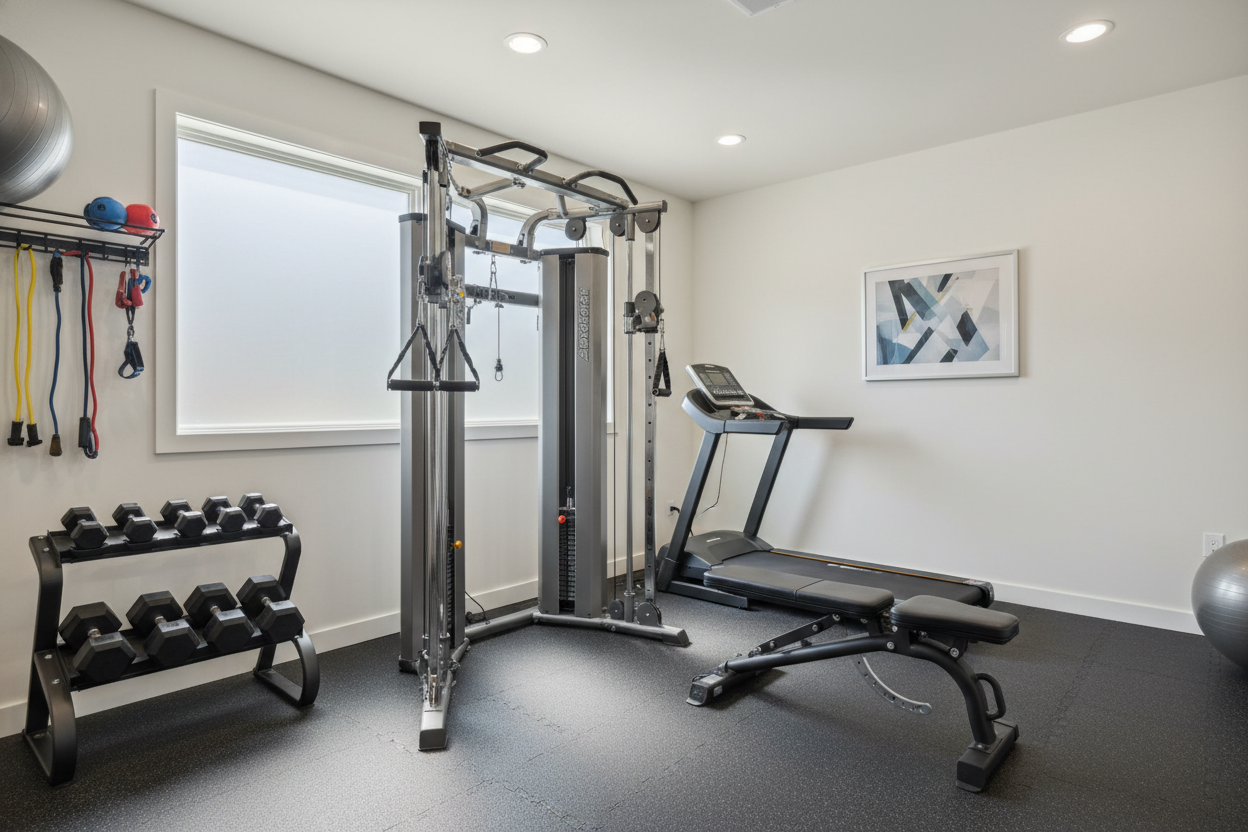
If I were starting over today with a blank garage and a sore set of knees, I'd go for a dual-stack functional trainer first. It's the most versatile piece of equipment you can own. However, if you still crave that heavy, guided feel for squats and presses without the instability of a barbell, adding a Smith machine home gym station is the move. It gives you the safety of a fixed path while letting you push to absolute failure without a spotter.
Don't fall for the 'all-in-one' machines that try to do twenty things poorly. Pick a solid cable base, get a high-quality adjustable bench, and invest in a few pro-grade handles. My favorite is a long-bar attachment for lat pulldowns—the cheap ones rotate poorly and kill your wrists.
FAQ
Do cable gyms take up more space than a power rack?
Usually, yes. A functional trainer typically needs a 5x3 foot footprint, plus room for you to stand in front of it. However, because it replaces a dozen different machines, the 'functional footprint' is actually smaller than a rack plus a bench plus a dumbbell tree.
Are resistance bands a good substitute for a cable machine?
For travel? Yes. For a primary home gym? No. Bands lose tension at the bottom of the movement and can snap. A weight stack provides a consistent, measurable load that is much easier to track for progressive overload.
How much maintenance do these machines need?
Not much, but don't ignore them. Wipe down the guide rods with a silicone-based lubricant every few months. Never use WD-40—it's a degreaser and will actually make the rods stickier over time.
Share:
Is That Used Nautilus Smith Machine For Sale Actually a Good Deal?
Why Your Mini Dumbbells Keep Peeling (And Which Hand Weights to Buy)