
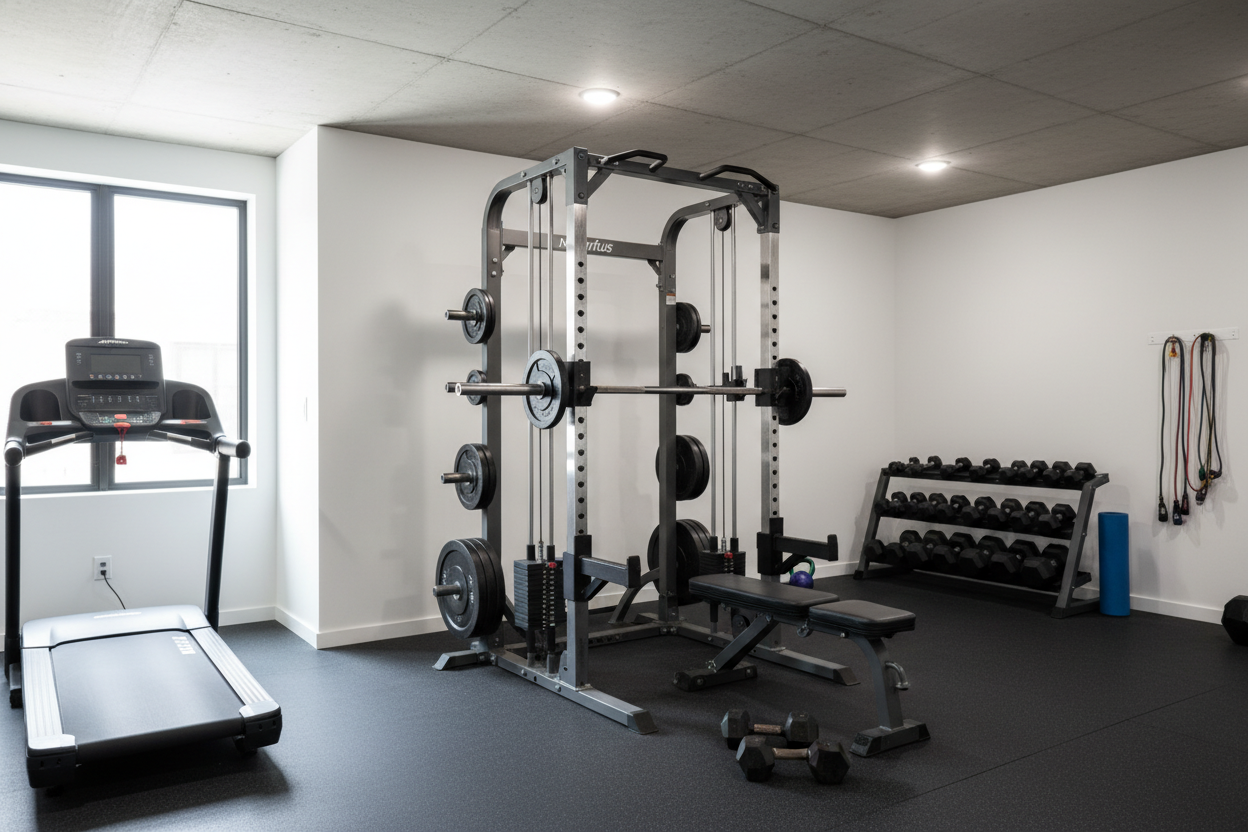
I spent years scouring Craigslist and Facebook Marketplace, hoping to find that one gym owner who just wanted his 'old junk' gone. There is a specific rush when you see a nautilus smith machine for sale for a fraction of its original $3,500 price tag. You start dreaming about those smooth, commercial-grade reps in your own garage.
But before you rent a U-Haul and recruit three buddies to help you move 600 pounds of steel, you need to know if you are buying a lifetime piece of equipment or an oversized clothes hanger. Commercial gear is built differently, but it also dies differently.
Quick Takeaways
- Check the guide rods for pitting or rust; if they are scarred, the bar will never glide smoothly.
- Measure your ceiling height twice—commercial Nautilus rigs are often taller than standard 8-foot garage ceilings.
- Test the counterbalance system; a broken cable inside the frame is a mechanical nightmare to fix.
- Compare the price of the used unit plus replacement parts against a modern, multi-functional home unit.
Why We All Lust After Commercial-Grade Iron
There is something about the thickness of the steel on a Nautilus frame that makes home gym racks look like toothpicks. When you find a used nautilus smith machine for sale, you are looking at a machine designed to handle 100+ users a day for a decade. The stability is unmatched; you can rack 400 pounds and the frame won't even shiver.
I have spent plenty of time hunting for these tanks, often debating if I should hold out for a used Cybex Smith machine or stick with Nautilus. Both brands offer that 'locked-in' feeling that budget racks lack. The allure is simple: you want the equipment you used at the powerhouse gym, but without the $60 monthly membership and the guy hogging the bench while scrolling on his phone.
Red Flags to Look For Before You Hand Over the Cash
Don't let the brand name blind you. A neglected commercial unit can be a total money pit. Most modern Smith machines use high-end linear bearings that are sealed and self-lubricating, but older Nautilus models might have been sitting in a humid storage unit or a damp basement. Look for 'chatter' marks on the guide rods—these are small horizontal grooves where the bearings have eaten into the metal.
If those rods are damaged, your workout will feel like you're sliding a bar through gravel. No amount of WD-40 or silicone spray will fix a gouged rod. You also want to check the safety catches. On a Nautilus, these are usually heavy-duty, but if they are bent or the spring pins are sticking, it becomes a genuine safety hazard when you're training solo.
The 'Empty Bar' Glide Test
Never test a Smith machine with plates on it first. You need to feel the raw friction. Lift the bar to the top and let it slide down slowly. It should be silent and consistent. If you feel micro-frictions or hear a rhythmic 'click-click-click,' the linear bearings are likely shot. Replacing those bearings isn't just expensive; it’s a greasy, four-hour job that requires snap-ring pliers and a lot of patience.
Checking the Counterbalance Cables
Nautilus machines often feature a counterbalance system that makes the bar feel like it weighs nearly nothing. This is handled by a set of cables and weights hidden inside the vertical columns. Peek inside with a flashlight. If you see frayed steel strands or a 'bird-nested' cable, you’re looking at a major repair. I once bought a rig with a snapped counterbalance cable thinking it wouldn't matter, only to realize the bar now weighed a clunky, unbalanced 65 pounds.
Will This Beast Actually Fit in Your Garage?
This is where most people mess up. Commercial Nautilus machines are tall—often hitting 90 to 94 inches. If you have a standard 8-foot ceiling (96 inches), you might have exactly two inches of clearance. That makes it nearly impossible to bolt it down or perform maintenance on the top pulleys. I’ve seen guys have to cut holes in their drywall just to fit the top of the frame.
When I was researching the best Smith machine for a garage gym, I realized that footprint is just as important as height. A commercial Nautilus rig is deep. It’s going to eat up a 7x7 foot chunk of your floor space once you account for plate loading. If you’re working in a tight single-car garage, this might turn your gym into a cramped hallway.
When to Walk Away and Just Buy New
If the seller wants $1,200 for a rusted unit with crunchy bearings, walk away. By the time you buy new guide rods, bearings, and cables, you could have bought a brand new all-in-one Smith machine with cable crossover. New home-tier equipment has caught up significantly in quality, and you get the added benefit of a warranty and a pulley system that hasn't been sweated on by a thousand strangers.
I personally love the 'project' of restoring old iron, but my back doesn't. If the machine needs more than a deep cleaning and some fresh grease, the 'deal' usually disappears. Buy the Nautilus if it’s pristine and the price is a steal; buy new if you actually want to spend your time lifting instead of scouring the internet for discontinued parts.
FAQ
How much does a Nautilus Smith machine weigh?
Expect a commercial unit to weigh between 500 and 700 pounds. You will need a trailer and at least two strong friends to move it safely. Do not try to put this in the back of a small crossover SUV.
Can I use standard 1-inch plates on a Nautilus Smith machine?
No. Commercial Smith machines are strictly designed for 2-inch Olympic plates. The sleeves are usually heavy-duty steel or hard chrome and won't accommodate 1-inch 'standard' plates.
Is it worth refinishing a rusty frame?
If the rust is just surface-level on the frame, a quick sand and some spray paint can make it look new. However, if there is deep pitting on the moving parts or the safety catches, it's usually not worth the effort or the risk.
Share:
I Tested a Seated Squat Machine to See if It Saves Bad Knees
Why My Sore Joints Sent Me Hunting for the Best Home Resistance Gym