
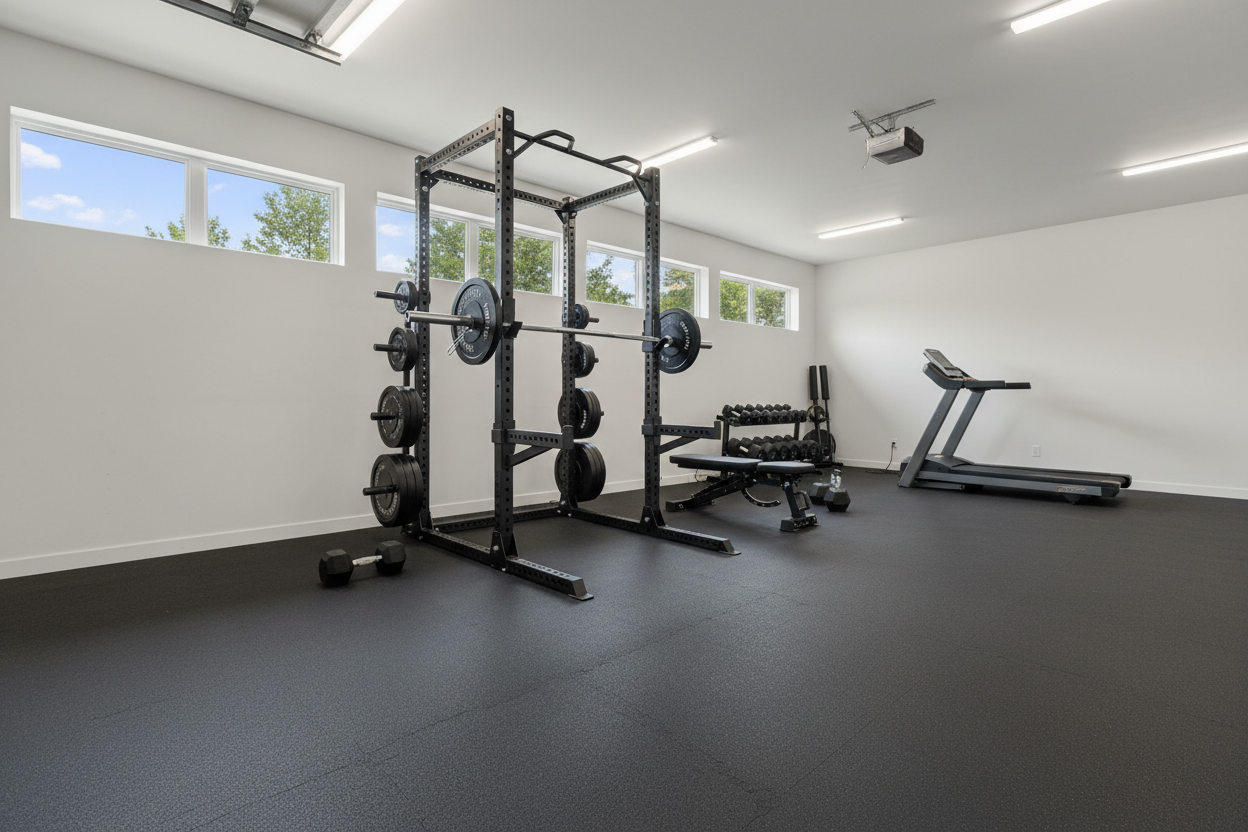
I’ve spent the last decade in my garage hitting my knuckles on low-hanging joists and doing seated overhead presses because my rack was too short. If you’re over 6’2”, the fitness industry basically ignores you. Most equipment is designed for the average 5’9” guy, which means your range of motion is getting clipped on every single rep. Searching for the best home gym for tall person isn't just about comfort; it's about not destroying your joints on gear that's too small for your frame.
Quick Takeaways
- Height is king: Look for a rack that is at least 90 inches tall to allow for standing overhead presses and full-extension pull-ups.
- Depth matters: Avoid 24-inch racks; you need at least 30-36 inches of internal depth to safely walk out a squat with long legs.
- Cable travel: Ensure your lat pulldown has enough vertical travel so you aren't bottoming out the weight stack before your lats are fully stretched.
- Bench length: A standard 42-inch bench will leave your head hanging off the end; aim for 47 inches or more.
The 'Tall Lifter Tax' (And Why Most Gear Fails Us)
Being a 6'4" lifter in a world of 80-inch power racks is a recipe for frustration. I remember the first time I tried to do a pull-up on a standard 'shorty' rack. My knees were practically touching the floor, and I had to cross my ankles like I was doing a CrossFit accessory move just to get a rep in. Why Finding The Best Home Gym For Tall Person Is A Total Nightmare often comes down to the fact that manufacturers prioritize shipping costs over actual human dimensions. Shorter uprights fit in smaller boxes, which saves them money but costs you your gains.
It’s not just about the pull-up bar, either. When you have long limbs, your 'bottom' position on a squat or bench press is much lower than a shorter lifter's. If your rack's safety pins don't have fine-tuned spacing, you’re either stopping three inches high or risking a pinned neck. Standard gear fails us because it assumes everyone has a 30-inch inseam and a 70-inch wingspan. If you're built like a human being and not a lawn gnome, you have to be picky about your specs.
Power Rack Height: Getting the Non-Negotiables Right
The first thing you need to measure is your ceiling height, and the second thing you need to do is buy the tallest rack that will fit. If you want a legitimate home gym for tall person, anything under 90 inches is a compromise. A 90-inch or 93-inch rack allows most guys up to 6'6" to perform a standing overhead press inside the rack (depending on plate diameter). There is nothing more soul-crushing than having to clean a bar and walk it outside your rack just because the top crossmember is in your way.
When you're building out a Home Gym, the uprights are the foundation. Look for 3x3-inch 11-gauge steel uprights. Why? Because taller racks have more leverage acting against them. A 93-inch rack made of thin 2x2 tubing will wobble like a wet noodle when you re-rack a heavy set of squats. You want mass and height. Also, check the pull-up bar height. Some 'tall' racks still mount the pull-up bar low. You want a multi-grip or straight bar that sits as close to the top of the uprights as possible so you can actually hang with straight legs.
Depth Matters Just As Much As Height
Tall lifters usually have long femurs. If you’re squatting in a 24-inch deep rack, you’re basically living in a coffin. By the time you take your two-step walkout, your heels are practically touching the back crossmember. I’ve seen guys catch their plates on the rear uprights during a heavy triple because they didn't have enough room to breathe. You need 30 inches of depth at a minimum, though 36 inches is the sweet spot. This gives you enough runway to find your stance without feeling like you're going to trip over the rack base.
Cable Travel: Securing a Full Stretch on Pulldowns
Cable machines are the biggest offenders for tall guys. I can’t tell you how many functional trainers I’ve tested where the weight stack hits the top before my arms are even fully extended. If you have a long reach, you need a high pulley that is actually high. How To Pick The Best Home Resistance Gym For Serious Lifting requires checking the 'cable travel' or the distance between the seat and the pulley. If that distance is less than 40 inches, you're going to be doing partial reps.
Look for machines with a 1:1 or 2:1 ratio, but more importantly, look for a long guide rod. A 90-inch tall functional trainer is almost always better than a compact 72-inch unit. If you're stuck with a shorter machine, you'll end up having to sit on the floor to get a full stretch on your lats, which defeats the purpose of having a dedicated seat and thigh pads.
Is a Fixed Machine Actually Better for Long Limbs?
There’s an argument to be made for guided paths when you have long levers. Controlling a heavy barbell with long arms creates a massive amount of torque on your joints. Sometimes, a Smith Machine Home Gym Station can be a lifesaver for tall lifters, provided the rail height is sufficient. It allows you to focus on the quad drive or chest contraction without your stabilizer muscles screaming because of the sheer distance the bar has to travel.
However, the caveat is the starting height. Some Smith machines have a bottom stop that is too high for deep squats if you have long legs, or a top hook that is too low for a tall guy to unrack safely. Always look for a machine that has at least 15-20 lockout points. This ensures you can find a 'start' position that doesn't require you to half-squat the weight just to get it off the hooks.
Benches and Barbells: Don't Skimp on the Touchpoints
If you're 6'4", a standard bench is a joke. Most cheap benches are 42 inches long. If I lay down on one of those, my tailbone is on the edge and my head is hanging off the back like a broken hinge. You need a 'competition' spec bench, which usually runs 47 to 50 inches in length. This supports your entire spine and, more importantly, your head. Also, look for a bench height of 17 inches. Anything taller and your feet won't reach the floor for a proper leg drive; anything shorter and your long legs will feel like they're up in your chest.
For the barbell, pay attention to the knurling. If you have wide shoulders, you likely squat with a wide grip. A bar with 'center knurling' is a must for us. It grips the center of your back and prevents the bar from sliding down your long torso during heavy sets. Smooth center bars are for Olympic lifting; for a tall guy's home gym, you want that extra bite on your traps.
Personal Experience: The Bloody Knuckle Lesson
I once bought a 72-inch 'basement' rack because I thought I could save a few bucks and just do my presses seated. Big mistake. Not only did I hate seated presses, but I also forgot about pull-ups. On my very first set, I jumped up, grabbed the bar, and smashed my knuckles into the concrete ceiling joist. I ended up selling that rack on Craigslist two weeks later for a $200 loss. Now, I have a 93-inch 3x3 rack bolted to the floor. It takes up more space, but I can actually train like an athlete instead of a contortionist.
FAQ
What is the minimum rack height for a tall person?
If you want to do standing overhead presses, you need at least 90 inches. If you only care about squats and bench, you can get away with 84 inches, but pull-ups will still be a struggle.
Do I need a special barbell if I'm tall?
A standard 20kg Olympic bar is fine, but look for one with center knurling. It helps keep the bar stable on your back, which is harder to manage with a longer torso.
Why does bench height matter for tall lifters?
If a bench is too high (19+ inches), you can't get your feet flat for leg drive. If it's too short, your knees will be higher than your hips, which kills your power and puts stress on your lower back.
Share:
I Sold My Racks and Kept Just a Barbell and Weight Set
Does a Brand Name in Home Gyms Guarantee Better Welds?