
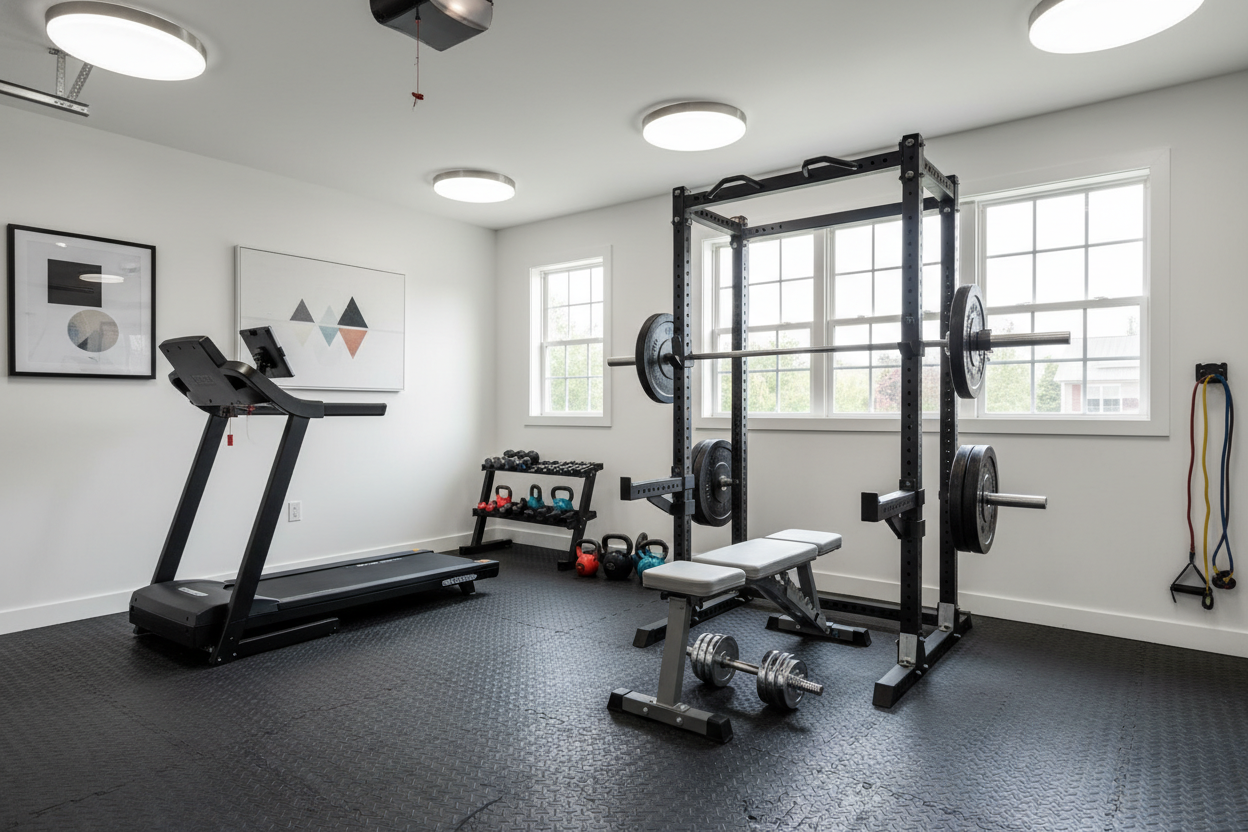
I remember standing in the middle of a big-box sporting goods store, staring at a $40 barbell. It looked like steel, it felt heavy enough, and I figured a bar is a bar. That standard straight bar ended up being the most expensive 'deal' I ever found. Within three months, I was scouring Craigslist to sell it for pennies on the dollar.
We have all been there—trying to build a home gym without draining the savings account. But there is a massive difference between being frugal and buying equipment that actually hinders your progress. Here is the reality of the standard bar versus the Olympic standard.
Quick Takeaways
- Standard bars use 1-inch diameter sleeves and won't fit 2-inch Olympic plates.
- The lack of rotating sleeves creates massive torque on your wrists and elbows.
- Most standard bars have a dangerously low weight capacity, often under 250 lbs.
- Buying standard equipment usually means buying everything twice when you eventually upgrade.
The 1-Inch Trap: What Are You Actually Buying?
When you see a standard straight barbell at a retail store, the first thing you notice is the price. It is usually half the cost of an Olympic bar. The reason is simple: it uses less steel. These bars have a uniform 1-inch diameter from end to end. They do not have the thick 2-inch 'sleeves' that you see in commercial gyms.
Retailers push these because they are lightweight and cheap to ship. But here is the catch: because the bar is thinner, it is significantly weaker. A standard bar will start to whip and bend permanently under loads that a proper bar wouldn't even notice. If you plan on ever lifting more than two plates, the standard bar is a ticking time bomb for your floor and your shins.
Why I Outgrew My First Standard Straight Barbell in 3 Months
My first 'real' gym milestone was hitting a two-plate squat. The problem? My standard bar was already bowing like a pool noodle at 185 lbs. It felt unstable and honestly, a bit scary. But the real killer wasn't the flex; it was the lack of rotation. On an Olympic bar, the sleeves spin freely. On a standard bar, the weights are locked in place.
When you curl or press, the plates want to rotate. If the bar doesn't let them spin, that rotational force goes straight into your wrists. I started developing a nagging pain in my forearms that didn't go away until I switched bars. You have to treat a fixed machine bar differently than a free-weight bar because of those mechanics, and a standard bar acts more like a fixed machine than a dynamic lifting tool.
The Plate Ecosystem Problem Nobody Warns You About
This is where the 'budget' bar really gets expensive. If you buy a standard bar, you have to buy standard plates. Those plates have a 1-inch hole. The second you decide to get serious and move into a real Olympic barbell ecosystem, every single plate you own becomes a paperweight. They will not fit on a 2-inch Olympic sleeve.
I spent $200 on a set of 1-inch plates only to realize I couldn't use them with a power rack or a decent bench later. You end up buying your entire weight set twice. It is a classic 'poor man pays twice' scenario. If you start with 2-inch plates, they will stay with you for the next thirty years of training.
Are There Any Good Reasons to Keep a 1-Inch Bar?
I am not saying you should throw a standard bar in the trash if you already have one. They have a niche. If you are just starting out with an entry-level weight bench with a rack, a standard bar can get you through the first few months of habit-forming. It is better than doing nothing.
They are also decent for high-rep accessory work. I still use an old standard bar for light curls or skull crushers where the weight rarely exceeds 60 or 70 lbs. It is also a fine choice for youth athletes who are learning form with 5-lb plastic plates before they are ready for the 45-lb bar.
Making the Upgrade Without Blowing Your Budget
If you haven't bought your equipment yet, skip the 1-inch aisle entirely. You can find a solid, entry-level 2-inch bar that will handle 500+ lbs without breaking the bank. Investing in a versatile 20kg Olympic barbell is the smartest move you can make for a home gym. It has the proper knurling to keep your grip secure and, most importantly, the sleeves spin.
That spin saves your joints and allows for a much smoother lift. You don't need a $600 competition bar, but you do need something that won't bend the first time you load it up for a heavy set of deadlifts. Buy once, cry once.
FAQ
Can I use standard plates on an Olympic bar?
No. The 1-inch hole is too small to fit over the 2-inch sleeves of an Olympic bar. You would need an adapter, but those are usually more trouble than they are worth.
Is a standard bar safe for bench pressing?
Only for light weights. Most standard bars have a weight capacity between 110 and 250 lbs. If you are approaching those limits, the bar can bend or the collars can slip, which is a recipe for a disaster over your chest.
Why do my wrists hurt when using a standard bar?
It is likely because the weights cannot spin. As the bar moves through an arc during a curl or press, the inertia of the plates creates torque. Without rotating sleeves, your wrists have to absorb that force.
Share:
Why One Good Fitness Machine for Home Beats a Room Full of Junk
Why I Tell Beginners to Buy a Real Gym Weights Barbell