
I remember staring at a late-night infomercial for a core-blasting rocker that looked like a glorified lawn chair. I bought it, and three weeks later, it was a very expensive place to hang my damp towels. If you are scrolling through Amazon at midnight comparing specs, you have seen the fluff. The market is flooded with plastic junk that promises results while you sit on your butt. But the truth I have learned after loading and dropping thousands of pounds of iron is that the best exercise devices don't do the work for you—they make the work harder, safer, and more efficient.
Quick Takeaways
- Prioritize heavy-duty steel over fancy electronics.
- Single-use gadgets are space killers; look for multi-functional frames.
- Mechanical reliability beats a 20-inch touchscreen every time.
- If it doesn't offer a way to increase resistance, it's a toy, not a tool.
The Difference Between a Gadget and a Tool
We have all been tempted by the gadget. You know the ones: the vibration plates that claim to melt fat while you stand still, or the electrical stimulators that promise six-pack abs while you eat pizza on the couch. These are gadgets. They are designed to sell a shortcut that doesn't exist. A real best exercise device is a tool. A tool doesn't promise ease; it provides a platform for effort. When I look at a piece of gear, I'm looking for how it facilitates progressive overload. Can I add weight to it next week? Is it going to snap if I put 300 pounds on it?
The psychology of the gadget is built on the 'shiny object' syndrome. We buy the gadget because we want to believe the technology has finally bypassed the need for sweat. It hasn't. A true best workout device is often the simplest one in the room. Think of a steel pull-up bar versus a motorized assisted-crunch machine. The bar requires you to move your entire body weight against gravity. The machine limits your range of motion and does half the work. One builds a back like a barn door; the other just takes up floor space. Stop buying things that plug into a wall to 'stimulate' your muscles and start buying things that require you to move.
Can One Station Actually Train Your Whole Body?
The biggest mistake I see new home gym owners make is trying to recreate a commercial gym footprint in a 10x10 spare bedroom. You don't need fifteen different isolation machines. You don't need a dedicated leg extension station, a chest fly machine, and a separate preacher curl bench. When space is a premium, the best workout device is the one that allows for compound movements. I am talking about squats, presses, and rows. These movements recruit the most muscle fibers and trigger the greatest hormonal response for growth.
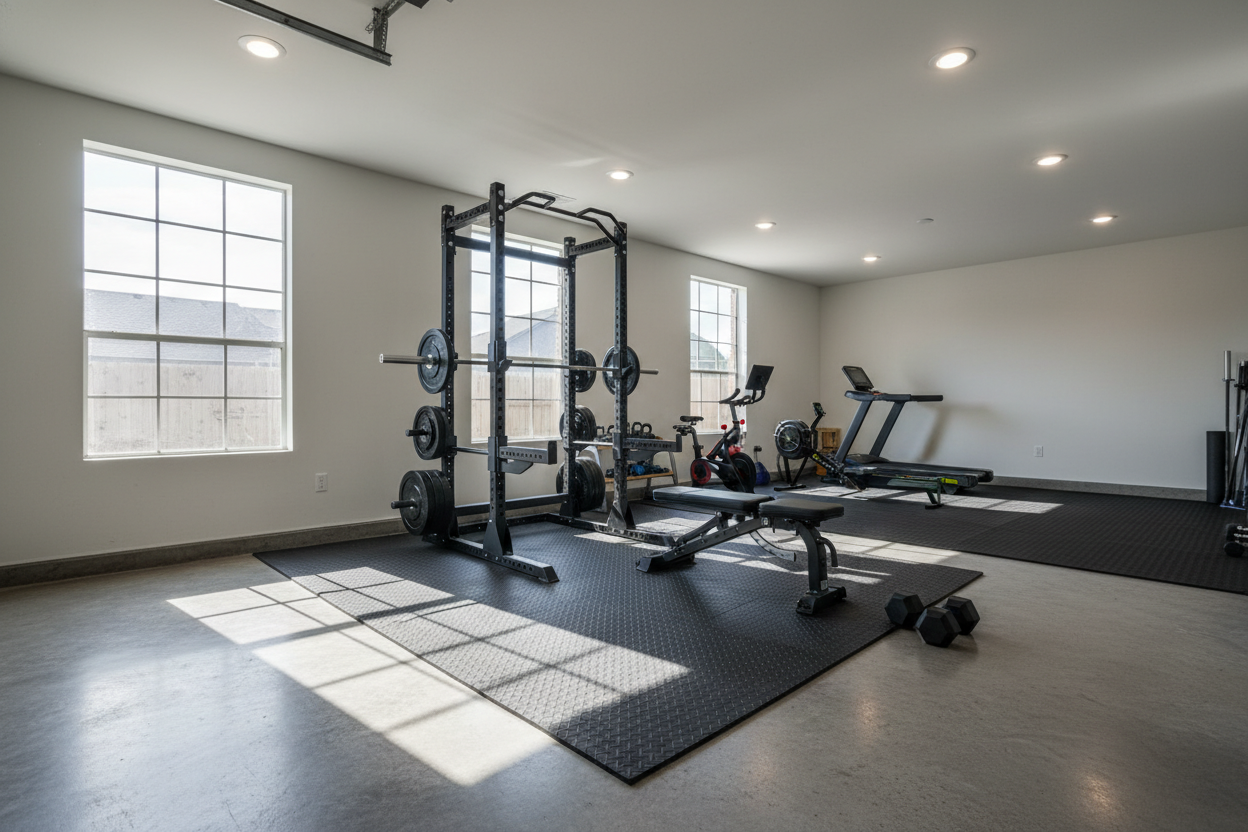
A well-built rack or a functional trainer can handle 90% of your needs. I’ve tested setups that felt like they were made of soda cans, wobbling the moment you racked a bar. You want something with at least 14-gauge steel—ideally 11-gauge if you're planning on moving real weight. Look for a frame that has a footprint of roughly 4x4 feet but offers attachments for dips, pull-ups, and landmine rows. This concentration of utility is what separates a professional-grade home gym from a graveyard of discarded plastic. If you can't do at least five different major lifts on a machine, it probably shouldn't be in your house.
The Misunderstood Smith Machine
I know, the 'hardcore' lifters on Instagram love to hate on the Smith machine. They call it 'training wheels.' But after a decade of lifting, I’ve realized that the best full body exercise machine for a solo lifter is often a high-quality Smith rack. Why? Because it provides a level of safety that a free-weight barbell can't match when you're training alone in a basement at 6 AM. Modern Smith machines have come a long way from the clunky, friction-heavy versions of the 90s. The best ones use linear bearings that feel buttery smooth.
When you are pushing to failure on a chest press or a split squat, having those safety catches just a flick of the wrist away is a massive confidence booster. It allows you to actually reach the intensity required for muscle growth without the fear of getting pinned under a bar. I use mine for heavy shrugs, calf raises, and even inverted rows. It isn't about replacing the barbell; it is about having a tool that allows for high-intensity volume without needing a spotter. If the rack is built with heavy-duty steel and rated for 500+ lbs, it is a serious piece of kit, not a shortcut.
Why Good Cardio Gear Shouldn't Need a Subscription
Cardio equipment has gone through a weird phase lately. Everything has a massive iPad glued to it and requires a $40 monthly subscription just to see your stats. I hate it. I want a best exercise device that works even if my Wi-Fi is down or the company goes bankrupt. When you are looking for a reliable exercise bike, focus on the drive system and the flywheel weight, not the screen size. A heavy flywheel—something in the 30-lb range—provides a much smoother, road-like feel than a light, cheap one that jerks every time you pedal.
For those of us living in apartments or tight spaces, a foldable upright exercise bike is a massive win. You want something with magnetic resistance because it is virtually silent. I’ve tested friction-based bikes that sound like a saw mill once you get up to speed. Magnetic systems use a series of magnets to create drag, meaning no pads are wearing out and no screeching noises are waking up the kids. Look for at least 8 to 16 levels of resistance. If the bike only has 'high' and 'low,' you'll outgrow it in a month. You need those incremental steps to keep your heart rate in the right zone as you get fitter.
The 'Does It Require Power?' Test
Before you drop five hundred or a thousand bucks on a new piece of gear, run it through my three-step checklist. First: Does it require a power outlet to provide resistance? If the answer is yes, be wary. True resistance should come from gravity (plates), friction, or magnets. Second: What is the primary material? If you see more plastic than steel, keep walking. Third: Does it have a weight capacity that is at least 100 lbs higher than your current weight? Durability isn't just about the machine not breaking; it's about the machine feeling stable while you use it.
A piece of equipment that shakes when you’re mid-set is a piece of equipment you’ll eventually stop using because you don't trust it. The best devices are the ones that feel like they could survive a nuclear blast. They are the ones that don't have 'as-seen-on-TV' stickers. They are the ones that look a little intimidating. If it looks like a piece of furniture, it probably won't get you the results you want. Stick to the steel.
My Personal Experience with 'Cheap' Steel
I once bought a budget power rack from a big-box store because it was $200 cheaper than the one I actually wanted. It looked fine in the photos. But when I got it home and tried to do dips on the included handles, the whole frame tilted forward. The steel was 16-gauge—basically thick tin—and the bolts were low-grade zinc that stripped the moment I tightened them. I spent more time worrying if the rack would collapse than I did focusing on my squats. I ended up selling it for pennies on the dollar and buying a 3x3-inch 11-gauge steel rack. The difference in my training was immediate. I could actually push myself because I wasn't afraid of the equipment. Don't make my mistake; buy once, cry once.
FAQ
Do I need a gym membership if I have the best exercise devices at home?
Not necessarily. If you have a solid rack, a bench, and a way to do cardio, you can do 95% of what a commercial gym offers. The only thing you miss out on is the social atmosphere and some niche isolation machines.
Are 'smart' fitness devices worth the extra money?
Usually, no. You're paying for software that will eventually become obsolete. Mechanical resistance—steel and iron—doesn't have a software update that will brick your machine in five years.
How much should I spend on a workout device?
For a primary piece of equipment like a rack or a high-end bike, expect to spend between $400 and $800. Anything significantly cheaper usually compromises on the gauge of the steel or the quality of the bearings.
Share:
Those Diagrams Are Lying: How to Use Gym Equipment at Planet Fitness
Why Your Adjustable Gym Bench for Home Feels So Unstable