
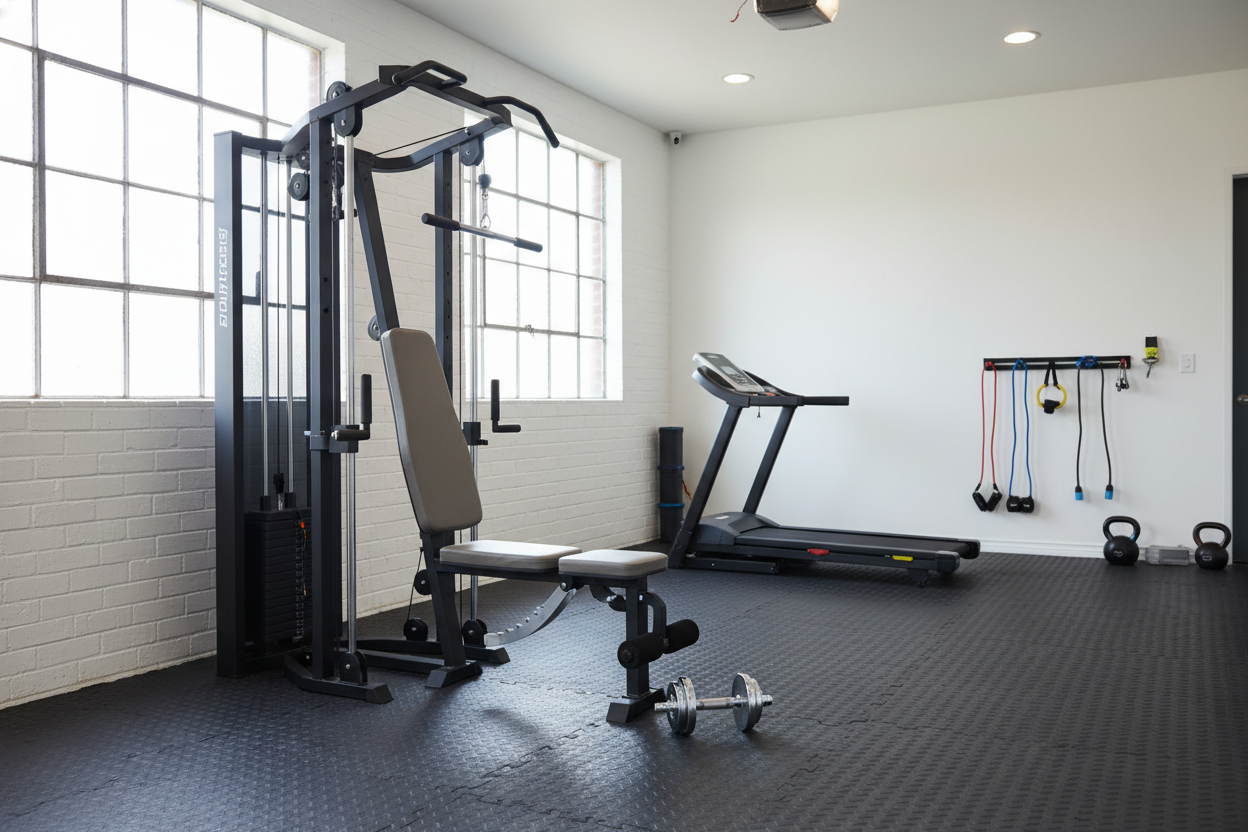
I have spent way too many nights scrolling through fitness forums, looking for the holy grail of equipment: something that fits in a spare bedroom but doesn't shake like a leaf when I load more than two plates. Most of us have been there. You buy a compact in home gym hoping to reclaim your commute time, only to realize the 'commercial grade' label was a total lie. If the box weighs less than you do, it is not going to survive a heavy session.
Quick Takeaways
- If the steel is 14-gauge or thinner, it belongs in a laundry room, not a gym.
- 'Multi-function' usually means the machine does 50 things poorly instead of 5 things well.
- Aluminum pulleys are non-negotiable if you want a smooth pull that doesn't hitch.
- Measure your 'working footprint,' not just the machine's static dimensions.
The 'Space-Saving' Trap Brands Want You to Fall Into
Companies love the word 'compact' because it is often a marketing euphemism for 'we used less metal to save on shipping costs.' When you see a compact gym machine advertised for $300, you are buying thin-walled tubing and plastic bushings. These materials create friction and frame flex that kill your mind-muscle connection.
The real danger is structural integrity. Lightweight frames are prone to tipping or, worse, the welds can snap under heavy weight. I have seen cable columns literally bow inward because the manufacturer used 2-inch uprights instead of the 3-inch industry standard. If you are moving serious weight, your gear needs to be anchored by mass, not just good intentions.
The Multi-Function Myth: Doing 50 Exercises Poorly
We have all seen the infomercials claiming 50+ exercises from one seat. Here is the reality: the pivot points on those machines are usually optimized for a 5-foot-8 person with average limb lengths. If you are taller, shorter, or have long femurs, the biomechanics are trash. You end up doing a chest press that feels more like a shoulder impingement drill.
Instead of chasing exercise quantity, look for serious home gym equipment that prioritizes the big movements. A machine that does a perfect lat pulldown and a smooth chest press is worth ten times more than a gadget that claims to offer a 'total body experience' via a series of awkward cable swaps and flimsy attachments.
What Actually Makes a Small Footprint Sturdy?
If you want a compact gym machine that doesn't wobble, you have to look at the spec sheet, not the glossy photos. You want 11-gauge steel. For context, 11-gauge is about 3mm thick, while the cheap stuff is 14-gauge (about 2mm). That 1mm difference sounds small, but it is the difference between a rock-solid unit and a vibrating mess.
Weight stacks are another giveaway. A machine with a 150-lb stack might be fine for high-rep accessory work, but you will outgrow it in six months. A Smith machine home gym station is often the smartest play for tight quarters. It provides a guided path for safety—crucial when training alone—and usually integrates a pull-up bar and cable system into a single vertical footprint.
Solving the Leg Day Problem in a Cramped Room
Leg day is where compact home gym machines usually fail. Most cable-based home gyms offer a 'leg developer' extension that feels like kicking a wet noodle. To actually grow your legs in a small space, you need a machine that can handle the sheer force of a heavy press without taking up the entire garage floor.
I used to think goblet squats were enough for a home setup, but eventually, your grip fails before your quads do. The most efficient use of floor space for lower body gains is a compact 30 degree leg press hack squat combo machine. By angling the sled at 30 degrees, manufacturers can shorten the rail length, giving you a heavy-duty leg day in a footprint that actually fits in a corner.
Your 3-Point Checklist Before Buying Space-Saving Gear
- Check the Ship Weight: If the total weight of the machine is less than 200 lbs, it will move when you use it. Heavier is always better for stability.
- Pulley Specs: Look for sealed bearings and aluminum pulleys. Plastic pulleys wear down, creating 'flat spots' that make the weight feel jerky.
- The 4-Foot Rule: Add at least two feet to every side of the machine's listed dimensions. That is your actual working space. If you don't have it, you'll be hitting your elbows on the wall.
My Worst Gear Mistake
I once bought a folding 'all-in-one' rack because I wanted to keep my car in the garage. I spent more time wrestling with the locking pins and leveling the feet than I did actually lifting. It was so light that every time I racked a squat, the whole thing shifted an inch. After three weeks, I sold it at a loss and bought a real, non-folding half-rack. Learn from me: don't sacrifice stability for the sake of a few extra feet of floor space.
FAQ
Is 14-gauge steel okay for a home gym?
Only if you are doing light toning or rehab work. For anyone planning to lift heavy or use the equipment daily, 11-gauge or 12-gauge is the minimum for safety and durability.
Are cable machines better than free weights for small spaces?
Cables are more versatile per square foot, but they require more maintenance. A high-quality cable column can replace a whole rack of dumbbells, making it a great choice for apartments.
How do I stop my gym machine from sliding on the floor?
Get high-density rubber stall mats. Do not use the cheap foam puzzle mats; they compress under weight and make the machine even more unstable.
Share:
I Finally Built a Weight and Dumbbell Set That Doesn't Suck
Is Buying Life Fitness Dumbbells for a Home Gym Massive Overkill?