
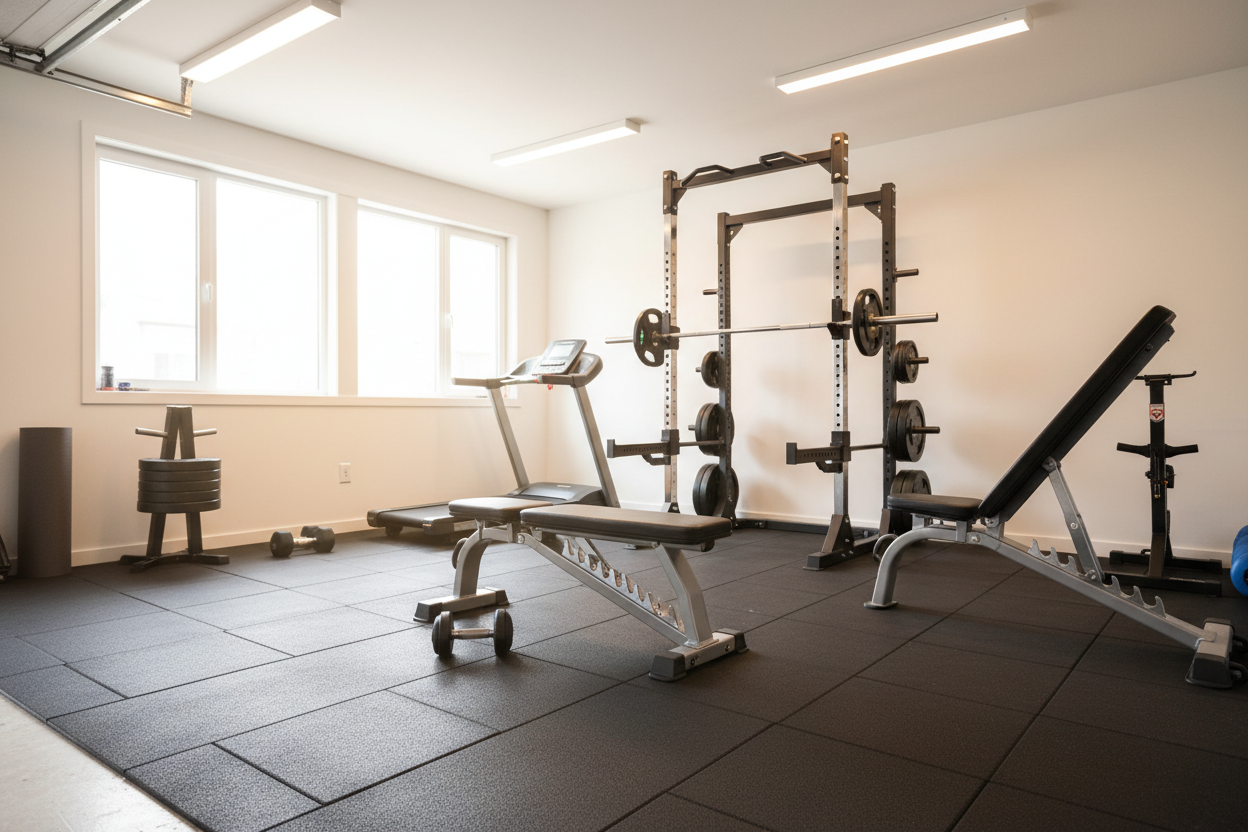
I remember the first time I tried to max out my seated overhead press in my garage. I had just hauled a cheap, no-name upright exercise bench out of the box, bolted it together, and felt like a king. Then I sat down, kicked a pair of 80s into position, and realized my mistake. The back pad was a strict, unforgiving 90 degrees, and my shoulders felt like they were being put through a meat grinder.
Most people think 'upright' means a perfect right angle. In reality, that is the fastest way to impingement city. If you are tired of your equipment working against your anatomy, you need to know what to actually look for in a upright workout bench before you drop your hard-earned cash.
- The 85-Degree Rule: True vertical is for statues, not lifters. Look for a bench that tops out at 85-88 degrees to save your shoulders.
- Footprint Matters: A narrow rear base is a tipping hazard when you are kicking up heavy dumbbells.
- Pad Gap: If you can fit a fist between the seat and the back pad, your lumbar spine is going to hate you.
- Weight Capacity: Don't trust a bench that doesn't list a static and dynamic load rating.
The 90-Degree Myth: Why True Vertical Is Actually Terrible
Walk into any big-box gym and you will see people struggling with overhead presses on benches set at a hard 90 degrees. Here is the problem: your shoulder blades need room to rotate. When you are pinned against a perfectly vertical board, your humerus has nowhere to go, often leading to that nasty pinching sensation in the front of the joint.
A high-quality upright exercise bench should actually sit at about 85 degrees. That slight recline allows your ribcage to stay tucked and your shoulders to move through a natural arc. It feels vertical, but it provides just enough clearance for your scaps to do their job. If your current bench only does 90, you are better off dropping it one notch to a slight incline than forcing the vertical issue.
The Seat Pad Gap: The Silent Lower Back Killer
Most adjustable benches are designed for the flat position first and the upright position as an afterthought. When you crank that back pad up, it creates a massive gap where the seat meets the spine. For many lifters, this gap lands right at the tailbone or the lower lumbar, leaving your back unsupported right when you are under the most load.
If you are looking for a frame that solves this, the adjustable weight bench OWB01 is a solid example of a design that keeps the gap tight even at steep angles. You want a seat that pivots or slides to meet the back pad. Without that support, you will find yourself 'butt-scooting' forward mid-set, which ruins your power transfer and puts your spine in a vulnerable position.
Base Stability: What Keeps You From Tipping Backward?
Physics is a jerk. When you sit on a upright workout bench and lean back to press, your center of gravity shifts toward the rear of the frame. If the bench has a short, narrow rear foot, you are one heavy rep away from a trip to the emergency room. I have seen guys almost flip over backward because they tried to manhandle 100-lb dumbbells on a bench with a 12-inch wide base.
You need a flared rear foot—at least 18 to 24 inches wide. Before you buy, browse a reliable weight bench selection and look for frames that feature a tripod or wide-set 'H' base. You want the steel to extend past the point where the back pad ends. If the frame is shorter than the pad, it is a tipping hazard waiting to happen.
Dedicated Utility Seat vs. Adjustable: Which Wins?
In a perfect world, we would all have 2,000-square-foot gyms with dedicated stations for everything. But you are likely working in a garage or a spare bedroom. A dedicated, non-adjustable utility seat is incredibly stable and usually has a smaller footprint, but it only does one thing. It is a specialist tool.
On the flip side, people often wonder can one exercise workout bench actually replace a full gym? Not quite, but a high-end adjustable bench comes close. For most home gym owners, the versatility of an adjustable frame wins out, provided it has the build quality to handle the upright position without wobbling like a Jenga tower. If you have the space, a dedicated seat is a luxury; if you don't, buy one high-quality adjustable and call it a day.
The 3-Step Test for Your Seated Pressing Station
Before you commit to a heavy set, run your equipment through this checklist. First, the unweighted wiggle test: grab the top of the back pad and shake it side-to-side. If it moves more than an inch, the tolerances are garbage. Second, the kick-up simulation: sit on the bench and mimic the motion of throwing heavy bells to your shoulders. Does the front of the bench lift off the ground? If so, the base is too short.
Finally, check the lumbar support. Sit back and see if your lower back feels 'hollow.' If there is a void, you will need to tuck a rolled-up towel or a lumbar pillow in there. Or, better yet, upgrade to a bench that was actually designed by people who lift.
Personal Experience: The Day the Pin Sheared
I once bought a 'pro' upright workout bench from a big-box store because it was on sale for ninety bucks. It looked fine in the photos. Three weeks in, I was pressing 95s, and as I leaned back to start the set, the adjustment pin sheared right off. The back pad slammed into the flat position while I was holding 190 pounds of iron over my face. I got lucky and dumped the weights, but it taught me a lesson: never skimp on the piece of equipment that stands between you and the floor.
FAQ
Is a 90-degree angle best for shoulder presses?
No. Most lifters find 85 to 88 degrees much more comfortable and safer for the rotator cuffs. It allows for better scapular upward rotation.
What is a good weight capacity for an upright bench?
Look for a minimum of 600 lbs. That sounds like a lot, but remember that includes your body weight plus the dumbbells. A 200-lb man pressing 100s is already at 400 lbs of dynamic load.
Do I need a footrest on my upright bench?
It is not strictly necessary, but a footrest helps you 'anchor' your hips into the seat, which prevents you from sliding forward and losing your arch during heavy sets.
Share:
Is a Complete Weight Lifting Set With Weights Actually Cheaper?
Does the Titan Fitness Smith Machine Feel Cheap? I Tested It