
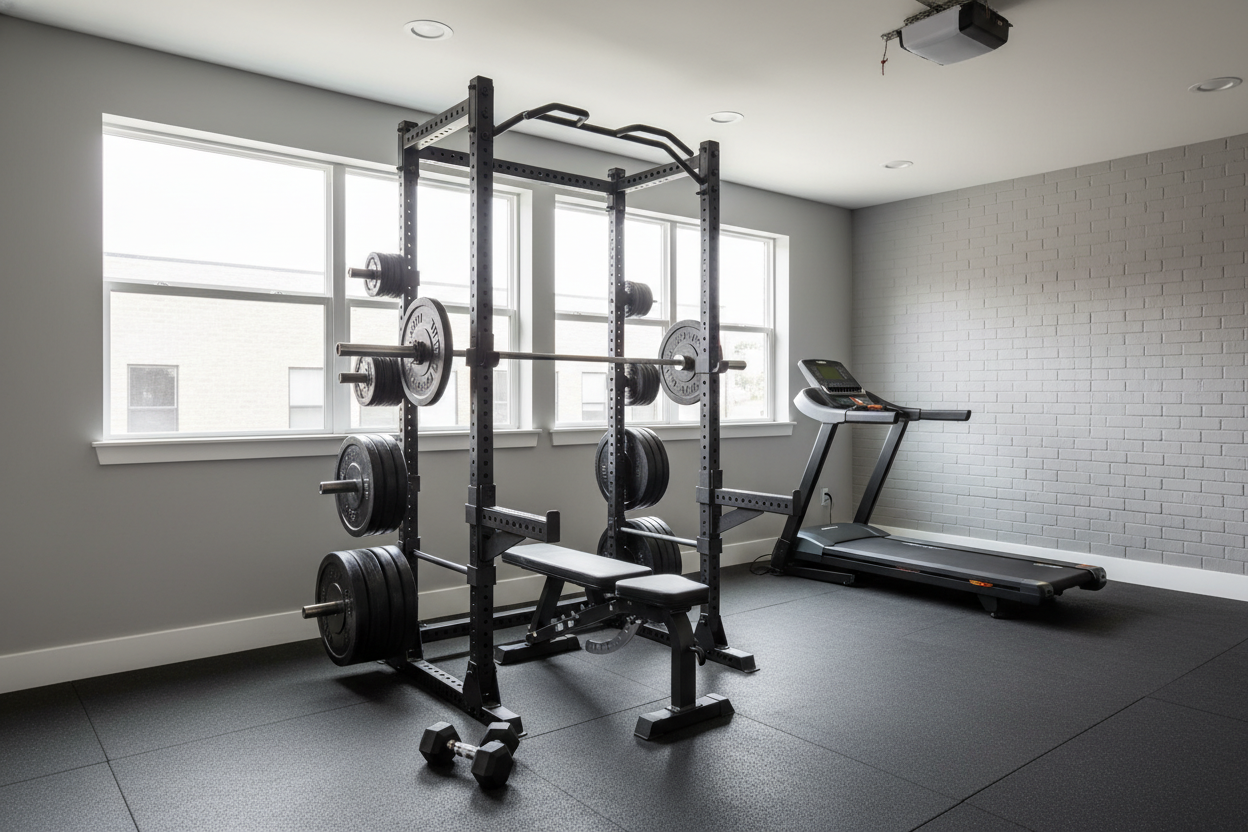
I spent three years building what I call a 'Frankenstein gym.' One month it was a pair of rusty 25s from a yard sale, the next it was a cheap bar from a big-box store that felt like a wet pool noodle. By the time I actually had a weight lifting set with weights that didn't vibrate like a tuning fork every time I hit the floor, I had spent nearly double what a premium bundle would have cost upfront. Building a home gym should be a one-time investment, but most people turn it into a high-interest hobby of replacing bad gear.
- Save up to 25% by avoiding multiple freight shipping charges.
- Ensures plate diameters match for consistent floor pulling.
- High-quality bundles offer better resale value if you ever move.
- Avoids the 'dead-end' 1-inch standard bar trap.
The 'Frankenstein Gym' Trap
It starts with a single purchase. You think you’re being smart by grabbing a cheap bar and maybe two 45-pound plates to get started. You tell yourself you’ll add more iron as you get stronger. This piecemeal approach to a weight lift set is a psychological trap. It feels cheaper because the individual transactions are smaller, but you’re actually paying a 'convenience tax' on every single piece. When you buy components separately, you often end up with mismatched plates from different brands. Why does that matter? Because if one brand’s 45-pound plate is 17.5 inches and the other is 17.7 inches, your barbell will sit unevenly on the floor during deadlifts. This creates a weird pivot point that can wreck your form.
Moreover, you quickly realize that the random assortment of gear doesn't scale. You’ll eventually want to stop buying random pieces and focus on the lifting weight equipment you actually need. A home weightlifting set that comes as a complete package ensures that every plate, from the 45s down to the 2.5s, is designed to work together. You get a consistent grip, a consistent plate height, and a consistent look. It sounds vain, but a weight lifting home set that looks professional actually makes you want to train. Staring at a pile of mismatched, peeling iron in a dark garage is a great way to lose motivation by February.
The Hidden Killer of Piecemeal Buying: Freight Shipping
Iron is heavy. That sounds obvious until you see the shipping quote for a pair of 45-pound plates. Shipping carriers hate moving weight. If you buy a weight room set piece by piece, you are effectively paying the 'minimum' shipping charge four or five different times. For example, shipping a single pair of plates might cost you $40. If you do that five times to build a full set, you’ve just lit $200 on fire. That is $200 that could have gone toward a better barbell or a nicer rack.
When you buy an at home weight lifting set as a bundle, it usually ships via LTL (Less Than Truckload) freight. The gear is strapped to a wooden pallet, wrapped in plastic, and delivered via a lift-gate truck. While the flat rate for freight might seem high at first—say, $150—it covers the entire 300-pound or 500-pound load. The math is simple: one freight charge for a complete weight lifting set is almost always cheaper than five separate ground shipping charges for individual boxes. Manufacturers also bake these logistics savings into the bundle price. They want to move a whole pallet at once, so they’ll often shave 10% to 15% off the total price just to clear the warehouse space in one go. You’re essentially getting the 'bulk' discount that commercial gyms get.
Are You Buying a Good Bar, or Just Heavy Iron?
The biggest danger of the 'all-in-one' weight lifting set with weights is the 'mystery bar.' Big-box retailers love to sell bundles where the plates are decent but the barbell is garbage. A real Olympic bar should have a 28mm to 29mm diameter, a tensile strength of at least 160,000 PSI, and actual bearings or bushings in the sleeves. If the bar in the set has a 1-inch diameter or uses bolts at the ends to hold the sleeves on, run away. That isn't a barbell; it's a liability. You want a bar that can handle a drop without bending. I’ve seen cheap bundle bars permanently 'smile' (bend) after a single 315-pound squat session.
When vetting a bundle, look at the knurling—the 'sandpaper' texture on the bar. It shouldn't be so smooth that it slides out of your hands when you sweat, but it shouldn't be so aggressive that it draws blood during a high-rep set. Also, check the plate tolerances. Cheap iron can be off by as much as 5% to 10% in weight. A '45-pound' plate that actually weighs 41 pounds is a nightmare for your progress. High-quality at home weight lifting equipment uses cast iron or urethane with much tighter tolerances, usually within 1% to 2%. You want your 225-pound bench press to actually be 225 pounds, not 214 or 232. Solid iron outlasts every fitness fad; don't settle for hollow tubes or plastic-coated sand weights.
You Still Need a Place to Press (Don't Ignore the Bench)
A great barbell and plate set is only as good as the platform you’re using it on. If you’re doing floor presses because you didn't budget for a bench, you’re missing out on half the value of your iron. You need a foundation that won't wobble when you’re unracking a heavy load. A reliable weight bench is the unsung hero of the home gym. It provides the stability needed for chest presses, seated rows, and even step-ups. If your bench feels like it's going to tip over when you sit down with a pair of dumbbells, your brain will subconsciously hold you back from lifting heavy because it doesn't feel safe.
For those starting from scratch, I often recommend looking at a weight bench with barbell rack. This setup acts as a base station for your new weights. It gives you a place to store the bar and a safe way to perform the 'big three' lifts (squat, bench, and sometimes overhead press if the rack is tall enough). Buying the weights is the 'engine' of your gym, but the bench and rack are the 'chassis.' If the chassis is weak, the engine doesn't matter. Make sure your bench is rated for at least 600 pounds of total weight (you + the bar) so you have room to grow into your strength goals.
The Final Verdict: Who Should Actually Buy the Bundle?
The bundled weight room set is for the person who is tired of 'upgrading.' If you know you are committed to lifting for the next five to ten years, buy the bundle. It is the classic 'buy once, cry once' scenario. You pay a larger chunk of change today to avoid the headache of scouring Facebook Marketplace for matching plates three months from now. It’s for the lifter who wants a professional feel in their garage without the professional price tag of buying every item at retail MSRP plus shipping.
On the flip side, if you are a specialized powerlifter or weightlifter who needs a very specific bar—like a 27mm deadlift bar or a high-spin needle bearing Olympic bar—you might be better off buying the bar separately and bundling only the plates. But for 90% of us who just want to get strong, hit some squats, and look better in a t-shirt, the pre-packaged set is the smartest financial move. It simplifies the logistics, guarantees compatibility, and gets you training faster.
My Personal Lesson in 'Cheap' Gear
I once bought a 300-pound 'starter set' from a local sporting goods store for $199. It seemed like a steal. Three weeks in, the chrome on the bar started flaking off into my palms like tiny razor blades. The '45-pound' plates were so poorly cast that they rattled on the bar, making a deafening 'clank' with every rep that annoyed my neighbors. I ended up selling the whole set for $50 on Craigslist and buying the high-end bundle I should have bought in the first place. I lost $150 and three weeks of good training just trying to save a buck.
FAQ
Is 300 lbs enough for a home weight lifting set?
For most beginners and intermediates, 300 lbs (which usually includes a 45 lb bar and 255 lbs of plates) is a perfect starting point. It allows for a 225 lb bench and a nearly 300 lb deadlift. You can always add a pair of 45s later as you get stronger.
What is the difference between Olympic and Standard sets?
Olympic sets have 2-inch holes and the bars are rated for much higher weights. Standard sets have 1-inch holes and are generally 'toy' grade gear that bends easily. Always go with Olympic-sized equipment for a home gym.
Do I need bumper plates or iron plates?
If you plan on doing Olympic lifts (cleans, snatches) or dropping the bar from overhead, get bumpers. If you’re doing traditional powerlifting (squat, bench, deadlift) and using floor mats, iron plates are more compact and usually cheaper.
Share:
Why Your Aerobic Exercise Machine Is Just an Expensive Coat Rack
Why Your Upright Exercise Bench Is Lying About Its Angle