
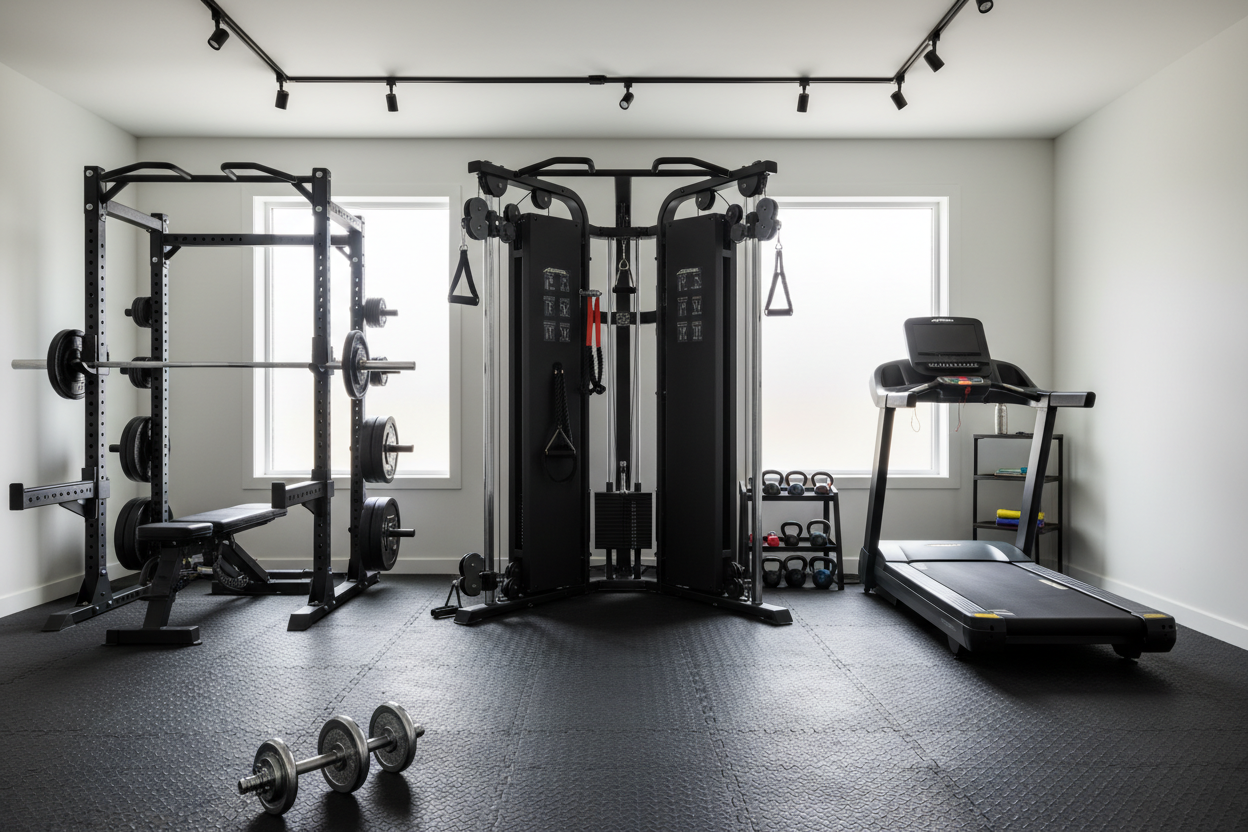
I used to be a total barbell snob. If it didn't involve a 45-lb bar and the risk of being pinned under a heavy load, I didn't think it was 'real' training. I spent years scoffing at the cable crossover and the leg press, convinced that machines were just for people who didn't want to put in the work. Then, I hit thirty, my knees started clicking like a ratchet strap, and my progress stalled out for nearly a year.
That is when I had to get honest and ask: are weight machines effective, or have I just been ego-lifting in a power rack for no reason? The truth is, the 'free weights only' mentality is a fast track to plateaus and nagging joint pain. If you want to actually build a physique that looks like you lift, you have to stop treating machines like the enemy.
Quick Takeaways
- Machines provide superior stability, allowing you to push muscles to absolute failure safely.
- Free weights are king for central nervous system adaptation and functional strength.
- The biggest disadvantages of weight machines involve fixed movement paths that may not fit your specific limb lengths.
- A hybrid approach is the smartest way to train for longevity and size.
The Barbell Bias: Why We Love to Hate on Fixed-Path Gear
The garage gym community is built on the back of the barbell. We love the grit of it. There is something primal about pulling a heavy deadlift off a concrete floor. But this macho culture has created a blind spot. We have been told for decades that machines are 'cheating' because they balance the weight for you. That is exactly the point, but we have framed it as a negative.
When you are squatting, a huge portion of your energy goes into not falling over. Your core, your stabilizers, and your brain are all working overtime just to keep the bar path straight. That is great for athleticism, but it is not always the most efficient way to grow a specific muscle. Blindly writing off machines because they aren't 'hardcore' is just leaving gains on the table. I have seen guys with 500-lb squats who have tiny quads because their lower back always gives out first. That is where the machines win.
Longevity is the name of the game. You can only redline your central nervous system with heavy compound movements for so long before something snaps. Integrating fixed-path resistance isn't about being lazy; it is about being surgical with your training. It allows you to keep the intensity high while giving your joints a much-needed break from the sheer stabilization demands of free weights.
Let's Talk Muscle: Are Exercise Machines Effective for Hypertrophy?
If your goal is purely to get bigger, machines are often superior to free weights. This comes down to the principle of stability. The more stable the environment, the more force your prime movers can produce. When you are on a chest press machine, you don't have to worry about the bar drifting over your face or your left wrist wobbling. You can put 100% of your focus into driving the weight and contracting your pecs.
This stability allows you to reach true muscular failure. On a set of heavy dumbbell presses, your set usually ends when your stabilizer muscles fatigue or your form gets too shaky to be safe. On a machine, you can grind out those last two 'ugly' reps that actually trigger growth, knowing the machine isn't going to drop on you. Whether you are using dumbbells or a cable stack, it all starts with a solid foundation like a reliable weight bench. Once you have that base, adding machine-style movements allows you to bypass the 'weakest link' in the chain.
I have found that are exercise machines effective for hypertrophy is a resounding yes because of the constant tension. Think about a dumbbell fly. At the top of the movement, there is zero tension on your chest. On a cable machine or a pec deck, the resistance is pulling against you through the entire arc. That extra time under tension is a massive driver for muscle thickness that you just can't replicate with a piece of iron and gravity alone.
The Glaring Disadvantages of Weight Machines
Of course, it isn't all sunshine and rainbows. The disadvantages of weight machines are real, and they usually start with the fixed path of motion. Humans aren't robots. We all have different shoulder widths, arm lengths, and hip structures. A machine that feels great for a 6-foot lifter might feel like a torture device for someone who is 5-foot-5. If the machine's pivot point doesn't align with your joints, you are forcing your body to move in a way it wasn't designed to, which is a recipe for tendonitis.
There is also the issue of 'fake strength.' You might be able to move the entire stack on a leg press, but that doesn't mean you can walk into a squat rack and move 400 pounds. Machines neglect the tiny stabilizer muscles that keep your joints healthy in the real world. If you only use machines, you become very strong in a very specific, two-dimensional plane. The moment you have to move something heavy in the real world—like a couch or a bag of concrete—your body won't know how to coordinate that strength.
Finally, there is the loss of proprioception. Free weights teach you where your body is in space. They force you to develop a mind-muscle connection and a sense of balance. Machines do the thinking for you. If you rely on them too much, you lose that 'athletic' feel. You become a collection of muscles rather than a functional unit. This is why you see bodybuilders who look like superheroes but move like the Tin Man.
But Wait, Are Workout Machines Effective for Real-World Strength?
We need to define what 'effective' means. If you want to be able to lift a heavy stone or carry a heavy load, are workout machines effective on their own? Probably not. Real-world strength is about the central nervous system (CNS). It’s about your brain's ability to recruit every muscle fiber in your body simultaneously to overcome a load. Machines isolate; free weights integrate.
Compound free weight movements like the overhead press or the deadlift require a level of total-body tension that a machine can't mimic. You have to brace your core, grip the floor with your feet, and create internal torque. That skill—and it is a skill—is what translates to absolute strength. If you want to be 'strong' in the broadest sense of the word, you still need to spend time under a bar.
However, machines are a great 'accessory' for strength. If your lockout on the bench press is weak, a tricep press-down machine can build the raw horsepower in your triceps without adding more fatigue to your shoulders. Use machines to build the engine, and use free weights to learn how to drive the car.
Are Gym Machines Effective Enough to Hog Your Garage Floor Space?
This is the big hurdle for the home gym owner. Most of us don't have 5,000 square feet to fill with single-use commercial pieces. When you're working with a 20x20 garage, every square inch has to earn its keep. So, are gym machines effective enough to justify the footprint? In the past, I would have said no. But the market has changed. We are seeing a huge rise in hybrid equipment that gives you that commercial feel without the commercial size.
I recently added some independent arm chest press systems to my setup, and it changed the way I train at home. These lever-based systems bridge the gap. They give you the safety and the fixed arc of a machine, but the independent arms force you to balance the load so your dominant side doesn't take over. It is the closest thing to a 'best of both worlds' scenario I have found.
A few years ago, I missed the weight machines at the gym so much I almost considered getting a commercial membership again. I missed the way I could just sit down and hammer my quads or lats without the 15-minute setup time of a barbell. Now, with functional trainers and lever-arm attachments for power racks, you can get that 1% of extra polish on your physique without leaving your house. If you have the space, a cable tower or a dedicated leg press is the best investment you can make for your training variety.
FAQ
Are machines safer than free weights?
Generally, yes. You can't drop a machine on your neck, and you can usually 'bail' on a rep without much risk. However, they can cause overuse injuries if the machine's path of motion doesn't fit your natural biomechanics.
Should beginners start with machines or free weights?
I always recommend starting with a mix. Machines help a beginner feel the muscle working and build an initial base of strength safely. But you shouldn't wait too long to start learning the basic barbell movements, as those take more time to master.
Can you build a great physique using only machines?
Absolutely. Many top-level bodybuilders use machines for 80% of their training. If your goal is aesthetics, the muscle doesn't know if the resistance is coming from a cable, a lever, or a piece of iron. It only knows tension.
Share:
Don't Buy the Best Home Gym All-In-One Until You Check These 3 Specs
Why the Best Exercises Machine for Home Is Actually Two Things