
I remember scrolling through Craigslist at 2 AM, looking at those massive, 15-station multi-gyms that look like a Transformer had a mid-life crisis. My local commercial gym had just hiked their rates to $80 a month, and I was desperate to find the best exercises machine for home use. I wanted one piece of steel that could do it all: chest press, leg curls, lat pulldowns, and maybe make me a sandwich afterward.
After wasting a few thousand dollars and three different garage configurations, I realized the 'all-in-one' dream is a marketing lie. Most of those machines are built with cheap plastic pulleys and cables that feel like they're grinding through sand. If you want a real workout that doesn't feel like a physical therapy session from 1994, you need to stop looking for a single gadget and start looking for a system.
Quick Takeaways
- Functional trainers (dual-pulley systems) offer 10x the versatility of fixed-lever machines.
- Avoid 'all-in-one' stations that use a single weight stack for 20 different exercises; the biomechanics are almost always off.
- A rock-solid adjustable bench is the most underrated 'machine' in your arsenal.
- Prioritize 11-gauge steel and a 2:1 pulley ratio for a smooth, commercial-grade feel.
Why We All Fall for the 'All-In-One' Fantasy
It sounds efficient on paper. Why buy five things when one machine claims to do it all? These manufacturers target the time-strapped lifter by promising a full-body blast in a 4x4 footprint. But here is the reality: when a machine tries to do everything, it usually does nothing well. The chest press handles are at a weird angle, the leg developer hits your shins in the wrong spot, and switching the cables takes longer than the actual set.
I have owned those budget-friendly home stations. The cables start to fray within six months, and the weight stacks are often capped at 150 lbs, which you will outgrow on day one of lat pulldowns. You end up with a giant, expensive clothes rack taking up half your garage because the movements feel so jerky and unnatural that you eventually stop using it.
So, What Is the Best Exercise Machine for Home?
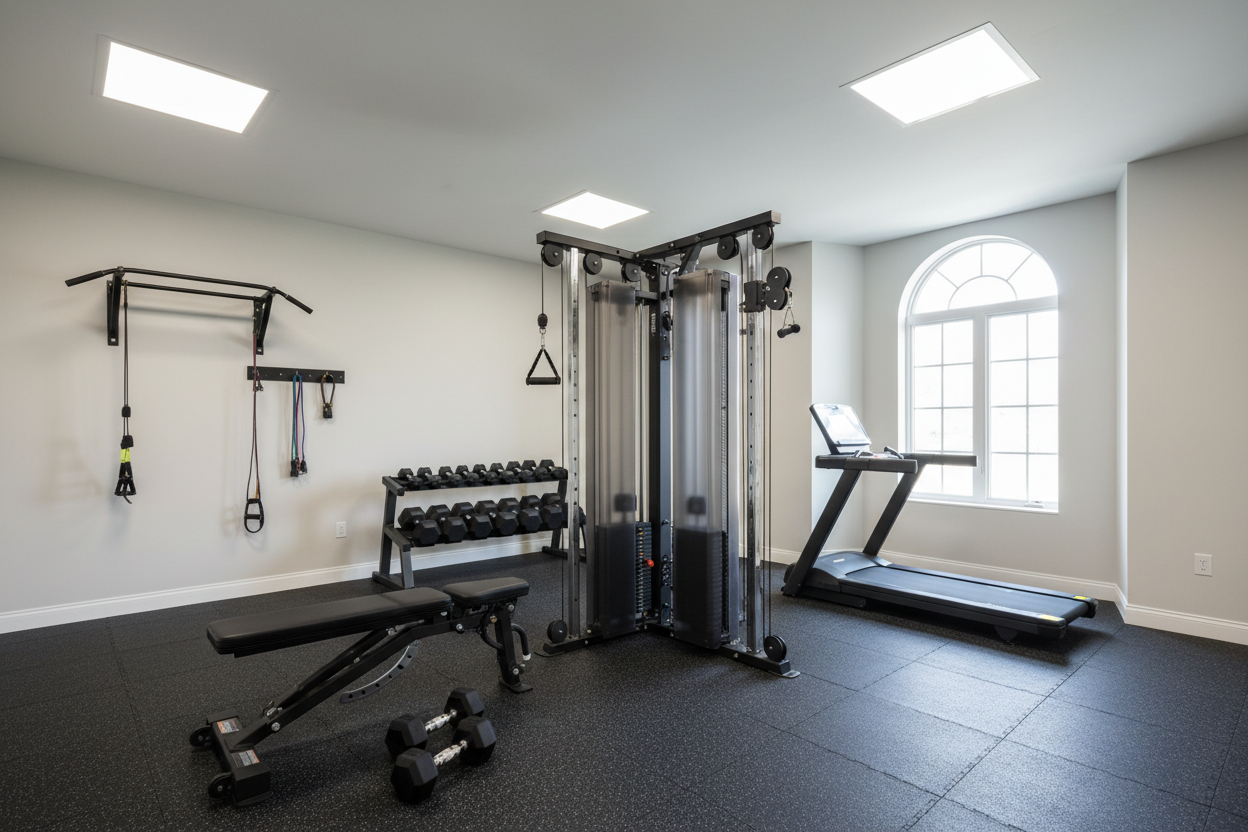
If you want the honest truth, the 'best' machine is actually a high-quality functional trainer paired with a heavy-duty adjustable bench. A functional trainer uses two independent weight stacks and adjustable pulleys that slide up and down on vertical rails. This setup allows you to mimic almost any movement—cable crossovers, rows, tricep extensions, and even squats if you have the right attachments.
You might ask, is there actually a single best exercise machine for home? If forced to pick one, the functional trainer wins every time. It doesn't lock you into a fixed path. It forces your stabilizer muscles to work, which is exactly what you want if you're training for real-world strength or aesthetics. Plus, two people can usually work out on it at the same time, which is a lifesaver if you train with a partner.
The Problem With Fixed Movement Paths
Cheap multi-gyms use levers. Levers have a fixed arc. If your torso is longer or your arms are shorter than the 'average' person the designer had in mind, that machine is going to wreck your shoulders. I have seen too many guys develop nagging rotator cuff issues because they were forced into a pressing motion that didn't fit their frame.
If you absolutely love the feel of a fixed bar for heavy compounds, you are better off looking at a Smith machine home gym station. A quality Smith machine provides the safety of a fixed track but allows for much higher weight capacities and better ergonomics than those plastic-pulley 'total gyms' sold at big-box retailers. It gives you that stable 'pump' without the awkward joint angles.
What Is the Best Exercise Machine to Have at Home for Small Spaces?
If you are working with a spare bedroom or a corner of the basement, footprint is everything. You don't want a machine that requires 3 feet of clearance on every side just to change the plates. This is where wall-mounted cable stations or compact functional trainers shine. They sit flush against the wall, leaving the center of your room open for floor work or dumbbells.
Building a home gym in a tight space is about the 'versatility-per-square-foot' ratio. A 2x2 foot power rack or a slim cable tower provides a massive amount of utility compared to a dedicated leg press machine that takes up 15 square feet and only does one thing. I always tell people to measure twice and buy once—don't forget to account for your arm span when the cables are pulled out wide.
How to Split Your Budget Like a Pro
Don't blow your entire $3,000 budget on one flashy machine. You want to allocate about 60% of your funds to your primary movement hub—the functional trainer or a solid rack. This is where you want the 11-gauge steel and the smooth-rolling bearings. If the pulleys are cheap, the whole experience sucks.
The remaining 40% should go toward a rock-solid adjustable bench and a set of dumbbells. A bench that wobbles when you're trying to press 70-lb bells is a safety hazard and a mental distraction. Look for a bench with a 1,000-lb capacity. It sounds like overkill, but that heavy steel base means it won't slide across your floor when you're doing step-ups or heavy rows.
My Honest Mistake
Years ago, I bought a budget 'Power Tower' and a cheap multi-press because it saved me $400. Within three months, the padding on the bench was cracking, and the tower shook every time I did a pull-up. I ended up selling both for pennies on the dollar and buying the quality gear I should have bought in the first place. Buy once, cry once. Your joints and your wallet will thank you later.
FAQ
Do I really need a weight stack, or are plate-loaded machines okay?
Plate-loaded machines are cheaper and great if you already own Olympic plates. However, weight stacks are much faster for drop sets and keep the floor clutter-free. If you can afford the luxury of a selectorized stack, do it.
Is a cable machine enough to build muscle?
Absolutely. Time under tension is what matters. With a dual-pulley system, you can hit every major muscle group with constant tension that you just don't get with standard free weights.
How much ceiling height do I need for a functional trainer?
Most standard units are about 80 to 84 inches tall. Always check your basement joists before ordering. If you're tall, make sure the top pulley position is high enough for you to get a full stretch on lat pulldowns.
Share:
Are Weight Machines Effective? What the Free Weights Crowd Misses
Does the Logo Matter When Comparing Brands of Fitness Equipment?