
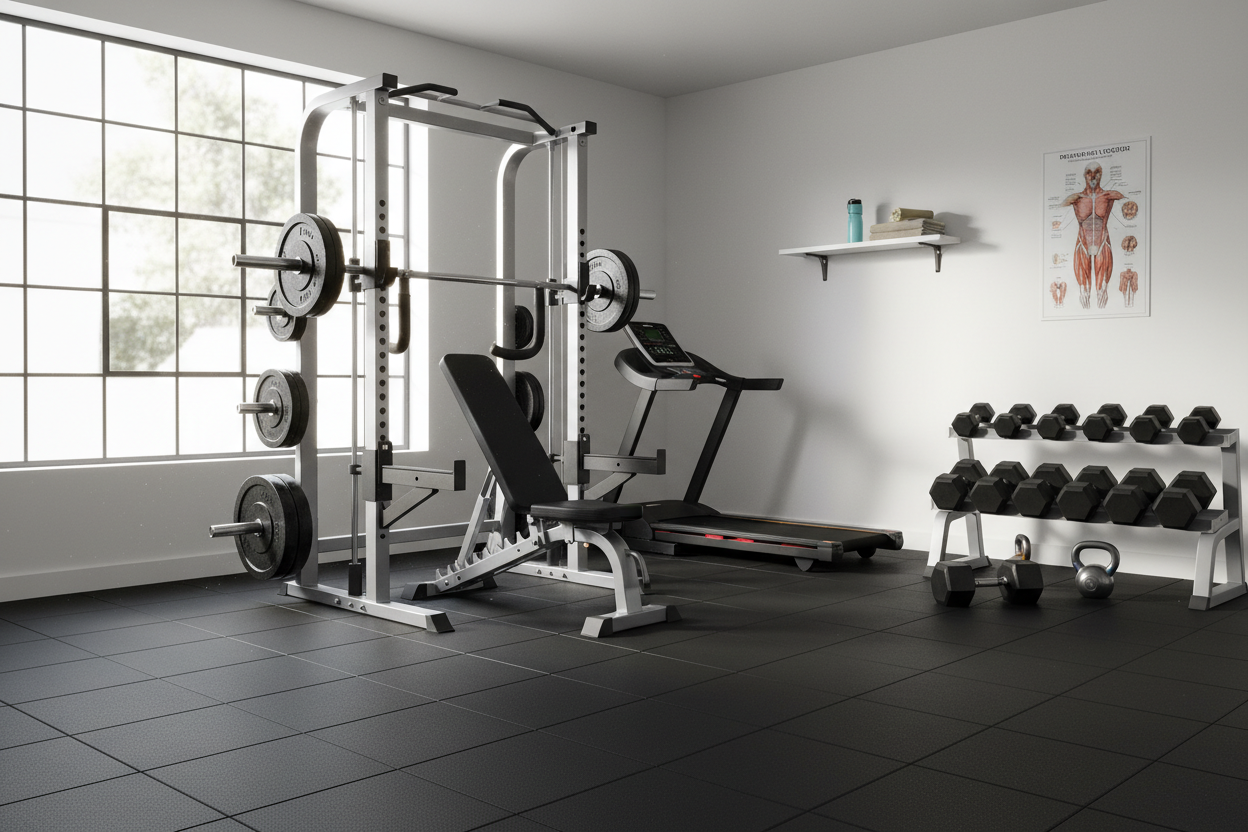
I remember staring at my barbell three years ago, dreading the next set of heavy overheads. My left rotator cuff felt like it was being poked with a hot needle, and my lower back was arching so hard I looked like a human banana just to get the weight up. That was the day I finally swallowed my pride and hopped into the shoulder press on smith machine. I used to think machines were for people who didn't want to work hard, but my inflamed joints told a different story.
Quick Takeaways
- Fixed tracks eliminate the 'wobble,' allowing you to push 10-15% more weight safely.
- The Smith machine provides better isolation for the anterior and lateral deltoids by removing core stability as a bottleneck.
- Seated variations are generally superior for hypertrophy because they provide a stable base for your spine.
- Angled Smith machines require specific orientation—facing the wrong way can wreck your mechanics.
The Free Weight Ego Check (And Why My Shoulders Hurt)
For a long time, I was a barbell purist. If it wasn't a standing barbell overhead press, I didn't want it. But as I started pushing past the 185-lb mark, my form turned into garbage. To keep the bar from drifting forward, I’d lean back excessively, turning a shoulder movement into a high-incline chest press. It wasn't building my delts; it was just grinding my vertebrae.
The smith machine military press changed that. By locking the bar into a vertical track, I could finally sit upright and actually feel my shoulders doing the work. No more chasing the bar's center of gravity. No more 'cleaning' the bar to my chest just to start a set. Just raw, focused tension on the muscle. If you're struggling with joint impingement or your progress has stalled because your lower back gives out before your shoulders do, it's time to put the ego aside.
Why the Fixed Bar Path Isn't Cheating
People love to call the smith press machine 'cheating' because you don't have to stabilize the weight. They're missing the point. In the context of bodybuilding and pure hypertrophy, stability is your best friend. When your nervous system doesn't have to worry about the bar falling on your head, it can recruit more motor units in the target muscle. It is similar to the chest press debate where the machine allows for a level of intensity that free weights simply can't match without a spotter.
By removing the need for stabilizer muscles to fire at 100%, you can take your sets of smith machine overhead press right to the edge of mechanical failure. I’ve found that my lateral delts actually grew faster once I switched to the Smith because I wasn't using momentum to 'cheat' the weight up. You're forced to own every inch of the rep, from the bottom of the chin to the lockout.
How to Set Up Without Wrecking Your Rotators
The biggest mistake people make with the smith machine shoulder press is bench placement. If you sit too far forward, the bar path forces your elbows behind your torso, which is a one-way ticket to an impingement flare-up. Set your bench at a 75 to 80-degree angle—not a perfect 90. This slight lean allows your elbows to stay in the 'scapular plane,' which is much friendlier on the rotator cuffs.
If you're using an angled Smith machine, pay attention to the track. For a smith machine front press, you generally want to face the bar so it moves slightly away from your face as you press up. This mimics the natural arc of a barbell. If you're using a high-end rig that features smooth cable crossovers and fixed pressing, you can easily transition from heavy presses to cable laterals without moving an inch. Grip width should be just outside shoulder width—wide enough that your forearms stay vertical at the bottom of the rep.
Seated vs. Standing: Which Variation Wins?
The standing smith machine shoulder press is a weird beast. It requires more core engagement than the seated version, but it still feels 'stiff' compared to a free-weight barbell. If your goal is athletic carryover or core strength, stand up. But if you're like me and you're training in a home gym with a lower ceiling or you just want massive caps on your shoulders, the seated smith machine shoulder press is the undisputed king.
Sitting down removes the 'spring' from your legs and the sway from your hips. It forces the smith machine ohp to be a pure upper-body movement. I’ve noticed that when I do a smith machine standing shoulder press, I still tend to use a bit of a 'hitch' at the bottom. Seated? There's nowhere to hide. You either press the weight, or you don't.
My Go-To Fixed-Track Shoulder Routine
I don't just do one exercise and call it a day. I treat the smith military press as my 'Big Lift.' I start with 3 sets of 6-8 reps, focusing on a slow 3-second eccentric (lowering) phase. This builds massive time under tension. After that, I move into higher-rep isolation work. Many commercial-grade home setups allow you to do this all in one spot.
- Smith Machine Overhead Press: 3 x 8 (Heavy)
- Dumbbell Lateral Raises: 4 x 15 (Focus on the burn)
- Cable Rear Delt Flys: 3 x 20 (Using the Smith's integrated pulleys)
- Smith Machine Push Press: 2 x AMRAP (Use your legs to blast through the fatigue)
This combination gives you the heavy mechanical tension from the smith machine shoulder workout and the metabolic stress from the isolation moves. It’s the fastest way I’ve found to add width to my frame without needing a bottle of ibuprofen the next morning.
Wrapping Up: Time to Swallow Your Pride
If you're still listening to the 'machines are useless' crowd, you're leaving gains on the table. The shoulder exercise on smith machine isn't a replacement for every free weight move, but it is a precision tool for building muscle while protecting your longevity. Modern smith machines have come a long way from the clunky, friction-heavy racks of the 90s; they're smooth, safe, and effective.
Stop worrying about what the purists think. If your shoulders are growing and your joints feel great, you're winning. Grab the bar, set the safety pins, and start pressing.
FAQ
Is the Smith machine shoulder press harder than barbell?
Usually, it feels slightly easier because you don't have to balance the bar, allowing you to lift more weight. However, the lack of momentum can make the 'burn' feel much more intense.
Can I do behind-the-neck presses on a Smith machine?
You can, but I wouldn't recommend it unless you have elite-level shoulder mobility. For 95% of lifters, the smith machine front press is safer and hits the front and side delts just fine.
Is the Smith machine bad for your back?
Only if you have poor form. In fact, a seated smith shoulder press is often safer for the lower back than a standing barbell press because it prevents the 'banana back' arching that happens under heavy loads.
Share:
I Finally Figured Out the Freemotion Smith Machine Bar Weight
The Essential Home Gym Items I Kept After 10 Years of Lifting