
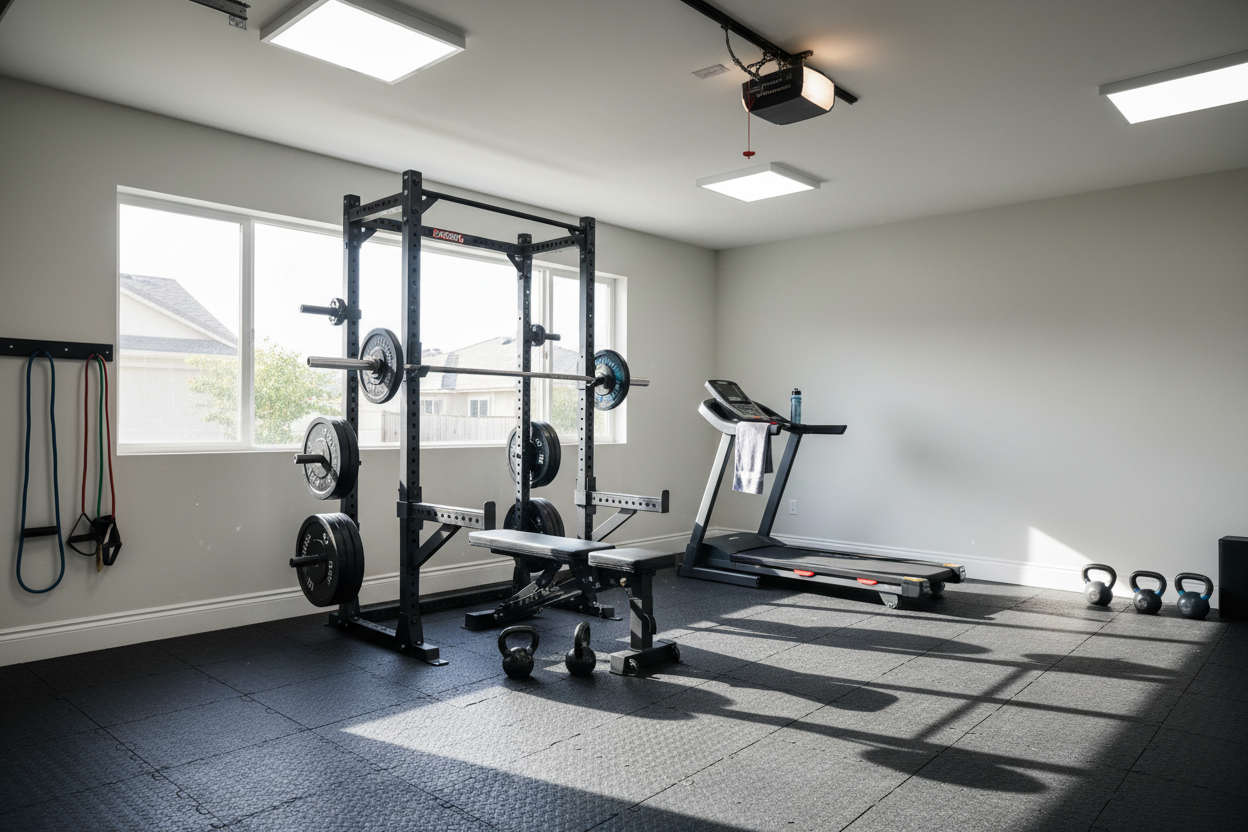
I spent years paying $60 a month to a commercial gym just to wait twenty minutes for a squat rack that smelled like old pennies and disappointment. When I finally decided to build my own space, I spent weeks scrolling through forums, terrified that if I didn't drop five figures, my rack would collapse the first time I touched it. The reality is that budget gym equipment has come a long way, but you have to know where the manufacturers are cutting corners.
Quick Takeaways
- Cast iron plates and flat benches are safe bets for saving cash.
- Never compromise on the weight capacity of your rack or the quality of your primary barbell.
- Look for 11-gauge steel over 14-gauge for anything supporting your body weight.
- Multi-functional pieces save more money and floor space than cheap single-use machines.
The 'Buy Once, Cry Once' Myth Is Mostly Marketing
You’ve seen the influencers. They stand in front of a $2,000 power rack, holding a $600 stainless steel barbell, telling you that anything less is a waste of money. It’s a lie. While high-end gear is beautiful, the 'buy once, cry once' mentality is often used to shame beginners into overspending. You can absolutely build the best home gym on a budget without taking out a second mortgage.
The trick is knowing your current strength level and your ceiling. If you’re a 200-pound squatter, you don't need a rack rated for 1,500 pounds. You need something stable, safe, and expandable. Most people quit their home gym habit within six months because they bought gear that was too precious to actually use or too expensive to justify. Start with the essentials and earn your upgrades as you hit your milestones.
Where You Can Absolutely Cheap Out
Iron is iron. A 45-pound plate made in a boutique foundry in the USA weighs the same as a 45-pound plate you found on Craigslist for fifty cents a pound. When you are looking for equipment for home gym gains, don't get distracted by fancy urethane coatings or calibrated competition colors. Basic cast iron plates are the ultimate budget win. They might have a 2-3% weight variance, but unless you’re breaking world records, that won't matter for your hypertrophy goals.
Pull-up bars and flat benches are other areas where you can save. A piece of steel bolted to your wall doesn't need a brand name to hold your weight. Similarly, a simple flat bench with a decent tripod design is often sturdier than a cheap, complicated adjustable bench. Avoid the bells and whistles here. If it's solid steel and the padding doesn't feel like a pool noodle, it’s probably good enough for a garage gym.
The Middle-Tier Sweet Spot for Versatility
The biggest mistake I see is people buying five different cheap, shaky machines for isolation work. Your garage only has so much square footage. Instead of buying a dedicated leg extension, a bicep curler, and a row machine, look for high-value combo units. A versatile lat pulldown low row station is a perfect example. It handles your back, arms, and even some leg work if you get creative, all while using a single weight stack or plate load system.
When you focus on multi-use gear, you can afford to buy slightly higher quality because you're buying fewer items overall. You should stop buying single use gear that clutters your floor and drains your wallet. A solid rack with a cable attachment or a set of adjustable dumbbells will always beat a room full of cheap plastic machines that rattle every time you move the pin.
Where Penny-Pinching Becomes a Safety Hazard
There are lines you cannot cross. The cheapest barbells on the market are usually made of soft steel with a low tensile strength. If you load 300 pounds on a $50 bar, it might not snap, but it will likely develop a permanent bend—a 'smile'—that makes every lift feel off-balance and dangerous. Your barbell is the most important interface between you and the weight; spend the extra $100 here for something with at least 190,000 PSI tensile strength.
J-hooks and safety bars are another non-negotiable. I’ve seen budget J-hooks with terrible welds that look like they were applied by a hobbyist. If those welds fail while you’re racking a heavy squat, the results are catastrophic. Also, be wary of 14-gauge steel racks. While they look fine in photos, they often sway under load. If you’re planning on moving real weight, 11-gauge steel is the industry standard for a reason. Don't risk your floor—or your spine—on a rack that feels like a folding chair.
How to Spot Good Budget Gear (A Quick Checklist)
Before you hit 'buy' on that suspiciously cheap power rack, check the specs. First, look at the steel gauge. 11-gauge is roughly 3mm thick, while 14-gauge is about 2mm. That 1mm difference sounds small, but it’s the difference between a tank and a toy. Second, check the weight capacity. If a company doesn't list a static weight capacity, they don't want you to know it. A reputable budget rack should handle at least 700 to 1,000 pounds.
Next, look at the hardware. Are the bolts 1/2 inch or 5/8 inch? Bigger is better. Look at the feet of the equipment—does it have rubber end caps or pre-drilled holes to bolt it to the floor? Stability is safety. Finally, check the warranty. Even a budget company should stand behind their welds for at least a year. If they only offer a 30-day window, they know the product isn't built to last through a serious training cycle.
My Personal Lesson in Cheap Iron
Years ago, I bought an adjustable bench for $80. It had 4.5 stars on Amazon and looked great in the photos. The first time I tried to do incline presses with 70-pound dumbbells, the locking pin sheared off. I ended up flat on my back, luckily without a dumbbell crushing my face. It was a wake-up call. I realized that 'budget' shouldn't mean 'flimsy.' I replaced it with a heavy-duty flat bench that cost $50 more, and I've used it every week for five years without a single wobble. Spending a little more on the right things actually saves you more in the long run.
Budget Gym FAQ
Is used gym equipment better than cheap new gear?
Almost always. A high-end commercial rack from a closing gym will outlast a brand-new, entry-level rack every time. If you can find older plates or bars from reputable brands, grab them.
Can I build a home gym for under $500?
Yes, if you focus on a barbell, some iron plates, and a basic rack. You won't have a cable machine or a full dumbbell rack, but you can perform every major compound lift needed for strength and size.
What is the most important piece to spend money on?
The barbell. It is the only piece of equipment you touch on every single lift. A bar with good knurling and reliable sleeves makes training significantly more enjoyable and safer for your joints.
Share:
The 6 Home Gym Machine Exercises I Actually Use Every Week
I Went Undercover at 5 Exercise Equipment Stores (Here's What I Found)