
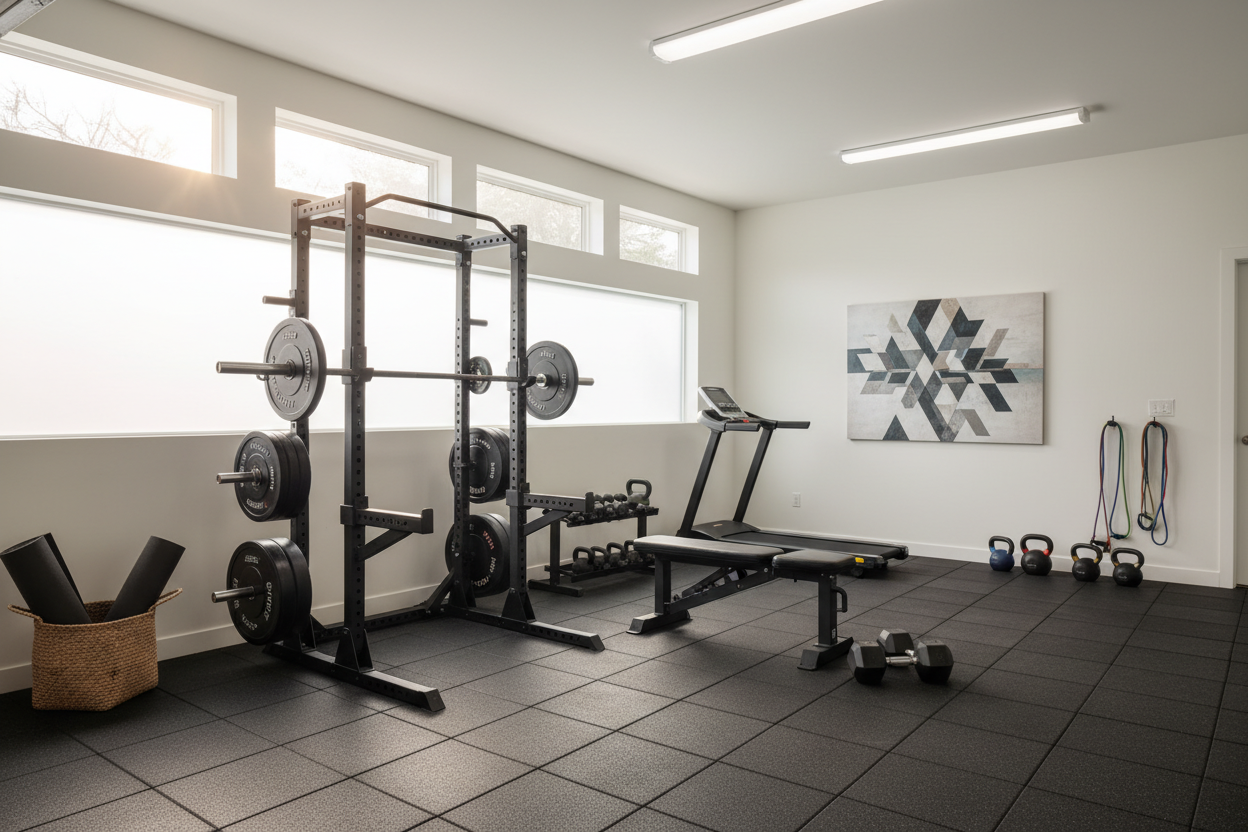
I remember the day I finally cancelled my commercial gym membership. It wasn't the $80 monthly fee that broke me; it was the 'out of order' signs on the only two squat racks and the crowd of teenagers filming TikToks in the dumbbell area. I realized the best equipment for home gym setups isn't the flashy stuff you see in high-budget TV commercials. It is the heavy, stubborn steel that lasts long enough to be handed down to your kids.
Quick Takeaways
- Analog gear beats digital screens every time—iron doesn't need a firmware update.
- Prioritize a rack with 11-gauge steel for safety and stability.
- A quality 20kg Olympic barbell is the most important investment you will make.
- Measure your ceiling height before buying any cable machine or rack.
The 'Smart Gym' Trap: Why Iron Still Wins
Look, I get the appeal of a giant tablet on your wall. It looks sleek. But what happens when that company goes bankrupt or decides your $3,000 mirror needs a $50 monthly 'software maintenance fee' just to turn on? I have seen too many people buy WiFi-dependent resistance systems that become expensive coat racks the second the internet goes down.
My cast iron plates don't need a subscription. My power rack doesn't lose resistance when the server is lagging. If it plugs into a wall, it has an expiration date. Heavy, analog equipment is the only way to ensure your gym still works in 10 years. Real strength is built with gravity, not algorithms.
The Foundation: Building the Best Home Gym for the Money
If you want the best home gym for the money, you have to nail the 'Big Three.' You need a power rack with at least 3x3-inch or 2x3-inch uprights, a 20kg Olympic barbell with a 190,000 PSI tensile strength, and a bench that doesn't wobble when you are holding heavy dumbbells. These are the non-negotiables.
When you are building a functional home gym, these pieces are your anchors. I always tell people to spend 60% of their budget here. A $600 rack and a $300 bar will outlive any 'all-in-one' plastic machine. You want gear that can handle a 500-lb squat even if you aren't there yet. It is about overhead—not just what you lift today, but what you will lift in five years.
Beyond Barbells: The Best Machines for Home Gym Isolation
Once you have your rack, you will eventually want some isolation work. The best machines for home gym use are plate-loaded functional trainers. They use the plates you already own, which saves you thousands compared to buying machines with dedicated weight stacks. Plus, they have a much smaller footprint in a cramped garage.
If you are training solo and want to push your limits on heavy presses without a spotter, a smith machine home gym station is a massive safety win. It allows for fixed-track movements that are perfect for hypertrophy. When selecting the best home resistance gym, pay attention to the cable ratio. A 2:1 ratio is standard for functional trainers, giving you more cable travel for things like chest flies and lateral raises.
Warning: Setup Struggles for Bigger Lifters
I am 6'2', and I learned the hard way that most 'standard' equipment is built for people 5'9' and under. There is nothing more infuriating than hitting the top of the rack during a pull-up or having a lat bar bottom out before your back is fully contracted. Seriously, finding the best home gym for a tall person is a chore because most residential gear is capped at 80 inches to fit low basements.
Check the upright height and the cable travel distance before you buy. If you have the clearance, always opt for a 90-inch rack. Your chin and your lats will thank you. Don't let a low ceiling dictate your range of motion.
Splurge vs. Save: Maximizing Your Budget
Spend big on the barbell. It is the only thing you actually touch every single rep. Get a bar with decent knurling that won't cheese-grate your hands but still feels secure. Also, splurge on J-cups with UHMW plastic liners so you don't chew up your bar's finish.
Save money on the plates. A 45-pound iron plate weighs 45 pounds whether it is a $200 vintage deep-dish or a $40 hunk of scrap metal from a garage sale. You can also save on flooring—skip the 'fitness' foam tiles and go to a farm supply store for 3/4-inch rubber horse stall mats. They are indestructible and cost a fraction of the price.
FAQ
Is iron better than bumper plates?
For most people, yes. Iron is thinner, so you can fit more on the bar, and it is significantly cheaper. Only buy bumpers if you are doing Olympic lifts like cleans or snatches and plan on dropping the bar from overhead.
How much space do I really need?
A 10x10 foot area is the sweet spot. It gives you enough room for a standard 7.2-foot Olympic bar and enough clearance to walk around it without bruising your shins on the rack.
Do I need a floor platform?
If you are deadlifting, I highly recommend it. Two layers of 3/4-inch plywood topped with rubber stall mats will protect your concrete slab from cracking under heavy loads.
Share:
Stop Buying Single-Use Gear: The Best Gym Equipment for Home
Is a Combo Smith Rack the Best Muscle Building Machine?