
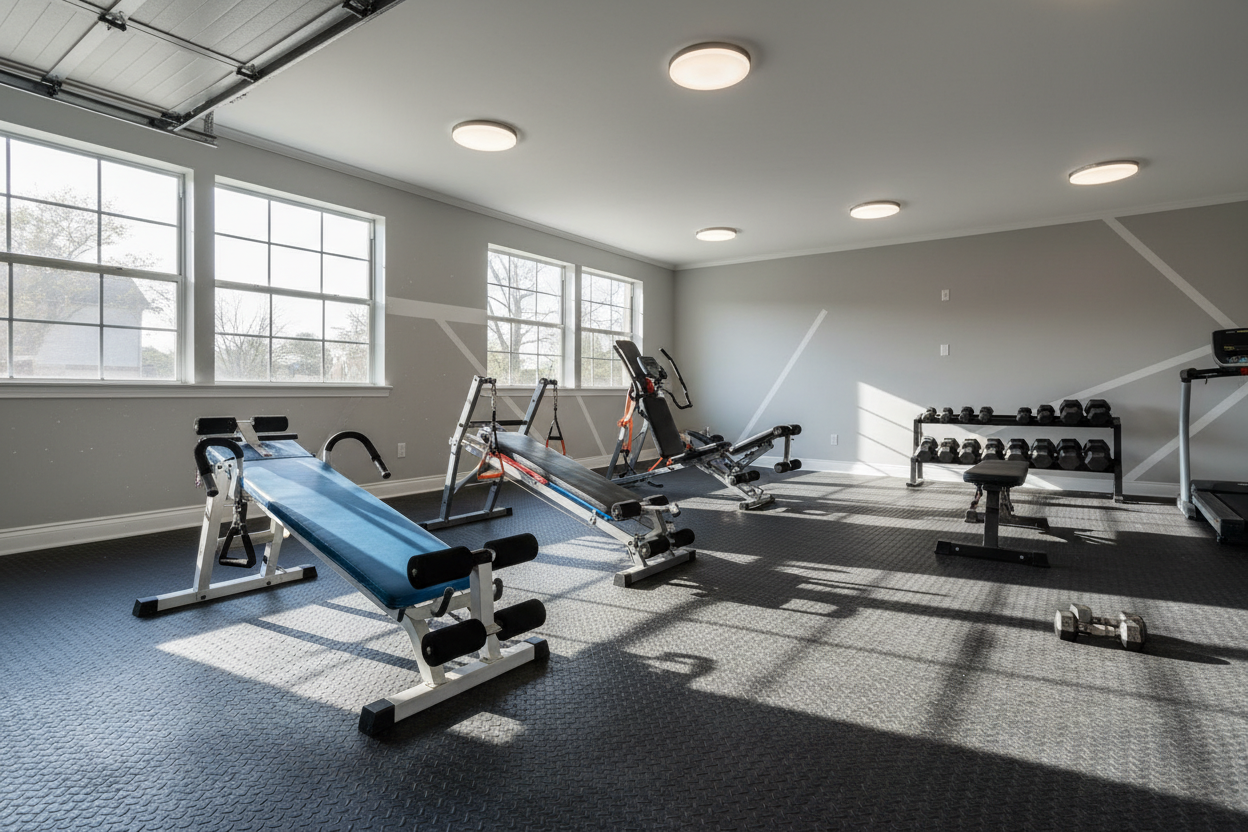
I remember watching Chuck Norris on those 2 AM infomercials and thinking it was all a gimmick. Then I actually tried one during a stint in physical therapy for a blown-out shoulder. My search for the best total gym for home started there, mostly because I needed a way to train that didn't feel like my joints were being ground in a pepper mill. I’ve since spent way too much time and money on Craigslist and retail sites, buying up everything from the vintage 1000 model to the high-end FIT, just to see if the hype holds up.
- The Winner: Total Gym FIT for its 12 resistance levels and 450-lb capacity.
- Budget Pick: A used Total Gym XL or XLS from Facebook Marketplace.
- Space Required: You need at least 8 feet of linear floor space.
- Best for Seniors: The XLS for its padded glideboard and ease of entry.
Confession: I Actually Like Infomercial Sliding Benches
There is a massive stigma attached to equipment sold by celebrities in the middle of the night. We’re conditioned to think if it’s not a 500-pound iron rack, it’s a toy. But after testing these for a year, the biomechanics are hard to argue with. The sliding bench creates a unique type of time-under-tension that is incredibly difficult to replicate with free weights. You aren't just fighting gravity; you're managing your own body weight on an incline that you can adjust in seconds.
Don't get me wrong—while a sliding bench won't replace the absolute load of a smith machine home gym station, it serves a distinct hypertrophy and endurance purpose. I use mine on 'active recovery' days or for high-rep finisher sets after my main compound lifts. The constant tension on the eccentric phase of the movement is where the magic happens. It’s a different kind of burn that builds real-world stability without the systemic fatigue of a heavy barbell session.
Total Gym FIT vs. XLS: Which One Survives Real Workouts?
If you're looking at the current lineup, the real debate is the total gym fit vs total gym xls. I’ve owned both. The FIT is the clear upgrade, and here is why: it has 12 levels of resistance compared to the 6 on the XLS. That might not sound like a lot, but when you're trying to progress on a movement like the pull-up or chest press, those smaller incremental jumps are vital. The FIT also bumps the weight capacity up to 450 lbs, whereas the XLS caps out at 400 lbs.
The pulley system on the FIT also feels noticeably smoother. It uses a upgraded pulley hardware that doesn't 'hitch' when you're at the top of the movement. When you are building out a home gym, you want gear that doesn't frustrate you. The XLS is a workhorse, but the FIT feels like a piece of professional equipment. If you weigh over 200 lbs or plan on using the weight bar attachment to add plates, the FIT is the only way to go. The difference in total gym models usually comes down to the quality of the rollers and the number of incline settings, and the FIT wins on both counts.
Don't Ignore Older Total Gym Models on Craigslist
You don't always have to drop a grand on a new unit. The used market is flooded with older total gym models because people buy them as New Year's resolutions and then use them as clothes racks. If you can find a Total Gym XL (not the XLS, just the XL), grab it. It was the original 'pro' model and it’s built like a tank. However, you have to be careful with an old total gym. Check the cables for fraying and look at the rollers under the board. If they are flat-spotted or the nylon is cracked, the ride will be bumpy and loud.
The original total gym models from the 90s, like the 1000 or 1500, are basically toys compared to the modern versions. They use thinner steel and the glideboard feels like a piece of plywood with a thin layer of foam. I bought a 1700 Club model for $50 once, and while it worked, the 'clunk' every time I changed direction drove me crazy. If you’re looking at total gym older model listings, stick to the 2000, 3000, or the XL to ensure you’re getting a frame that won't flex under a 200-lb adult.
Navigating Total Gym Models by Year
The total gym model history is a bit of a mess, but here is the quick total gym comparison chart in your head: the early 90s were the 'numbered' years (1000, 1500, 2000). The mid-2000s introduced the XL and the total gym summit, which added better attachments. The modern era is dominated by the XLS and FIT. The total gym first model was essentially a wooden board on a frame—we’ve come a long way. If you see a 'Total Gym Supra' or 'Electra', those are specialized older total gym models that are harder to find parts for today.
The Space Issue: These Things Are Longer Than You Think
Here is the reality check: these machines are massive when they are flat. While they fold up and can slide under a bed (if your bed is high enough), you need a clear path of about 9 feet to use it comfortably. If you put this in a cramped spare bedroom, you’re going to hit your head on the wall or your feet on the door. I learned this the hard way when I set mine up in a 10x10 office and realized I couldn't fully extend my arms on the pull-up bars without hitting the bookshelf.
Height is another factor. Finding the best home gym for tall person is a total nightmare, and the Total Gym is a mixed bag here. If you are 6'4" or taller, your head might hang off the end of the glideboard on certain exercises. The FIT and XLS have longer rails than the older models, which helps, but you'll still find yourself scooting down the board to make sure you don't bottom out the pulleys. Always measure your floor space before you pull the trigger.
The Best Total Gym for Seniors (And Joint-Friendly Lifting)
If you are training around an injury or looking for the best total gym for seniors, the XLS is actually my top recommendation over the FIT. Why? The XLS has a thicker, more cushioned glideboard that is much more comfortable for older spines. The resistance levels are also less aggressive, making it easier to find a 'sweet spot' for rehab. It’s the closest thing you can get to a clinical setting in your garage.
The low-impact nature of the cable system is elite for joint health. You can compare the smooth, controlled motion to a foldable pilates reformer. You get that same eccentric control without the jarring 'thud' of weight plates hitting each other. For someone with arthritis or recovering from a meniscus tear, being able to perform a squat at 5% of your body weight and slowly work up to 50% is a massive advantage that you just can't get with a standard leg press.
The Final Verdict: Which Total Gym Is the Best?
After loading, dropping, and sweating on four different generations of these things, the answer is clear. If you have the budget, the Total Gym FIT is the best total gym machine ever made. It’s the most versatile, has the highest weight limit, and the best warranty. However, if you are just starting out or want to save some cash, a used Total Gym XLS is the 'sweet spot' for value. It’s the best total gym for home users who want a professional feel without the $1,500 price tag. Just make sure you have the floor space—and actually use the thing instead of letting it become a very expensive towel rack.
Frequently Asked Questions
Can you actually build muscle on a Total Gym?
Yes, but you have to train for hypertrophy. That means high reps (12-20) and short rest periods. If you're a powerlifter looking for a 500-lb squat, this isn't it. But for lean muscle and 'armor building,' it's legit.
What is the weight limit for most models?
The XLS is rated for 400 lbs, and the FIT is rated for 450 lbs. Older models like the 1000 are often capped at 250 lbs, which is why I suggest avoiding the cheap vintage units.
Is the Total Gym better than free weights?
It's not 'better,' it's different. It excels at unilateral movements and constant tension. It's an incredible supplement to free weights, but I wouldn't throw away my dumbbells just yet.
Share:
I Bolted a Wall Mounted Smith Machine to My Studs. Here's the Truth.
I Asked a Fitness Equipment Designer Why Cheap Gym Machines Suck