
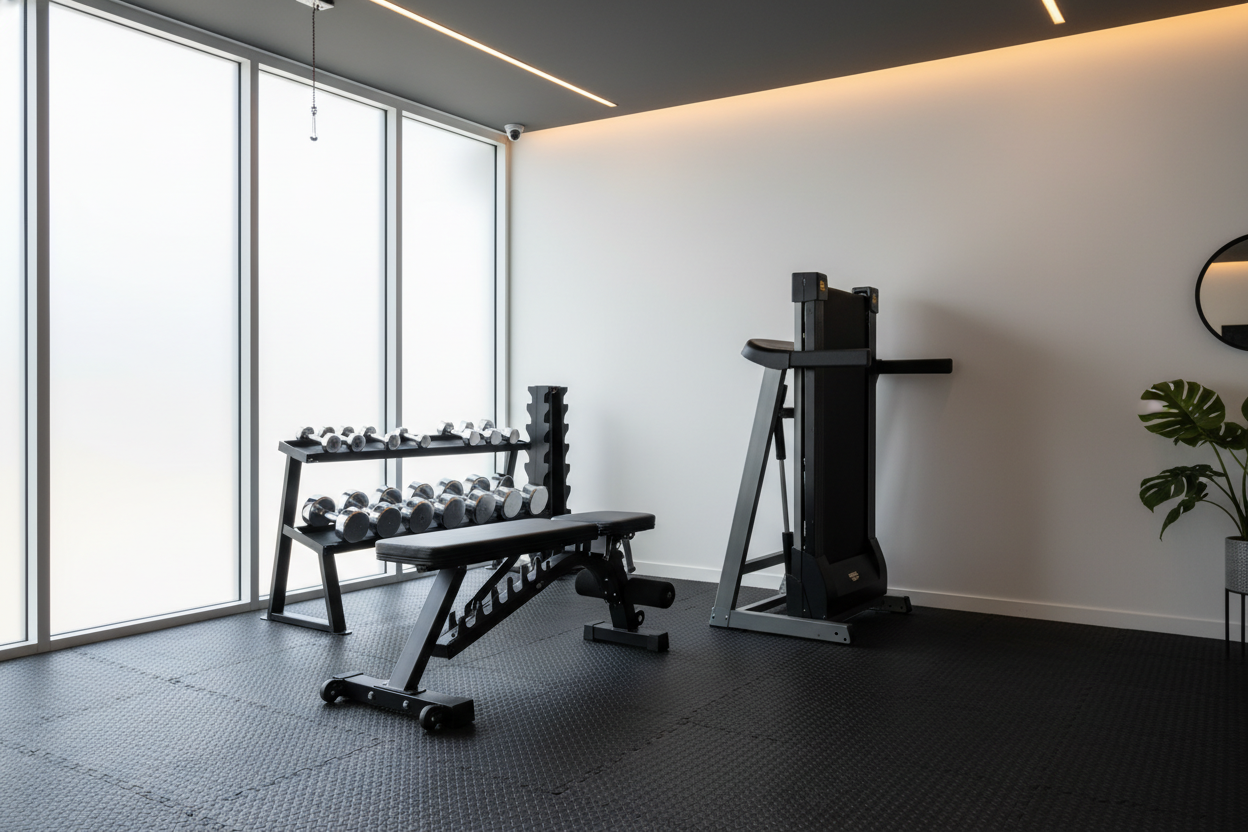
I have spent the last six years trying to cram a functional gym into a single-car garage that I also share with a lawnmower and a mountain of holiday decorations. Every time I went searching for a space saver exercise machine, I ended up with something that felt like it was made of recycled soda cans. It is a frustrating cycle: you buy the 'convenient' folding gear, and the first time you actually put some effort in, the console starts rattling like a tambourine.
The reality is that most compact gear is built for marketing photos, not for people who actually train. I have tested enough 'lightweight' frames to know that if a machine is easy for your delivery driver to carry with one hand, it is going to be a nightmare when you are mid-sprint. You do not need less machine; you need a smarter footprint.
Quick Takeaways
- Weight equals stability: If the machine weighs less than you do, it will move when you move.
- Transport wheels are non-negotiable: Look for heavy frames with high-quality wheels, not flimsy frames that are 'easy to lift.'
- Vertical is king: Machines that store upright beat machines that fold flat every single time.
- Check the steel: 11 to 14-gauge steel is the gold standard for home use.
The Brutal Truth About Most 'Foldable' Cardio Gear
The fitness industry treats compact aerobic exercise equipment as a budget afterthought. They assume that if you live in an apartment or a small house, you aren't a 'serious' athlete. This leads to a market flooded with lightweight exercise machines that use thin-walled tubing and plastic bushings instead of sealed bearings. When you start pedaling or running, the frame flexes. That flex turns into a wobble, and that wobble eventually leads to snapped bolts or a motor that burns out from the friction.
I once bought a folding bike that promised a 'whisper-quiet' ride. Within three weeks, the hinge mechanism had developed so much play that I felt like I was riding on a boat. If you are looking for a space saving exercise machine, you have to stop looking at how it folds and start looking at how it is anchored. A machine that shakes is a machine you will eventually stop using because it feels unsafe and sounds like a construction site.
What Actually Makes a Space Saver Exercise Machine Good?
Engineering a compact cardio machine for home requires a focus on geometry. A good machine uses a low center of gravity and a wide enough base to prevent tipping, even if the overall length is shortened. When I evaluate cardio equipment for small spaces, I look at the thickness of the steel and the quality of the weld points. You want a frame that feels like a singular unit, not a collection of parts held together by hope and cheap hardware.
Legitimate space saving cardio machines don't sacrifice the 'feel' of the workout. This means the flywheel weight needs to stay high—usually 20 lbs or more for a bike or elliptical—to ensure a smooth stroke. If the manufacturer cut weight by shrinking the flywheel to the size of a dinner plate, your workout is going to feel jerky and inconsistent.
Stability vs. Portability: The Ultimate Trade-Off
You should never want your cardio machine for small spaces to be featherlight. If a machine is too light, the physics just don't work in your favor. When you shift your body weight, the machine shifts with you. Instead of looking for a 'lightweight' unit, look for a heavy-duty unit with oversized transport wheels. I would much rather tilt a 150-lb rower onto high-quality wheels and roll it into a corner than try to stabilize a 40-lb machine that walks across the floor while I'm using it.
The Footprint vs. Stride Length Dilemma
This is the biggest trap in small cardio equipment for home. To make a machine shorter, companies often shorten the stride length. If you are over 5'8' and you try to use an elliptical with a 12-inch stride, you aren't running; you're doing a weird, cramped shuffle that will wreck your hips over time. Always check the specs for a 'natural' stride length (usually 18-20 inches) even if the machine itself is compact.
My Top Picks for Compact Cardio That Doesn't Feel Like a Toy
If you want a real workout without losing your living room, you have to be picky. For runners, I always warn people: stop buying those $200 walking pads that fold in half. They are fine for a stroll during a Zoom call, but if you want to actually train, you need a legitimate compact cardio machine for home that has a motor capable of sustained speeds without overheating.
For low-impact work, I have been surprised by how well a foldable pilates reformer machine fits into a cardio-adjacent routine. It offers a level of resistance and core engagement that most compact bikes can't touch, and it tucks away far better than a traditional elliptical. Air bikes are another winner here—they have a tiny footprint and provide a brutal full-body burn, though they are loud enough to wake the neighbors.
How to Build a Complete Setup in a 10x10 Corner
You don't need a 2,000-square-foot commercial space to get strong. The trick is pairing your space-saving cardio equipment with multi-use strength pieces. I’ve seen people try to fit five different machines into a corner, but you’re better off with one solid cardio unit and one heavy-duty strength piece. For example, the compact 30 degree leg press is a masterclass in footprint management. It gives you the heavy-duty leg training of a commercial gym but uses an angled design to shave feet off the total length.
Combine that with a set of adjustable dumbbells and your compact cardio machine, and you have a setup that can take you from fat loss to hypertrophy without ever leaving your spare bedroom. Just remember to invest in a high-density rubber mat. It protects your floors and adds one last layer of stability to your gear.
FAQ
Will a space-saving machine handle high-intensity intervals?
Only if it has a high weight capacity. Look for machines rated for at least 250 lbs, even if you weigh 150 lbs. That extra capacity translates to a more rigid frame that won't flex during sprints.
Is vertical storage better than folding?
Yes. Folding mechanisms introduce a hinge, which is a structural weak point. Vertical storage machines usually have a solid frame and just 'tip up' to save space, which is much more durable in the long run.
How much floor space do I actually need for a 'compact' gym?
A 6x6 foot area is the bare minimum for a single machine plus some 'elbow room.' If you have a 10x10 space, you can comfortably fit a cardio machine, a bench, and a set of weights.
Share:
How to Actually Build the Best Home Gyms Under $1000
I Finally Tried a Smith Machine That Moves Forward and Back