
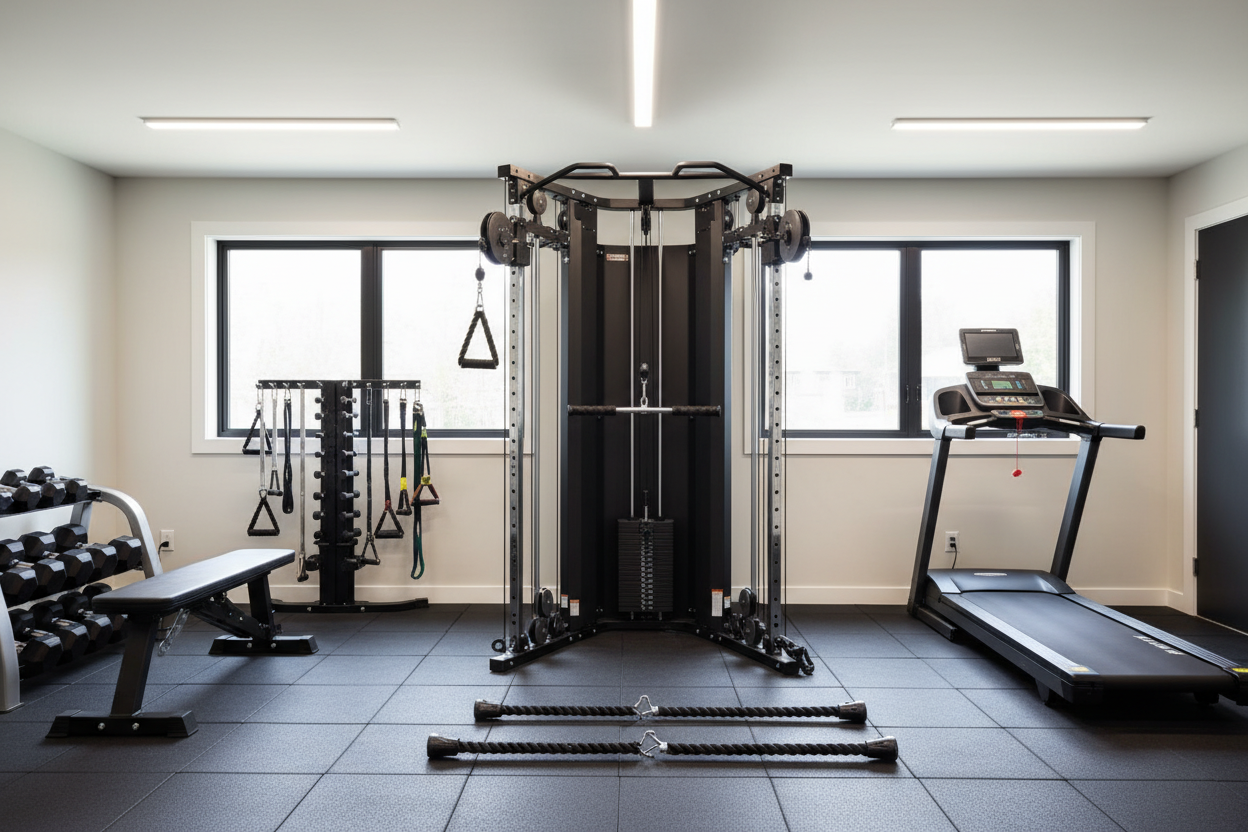
I remember standing in my garage, sweating through a heavy set of tricep extensions with a DIY rig I built for thirty bucks. I thought I was a genius until the cable snapped at the peak of the rep. The handle whipped back, missed my face by an inch, and 100 pounds of iron slammed into my concrete floor. That was the day I realized a cheap home gym pulley system isn't a bargain—it is a liability.
Quick Takeaways
- Avoid hardware store pulleys; they use plastic bushings that melt under friction.
- Look for a weight pulley system home gym setup with a 300lb+ load rating.
- Coated aircraft cable is non-negotiable for safety and smoothness.
- Aluminum pulleys beat nylon every time for long-term durability.
The Day My Tricep Pushdown Turned Into a Projectile
When you are deep into a session, the last thing you want to hear is the 'ping' of a cable fraying. Most people start their journey with a DIY gym pulley system made of clothesline and pulleys designed for hanging bird feeders. I was one of them. I thought I could save a few bucks by rigging up some basic hardware, but those components aren't rated for dynamic loads.
When that cable snapped, it wasn't just the noise that scared me; it was how close I came to a trip to the ER. A real workout pulley system needs to handle the violent 'snap' of a failed rep and the constant friction of high-volume accessory work. If your gear is making a high-pitched squealing sound, that is the sound of metal-on-plastic friction preparing to fail. You need a purpose-built fitness pulley system, not a weekend project from the local hardware aisle.
Why Paracord and Hardware Pulleys Aren't Good Enough
The mechanics of a weight pulley are simple, but the execution is where the cheap stuff fails. Most budget gym cable pulley system kits use 2-inch plastic pulleys with open bearings. These catch dust and hair, leading to a 'jerky' feeling during your lat pulldowns. You want a sheave diameter of at least 3 inches. Larger wheels reduce the bend radius of the cable, which prevents the internal steel strands from fatiguing and snapping.
Load ratings are another trap. A pulley might say '200 lb capacity,' but that is often a static rating. When you are dropping 150 lbs on a row, the dynamic force is much higher. A dedicated home pulley system uses high-density nylon or aluminum sheaves with sealed ball bearings to ensure the resistance stays consistent from the first inch of the pull to the last.
Wall-Mounted vs. Rack-Attached: Which Cable Setup Wins?
If you are tight on space, a rack-attached home gym cable pulley system is the standard move. They are portable, you can stow them in a gym bag, and they hitch onto any crossmember. However, they sway. If you are doing face pulls or crossovers, the weight stack will swing like a pendulum, which is annoying as hell and ruins your mind-muscle connection.
If you have the wall real estate, a dedicated wall mounted cable station is the superior choice. It provides a fixed path of travel and usually includes dual-rail guidance. This stability allows you to focus on the contraction rather than stabilizing a swinging plate peg. For anyone serious about hypertrophy, the smoothness of a fixed station beats a dangling cable every single time.
The 3 Non-Negotiables for the Best Pulley System for Home Gyms
First, only buy kits with coated aircraft cable. Bare steel cables will saw through your pulleys, and cheap ropes will stretch until your range of motion is ruined. Second, you need a sway-resistant loading pin. If the pin is just a thin bolt, your plates will rattle and shift, making the lift feel unstable. Look for a pin with a wide base and a carabiner hole that doesn't have sharp edges.
Third, check the pulley material. Aluminum is the gold standard for a pulley system for lifting weights because it dissipates heat better than plastic. If you're doing high-rep sets, that heat build-up is exactly why most compact gym setups snap. Don't gamble your floor or your face on a $15 kit from a random overseas seller.
How to Rig Up Your Cables Without Ruining Your Rack
Most garage gym pulley system setups fail because of bad angles. If your cable is rubbing against the side of the pulley housing, it will fray in weeks. When you attach your straps to your power rack, use a sacrificial layer—like a piece of rubber or a heavy-duty towel—to protect your powder coat. I’ve seen $1,000 racks stripped to the bare metal because of a sliding carabiner.
Ensure your loading pin is centered directly under the pulley. If you're pulling at an angle, the weight cable pulley system will bind. I personally use two carabiners on the loading pin to keep it from spinning, which keeps the plates from banging into my shins during seated rows.
Stop Cheaping Out on Your Accessory Work
Cables are the finishing touch to a great physique. You can build a massive chest with a barbell, but you need that constant tension for the details. Investing in a high-quality fitness gear pulley system is an investment in your safety and your results. Stop settling for jerky, dangerous rigs and start upgrading your home gym with equipment that actually holds up to the weight you’re moving.
FAQ
Can I use a standard 1-inch plate on a pulley loading pin?
Most high-quality loading pins are designed for 2-inch Olympic plates, but many kits include an adapter sleeve. Just make sure the pin is long enough to hold the volume of plates you need for your heaviest lifts.
How often should I replace my gym cable?
Inspect your cable every month. If you see 'kinking,' any visible steel strands, or the plastic coating peeling off, replace it immediately. A $20 replacement cable is much cheaper than a new mirror or a dental bill.
Are aluminum pulleys louder than nylon?
Slightly, yes. Aluminum has a metallic 'whir' compared to the muffled slide of nylon. However, the trade-off in durability and smoothness is worth the minimal extra noise in a garage setting.
Share:
Why I Refuse to Trade My Free Weight Leg Press for a Stack
The Real Full Gym Equipment Price Nobody Warns You About