
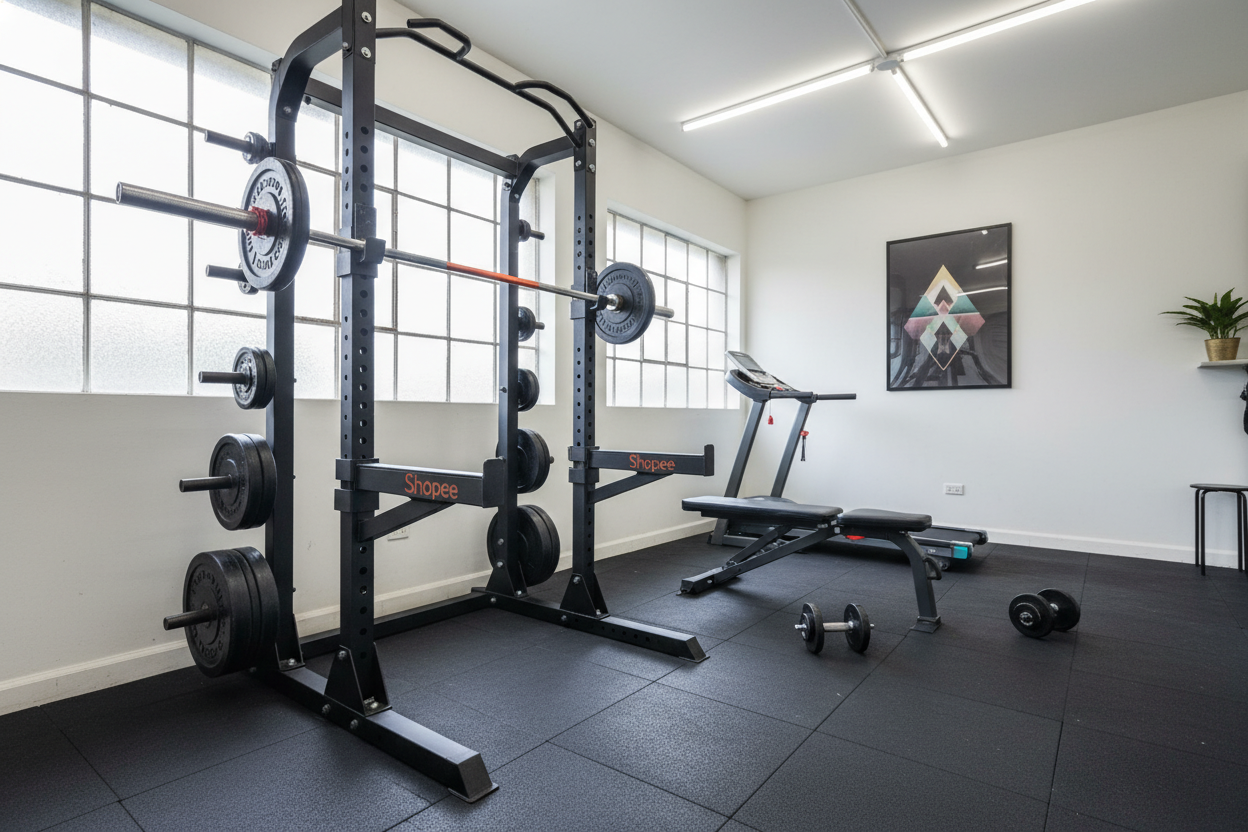
I was scrolling through my phone at 11 PM, dodging targeted ads, when I saw a shopee barbell listed for less than the price of a decent pair of lifting straps. My rational brain screamed 'danger,' but my curiosity won out. I wanted to know if this budget stick was a hidden gem or a literal pipe bomb waiting to go off in my rack.
Quick Takeaways
- The 'chrome' finish is thin and started flaking after three sessions.
- Knurling is incredibly passive — don't expect it to stick to your back during heavy squats.
- Sleeves use cheap nylon bushings with almost zero spin.
- Safe for light accessory work, but terrifying under a 3-plate load.
The Irresistible Lure of the $40 Lifting Bar
The price of outfitting a home gym has skyrocketed lately. When you see a barbell shopee listing with free shipping and a price tag that seems too good to be true, it is hard to resist. Most of us just want a bar to do some rows, curls, and maybe some light overhead presses without spending a car payment on a name-brand piece of steel.
I ordered the 'Heavy Duty Professional' model, which arrived in a cardboard tube that looked like it had been dragged behind a truck across three countries. For $40, I wasn't expecting a custom cerakote finish, but I was hoping for something that wouldn't arrive pre-bent. Surprisingly, it was straight — for now.
Unboxing the Shopee Barbell: Red Flags and Surprises
Right out of the tube, the first thing I noticed was the smell. It had that distinct, industrial machine oil scent that lingers in your garage for a week. The finish was a shiny, cheap decorative chrome that felt slippery. If your hands get even slightly sweaty, this bar becomes a greased pig.
The knurling was almost non-existent. It felt like a smooth piece of pipe that had been lightly scuffed with sandpaper. For high-rep work, that might save your skin, but for anything heavy, it is a recipe for a missed lift. The sleeves had a lot of side-to-side play, clanking loudly every time I moved the bar.
The Torture Test: Squats, Deadlifts, and Drops
I started with some light movements to get a feel for the balance. During the free weight barbell bench press, the lack of sleeve spin was immediately apparent. The weight felt 'dead' in my hands, and I could feel the torque on my wrists because the plates weren't rotating freely. This is a common issue with cheap bushings that can lead to tendonitis over time.
Then came the squats. I loaded 315 lbs, which is usually a comfortable working weight for me. As soon as I walked it out, the bar had a massive amount of whip. It felt like I was balancing a wet noodle across my traps. When I hit the bottom of the rep, the bar oscillated so much I had to fight just to stay upright. I managed three reps, but I didn't feel safe doing a fourth.
Why Cheap Steel Bends (And Stays Bent)
Quality bars use steel with high tensile strength, usually measured in PSI. Most cheap e-commerce bars use low-grade cold-rolled steel with a low yield strength. This means the weight at which the bar permanently deforms—meaning it stays bent—is very low. If you drop this bar from hip height with 225 lbs on it, there is a high chance it will never be straight again.
When Does It Actually Make Sense to Buy One?
I am not a gear snob. There is a place for a budget bar. If you are just starting out and your max deadlift is 135 lbs, this bar will serve you just fine for a year. It is also a great 'beater bar' for things like landmine rows, where the end of the bar is shoved into a metal tube and the finish is going to get trashed anyway.
However, if you have aspirations of lifting heavy or practicing Olympic movements like cleans and snatches, this is a bad investment. The lack of spin will hurt your wrists, and the lack of knurling will limit your grip. You'll end up buying a better bar in six months anyway, so you might as well save the $40 now.
What to Buy When You Outgrow the Starter Bar
Once you start hitting 225 lbs on your big lifts, the limitations of a cheap bar become a safety hazard. You need steel that is rated for the load you are moving. Investing in a reliable 20kg Olympic barbell ensures that the bar will return to its original shape even after a heavy set.
If you are tired of the bar shaking in your hands or the plates clanking like a bucket of bolts, it is time to upgrade to a real Olympic barbell. You'll notice the difference in the first set. The knurling will actually bite into your palms, and the sleeves will spin like they're on ice. Your joints will thank you.
FAQ
Is a cheap barbell safe for heavy lifting?
Generally, no. Most are rated for 300 lbs max, but that rating is often 'static,' meaning it can hold the weight but not survive the force of a drop or a fast movement. Stick to light weights.
Why does my cheap barbell rust so fast?
The decorative chrome used on budget bars is very thin and porous. Humidity gets underneath it easily. You can slow this down by wiping the bar with a light coat of 3-in-1 oil once a month.
Can I use a cheap bar for CrossFit?
I wouldn't recommend it. High-rep Olympic lifts require sleeves that spin consistently to protect your wrists. Cheap bars usually have friction-heavy bushings that can cause wrist strain during cleans.
Share:
I Finally Looked Up Who Inventor the Smith Machine. Here's the Story.
I Transformed My Setup With Just 4 Gyms Accessories