
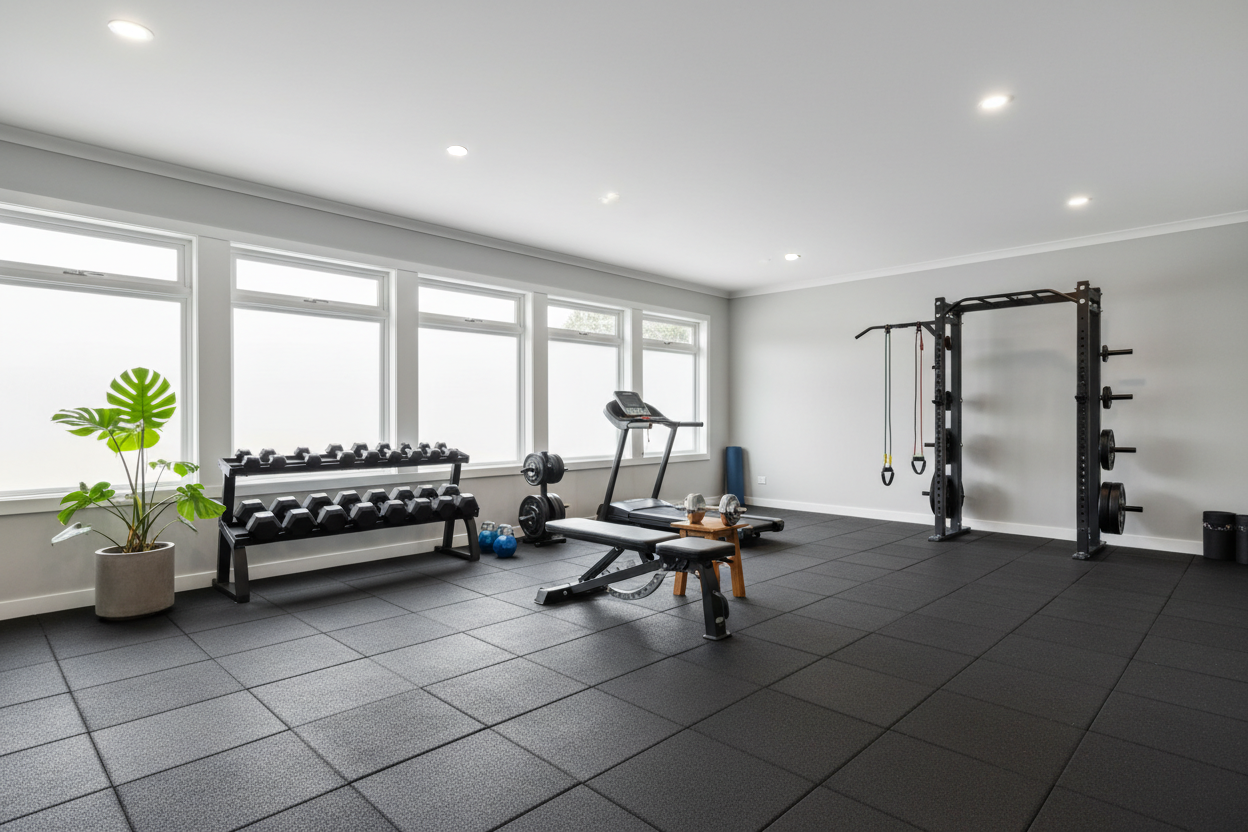
I remember the day I sold my soul to a big-box store for a 150-lb selectorized stack that promised 50 exercises in one. It arrived in three massive boxes, took six hours of swearing to build, and within a week, the cable felt like it was dragging through wet sand. Finding the right upper body workout machines for home shouldn't feel like a high-stakes gamble with your hard-earned cash.
- Avoid plastic pulleys and thin-gauge steel at all costs.
- Plate-loaded machines save money and handle significantly more weight than cheap stacks.
- Smith machines are the ultimate safety net for solo heavy lifting.
- Prioritize a rigid lat pulldown over a wobbly 'do-it-all' cable station.
The Multi-Station Lie We All Fall For
I thought I was being smart. One machine, every muscle group, small footprint—right? Wrong. The geometry on that first 'all-in-one' was so poor that my shoulders clicked on every chest press. The 1x1 inch steel tubing shook like a leaf when I loaded anything over 135 lbs. If you're thinking about buying single multi-gym setups, please stop and reconsider. These contraptions try to do everything and end up doing nothing well.
The range of motion is usually designed for a very specific body type. If you aren't exactly 5'10", you'll find the handles are always an inch too high or the seat doesn't drop low enough. I spent more time trying to find a comfortable position than I did actually lifting. The friction in the nylon pulleys was the final straw; it felt like lifting 50 lbs on the way up and 20 lbs on the way down. That's not how you build muscle.
What Actually Matters When Chasing a Pump at Home
When you're hunting for upper body exercise equipment for home, you need to care about three things: friction, footprint, and leverage. High-end gear uses aluminum pulleys or high-grade bearings that don't bind under load. If you're pulling a cable and it hitches, your muscles are losing tension. That’s a wasted rep.
Also, consider the weight source. Selectorized stacks are convenient, but they add $500 to $1,000 to the price just for the iron and the shipping. Plate-loaded gear lets you use the Olympic plates you probably already have lying around. You might wonder are dedicated upper body machines worth the space when you could just buy a power rack? If you want to isolate your lats or chest without your lower back or stabilizers giving out first, a dedicated machine is the only way to reach true failure safely.
The Heavy Hitters: Equipment That Actually Delivers
Forget the flashy infomercials. You want pieces that feel like the commercial gym gear you grew up on—stable, heavy, and predictable.
The Smith Machine: Your Best Friend for Solo Benching
People love to hate the Smith machine, calling it 'cheating.' I call it a way to hit chest failure at 9 PM on a Tuesday without needing a spotter to save my neck. A heavy-duty Smith machine with a smooth linear bearing system is a godsend for incline presses. I’ve used cheap versions that felt 'sticky,' but a unit with 2-inch guide rods allows you to focus entirely on the pectoral squeeze rather than balancing the bar.
It’s also the most effective tool for heavy shrugs and behind-the-neck presses. When you remove the stability requirement, you can move 20% more weight. In a home setting, that safety hook system is the difference between a great workout and a trip to the ER.
Plate-Loaded Lat and Dip Towers
You can't replicate a heavy lat pulldown with a resistance band tied to a door frame. You need a tower with a 1:1 ratio so 100 lbs actually feels like 100 lbs. I’ve found that a dedicated seated dip machine is far superior to standard dip bars for targeting the lower chest and triceps. It allows you to stay upright and controlled, which is much easier on the elbows as you get older and the weights get heavier.
The plate-loaded design means you can micro-load with 1.25-lb plates, something you can't do with most selectorized stacks. For back thickness, a rigid seat and adjustable thigh pads are non-negotiable. If you're lifting off the seat during a pulldown, the machine is failing you.
The Free Weight Complement (Don't Ditch Your Dumbbells)
Machines are your high-volume finishers, but they don't replace the basics. You still need your home gym essentials like a solid set of dumbbells and a barbell. I typically use the Smith machine for the heavy, stable volume where I want to push to absolute failure, then I grab a pair of 50-lb dumbbells for flyes or lateral raises to hit the stabilizers. Using upper body workout equipment at home is about balance. The machine builds the raw size; the free weights build the coordination.
The Final Verdict on Outfitting Your Space
Buy once, cry once. Look for 11-gauge steel and 2-inch by 3-inch frames. If the machine weighs less than you do, it’s probably going to move when you’re mid-set. Stick to gear that mimics commercial specs. Your chest and back will thank you when you're actually able to progress the weight instead of fighting a frayed cable or a wobbly seat. Invest in the steel, not the stickers.
FAQ
Is plate-loaded better than a weight stack?
For most home gyms, yes. It's significantly cheaper to ship and allows you to use your existing Olympic plates. Weight stacks are great for speed, but they limit your top-end strength over time.
Do I need a special floor for heavy machines?
Absolutely. Don't put a 300-lb machine on bare concrete or carpet. You need at least 3/4 inch rubber stall mats to protect the frame and your house from vibration and leveling issues.
How much space do I really need for a Smith machine?
Budget a footprint of roughly 7 feet wide (to clear the bar) and 5 feet deep. Always measure your ceiling height twice—many Smith machines sit right at 82-84 inches, which is tight for some basements.
Share:
How Much Should an Olympic Barbell With Weights Actually Cost?
Why Every Infomercial Ab Machine Belongs in the Dumpster