
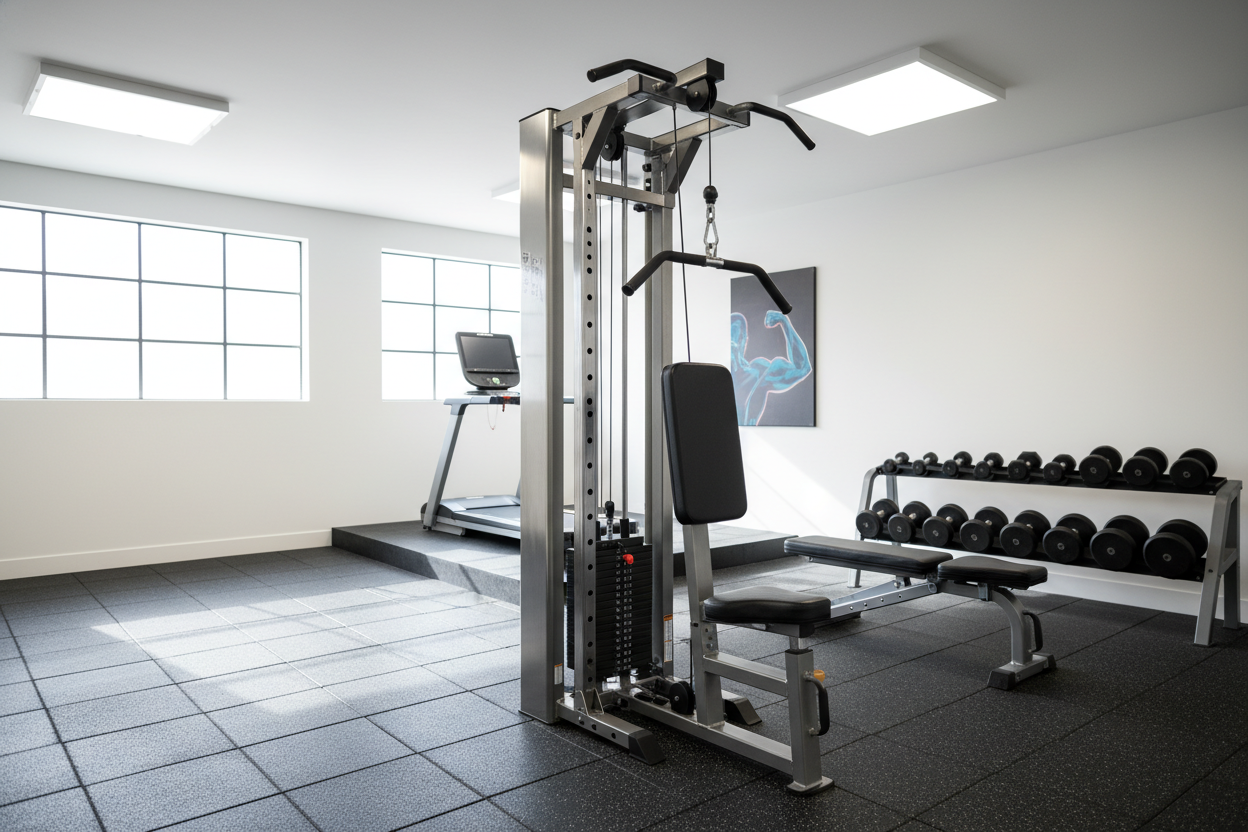
I spent twenty minutes waiting for a cable station last Tuesday just to do three sets of pushdowns. The commercial gym was packed, the air was stale, and I was losing my pump. That was the moment I realized that a home tricep machine wasn't just a luxury—it was a necessity for anyone serious about arm growth without the headache.
Quick Takeaways
- Cables provide constant tension that dumbbells simply cannot match due to gravity's limitations.
- Cheap door-mounted pulleys are a safety hazard; look for floor-mounted or wall-mounted steel frames.
- A 1:1 pulley ratio is better for heavy tricep work than the 2:1 ratio often found on functional trainers.
- Plate-loaded machines save money, but selectorized weight stacks save time and offer a smoother feel.
Why Dumbbells Are Cheating Your Triceps
Gravity is a fickle mistress. When you do a dumbbell kickback, there is zero tension at the bottom of the movement. You’re basically just swinging a weight until you hit the top 20% of the rep. Even with skullcrushers, the resistance curve drops off as soon as your arms lock out over your face.
Cables change the physics. Because the resistance is coming from the pulley, your triceps are under fire from the second you start the rep until the second you finish. If you are serious about upgrading your home gym setup, you have to move beyond just iron and air. Commercial gyms rely on cable stacks for a reason: they work the muscle through the entire range of motion, which is the fastest route to those horseshoe triceps.
The Flimsy Pulley Trap (And Why It Snaps)
We’ve all seen them: the $30 'portable' pulley systems on Amazon that hook over a door or a pull-up bar. I bought one once. It lasted exactly three workouts before the plastic coating on the cable started peeling and the pulley began to squeal like a stuck pig.
These things swing wildly. You spend more energy trying to keep the weight from hitting your shins than you do actually training. Worse, they have a terrifying habit of snapping mid-rep. If you're loading 50 lbs and that cable pops, you're taking a metal handle to the forehead. A real tricep home machine needs a fixed frame and high-tensile steel cables, not a glorified clothesline.
What Actually Matters in a Tricep Machine for Home
When you start shopping, don't get distracted by shiny paint. Look at the pulley ratio. A 2:1 ratio means 100 lbs on the stack feels like 50 lbs in your hand. This is great for rehab, but for heavy tricep extensions, you want a 1:1 ratio where the weight you load is the weight you lift.
Smoothness is the next big factor. If the carriage hitches or stutters, your joints will feel it. I learned the hard way that stability is king; I once tested a compact tower that wobbled so much I had to bolt it to a piece of plywood just to keep it upright. If you want something that won't shake when you're grinding out that last rep, you need a heavy-duty gym machine for home that has enough mass to stay put.
Standalone Tower vs. Multi-Station: Which Wins?
The standalone tricep tower is great if you have a dedicated corner. It’s simple, usually plate-loaded, and does one thing well. But if you’re tight on floor space, you might want to look at a versatile smith machine home gym station. These often integrate high and low pulleys into the frame of the rack.
Integrating your cable work into a multi-station setup means you can go from heavy close-grip bench presses straight into cable pushdowns without walking across the room. It saves you about 12 square feet of floor space, which is a big deal if you're training in a single-car garage. Just make sure the cable travel is long enough so you aren't bottoming out the weights at the end of your reach.
The Verdict: Do You Need a Tricep Home Machine?
If you're a powerlifter who only cares about the big three, you can probably get by with close-grip bench and overhead dumbbell extensions. But if you're chasing hypertrophy or dealing with nagging elbow pain, a cable setup is non-negotiable. The constant tension is easier on the tendons and better for the pump. It’s an investment in your joints as much as your gains.
My Personal Experience
Three years ago, I tried to save money by building a DIY pulley system using hardware store parts. I thought I was a genius until the nylon pulley melted from the friction of a heavy set of extensions. It smelled like burning plastic and ruined my workout. I eventually bit the bullet and bought a dedicated plate-loaded tower. My only regret? I didn't do it sooner. The ability to do face pulls, pushdowns, and overhead extensions with commercial-grade smoothness changed my arm days forever.
FAQ
Can I use a tricep machine for other exercises?
Absolutely. Any high-pulley station is perfect for face pulls, lat pulldowns (if it has a seat), and even standing cable crunches. It’s a versatile piece of kit if you get the right attachments.
Is plate-loaded better than a weight stack?
Plate-loaded is cheaper and lets you use the plates you already own. Weight stacks are much faster for drop sets and feel smoother because there’s less friction on the guide rods.
How much ceiling height do I need?
Most dedicated towers are about 80 to 84 inches tall. Always measure your ceiling before buying, especially if you're in a basement with low-hanging ductwork.
Share:
Your Bare Walls Are Depressing: Ideas for Home Gym Decor
Which Popular Gym Machines Actually Deserve the 5 PM Wait Line?