
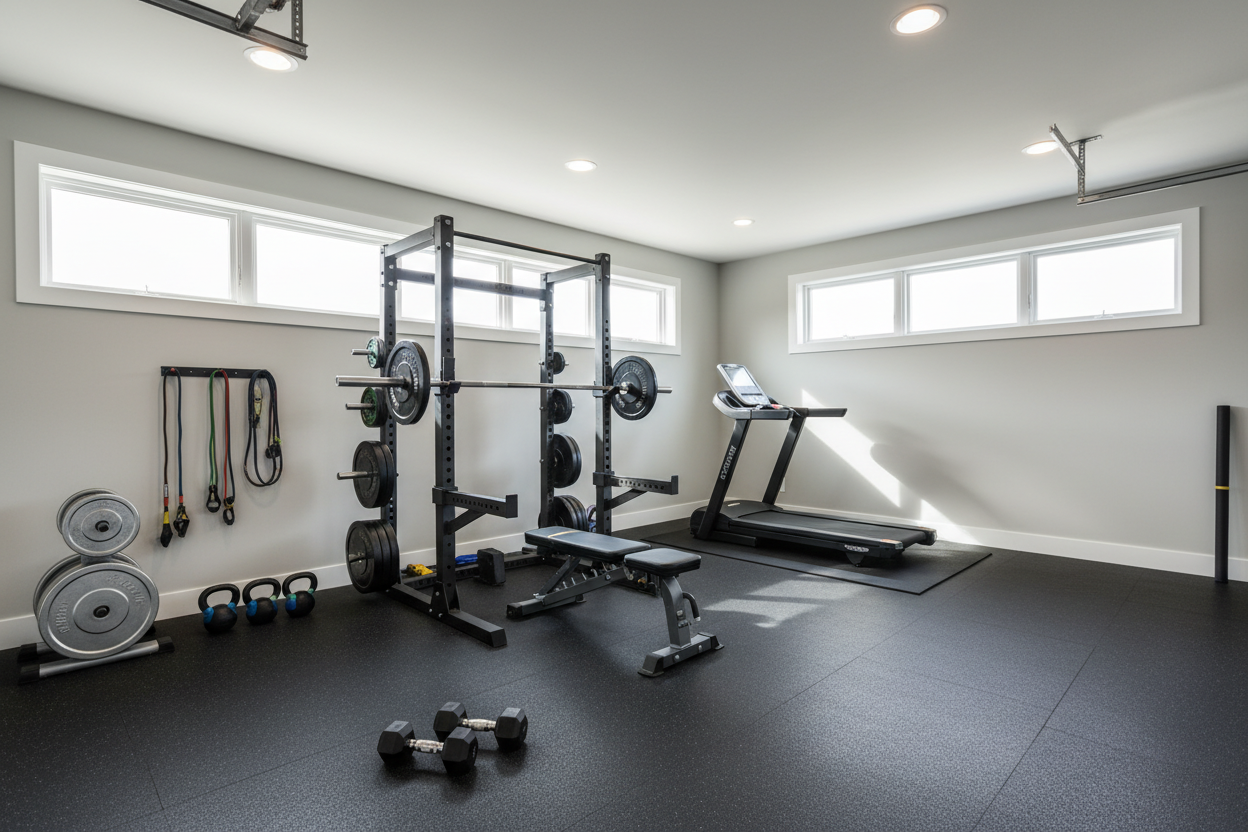
I have spent way too many nights staring at a 10x12 empty garage space, scrolling through forum threads until my eyes bled. We have all been there—trying to figure out what is best home gym equipment while the local commercial gym raises its monthly rates for the third time in two years. You want the perfect setup, but you are paralyzed by the fear of buying a $900 paperweight.
The truth is, most people buy gear for the person they hope to become, not the person who actually shows up to train at 6:00 AM. I have seen more pristine, dust-covered power towers in Facebook Marketplace than I care to count. If you want a space that actually gets used, you have to stop looking for a universal gold standard and start looking at your own training log.
- Function over Fashion: A $3,000 rack is useless if it does not fit under your low basement ceilings.
- Training Style Matters: Bodybuilders and powerlifters need entirely different footprints.
- Incremental Gains: Start with a foundational trio before buying niche attachments.
- Quality Over Quantity: One high-quality barbell beats five cheap specialty bars every single time.
Why 'The Best' Gear Doesn't Actually Exist
Whenever someone asks me which best home gym equipment they should buy first, I always answer with a question: What did you do for your last three workouts? If you spent those sessions on a cable crossover and a leg press, buying a bare-bones power rack is going to kill your motivation within a month. There is no 'best'—there is only 'best for your goals.'
People get caught up in the specs, like whether a rack uses 11-gauge or 14-gauge steel. Unless you are dropping 600 pounds from height, you probably won't bend either. The real constraints are your biomechanics and your floor plan. A 7-foot Olympic bar is the industry standard, but if your spare bedroom is only 8 feet wide, you are going to be putting holes in the drywall every time you load a plate. You have to be realistic about the physics of your space.
Stop Buying Gear for the Athlete You Want to Be
We have all fallen for the influencer trap. You see a pro athlete swinging a 70-lb kettlebell and suddenly you are convinced that a full run of competition bells is the secret to your success. If you have never touched a kettlebell in your life, do not drop $500 on a set. You are buying a fantasy, not a fitness tool.
I made this mistake early on with a Roman Chair. I thought I would do back extensions every morning. Instead, it became the world's most expensive towel rack. Buy gear that supports the movements you already do and enjoy. If you hate back squats, do not buy a dedicated squat stand just because a blog told you it was essential. Build a space that makes you want to walk through the door, not one that feels like a chore.
Figuring Out Your Non-Negotiable Essentials
If you are stripped down to the basics and wondering which is the best home gym equipment to start with, focus on versatility. You want tools that allow for hundreds of movements, not just one. For most of us, that means a solid rack, a versatile bar, and enough weight to keep you honest. You can get a world-class workout with just these items.
I usually tell people that a complete home gym fitness equipment is just 3 things: a way to load weight, a way to move that weight, and a bench that won't wobble when you're under a heavy load. Once you have those 'Big Three' covered, you can stop stressing about the fancy stuff. Heavy-duty basics allow you to pivot your training style without needing to sell off your entire inventory and start over.
Are Multi-Stations Actually Worth the Floor Space?
Barbell purists love to hate on all-in-one machines, but they are wrong. If you are a bodybuilder or someone who primarily cares about hypertrophy, a Smith machine home gym station is a massive space-saver. It combines a guided barbell path with cable columns, allowing you to hit chest flies, lat pulldowns, and squats in a single 4x6 foot footprint.
The trade-off is the 'feel.' A Smith machine won't build the same stabilizer strength as a free-standing barbell, but it allows you to push to absolute failure without a spotter. For a solo garage lifter, that safety factor is a huge plus. If your goal is to pack on muscle and you don't care about competing in powerlifting, don't let the 'hardcore' lifters talk you out of a machine that actually fits your training style.
The Golden Rule of Building Your Space
My biggest piece of advice? Buy slowly. It is tempting to buy a 'gym in a box' package and call it a day, but you will end up with three attachments you never use. Start with the core pieces that allow you to hit your primary lifts. Prove to yourself that you will actually walk out to the garage when it is 30 degrees outside before you invest in a leg curl extension.
As your strength increases and your programming evolves, you will naturally feel the gaps. Maybe you realize your joints hate heavy barbell pressing and you need a set of adjustable dumbbells. Or maybe you find that your floor is taking a beating and you need better mats. Building a home gym is a marathon, not a sprint. The best setup is the one that grows alongside your progress.
My Honest Mistake: The 'Budget' Bench
Early in my lifting career, I tried to save $100 by buying a generic adjustable bench from a big-box store. It had a 300-lb weight capacity, which sounded fine at the time. The first time I tried to incline press 185 lbs, the frame creaked and the back pad shifted two inches to the left. I almost dumped the bar on my face. I ended up giving that bench away and buying a heavy-duty 11-gauge steel bench anyway. I didn't save $100; I wasted $80 on the first one. Buy it once, buy it right.
Home Gym FAQ
How much ceiling height do I really need?
For a standard power rack, you want at least 7 feet, but 8 feet is the sweet spot. If you plan on doing pull-ups or overhead presses, measure your reach. There is nothing worse than hitting your knuckles on a joist mid-set.
Are adjustable dumbbells better than a full rack?
If you are tight on space, yes. A pair of high-end adjustables replaces 15 pairs of fixed dumbbells. However, they are slower to change between sets, which can be annoying for drop sets or circuit training.
Should I buy iron or bumper plates?
If you are doing Olympic lifts (cleans, snatches) or deadlifting on a concrete floor without a platform, get bumpers. They are quieter and save your foundation. If you just want to get heavy and love that 'clank' sound, cast iron is cheaper and takes up less room on the bar.
Share:
The Awkward but Brilliant Reality of Lifting With a Square Dumbbell
Why the Best Full Body Exercise Machine Is Just a Good Smith Rack