
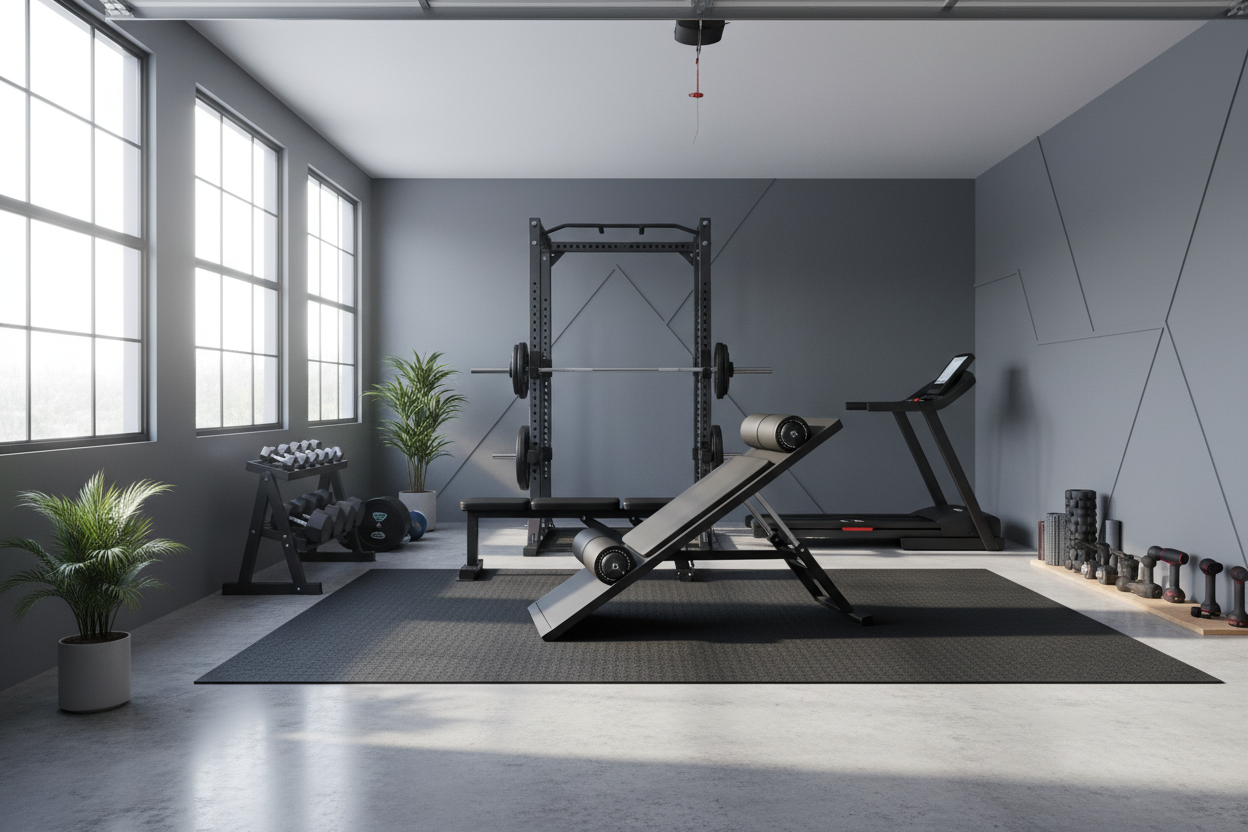
I remember the night I hit my breaking point. I was in my garage, mid-set with a cheap plastic ab wheel I'd bought for twelve bucks on Amazon, and I felt that familiar, sickening 'tweak' in my lower back. I wasn't even tired; my core just couldn't keep the wheel from wobbling, and my lumbar spine paid the price. That was the moment I started looking for a serious gym roller machine.
- Fixed tracks provide a safer, more stable path than handheld wheels.
- Mechanical resistance allows for progressive overload in core training.
- Automated recovery rollers offer deeper fascial release than manual cylinders.
- Dedicated machines reduce the risk of hip flexor dominance and lower back strain.
The Problem with the Classic $10 Ab Wheel
The standard ab wheel is a staple in most home gyms because it's cheap and small. But here's the truth: most people don't have the prerequisite stability to use it without their form breaking down. When that tiny wheel starts to drift or wobble, your core disengages, and your lower back arches to compensate. I spent years thinking my back pain was just 'part of the grind' until I realized I was essentially doing high-tension lumbar extensions.
Switching to a dedicated roller machine workout changed the physics of the movement. Instead of fighting to keep a single point of contact balanced on a dusty floor, a machine provides a stable base. This stability doesn't make the exercise easier—it makes it more effective. You can actually reach full extension and feel your rectus abdominis stretching without that terrifying 'snap' sensation in your spine.
Investing in a rolling machine for exercise isn't about being lazy. It's about longevity. If you're a heavy lifter, your spine is already under enough stress from squats and deadlifts. You don't need your accessory work to add to that fatigue. A machine allows you to isolate the core muscles while keeping your pelvis locked in a neutral position, which is exactly what we're after for a bulletproof trunk.
What Actually Constitutes a 'Roller Machine'?
When you start searching for rolling gym equipment, you'll notice the market is split into a few distinct categories. First, you have the core-focused exercise roller machine. These are usually track-based systems where your knees or elbows are locked into pads that slide along a fixed rail. They take the guesswork out of the movement path, which is a massive win for anyone with history of disc issues.
Then there's the thigh roller machine. These are often used for stabilization and targeted leg work, helping to strengthen the adductors and abductors. They look a bit specialized, but for athletes dealing with knee instability, they're gold. You also have motorized rolling exercise equipment designed specifically for recovery. These aren't for 'working out' in the traditional sense; they're high-torque, automated foam rollers that do the work for you.
When shopping, you need to watch out for red flags to look for in any exercise machine, especially regarding the bearings and rail quality. If a roller workout machine uses cheap plastic wheels on a thin metal track, it's going to feel 'crunchy' within a month. I look for industrial-grade rollers and heavy-gauge steel frames. If it weighs less than 30 pounds, it’s probably not going to survive a high-intensity session in a garage gym environment.
Core Isolation Without the Lumbar Pain
The beauty of a roll machine exercise is the forced path of motion. On a standard wheel, your hip flexors often take over the first half of the rep. With a track-based rolling machine workout, you can adjust the angle of the incline or the tension of the assist springs. This allows you to keep the tension strictly on the abs throughout the entire range of motion.
I've found that using a machine also allows for much better mind-muscle connection. When I'm not worried about the wheel slipping out from under me, I can focus on 'crunching' my ribcage toward my pelvis. It turns the movement from a balancing act into a genuine strength exercise. This is a perfect complement to heavy compound movements. For example, pairing core roller work with a hip thrust machine session creates a level of pelvic stability that a basic floor circuit just can't match.
Biomechanically, the fixed path prevents the 'shearing' force on the vertebrae. You're moving in a straight, controlled line. Most of these machines also have elbow pads, which is a godsend if you have wrist issues from years of heavy pressing. By taking the wrists out of the equation, you can put 100% of your focus into the contraction.
Are Automated Recovery Rollers Actually Worth the Money?
Let's talk about the recovery side of things: the foam rolling machine. I used to think these were for people with too much money and not enough grit. Then I tried one after a heavy leg day. A manual foam roller requires you to hold your body weight up in a plank position while trying to relax your muscles—which is a bit of a contradiction. An automated rolling machine for exercise recovery lets you sit or lie down while the machine does the oscillating and rolling.
The pressure is consistent and much more intense than what you can achieve by just rolling your body weight over a piece of high-density foam. For guys like me with tight IT bands and stubborn calves, these machines are a revelation. You can find the 'hot spot' and just let the machine work it out for five minutes without getting a shoulder workout in the process.
Is it a luxury? Absolutely. But if it means the difference between you hitting your squats on Monday or limping through them because your quads are glued together, the ROI is there. These units usually have adjustable speeds and directions, which is something you just can't replicate with a standard cylinder.
Does a Rolling Machine Belong in a Garage Gym?
Space is the ultimate currency in a garage gym. When you're deciding between cables vs smith machine setups, a core roller might seem like an unnecessary footprint. However, most modern rolling workout machine designs are surprisingly slim. Some can even be folded and hung on a wall or tucked under a lifting platform when not in use.
I've seen a shift lately where people are moving away from 'do-everything' racks toward specialized gear. Just like someone might add a compact leg press to save their back from heavy barbell loading, a roller machine serves that same purpose for the core. It’s about high-value, low-risk training. If a machine takes up 4 square feet but ensures you never miss a week of training due to a back tweak, it has earned its spot.
For my setup, I prioritized a unit with a small footprint but a high weight capacity. I don't want something that feels like a toy. If you're tight on room, look for 'ab coasters' or vertical track rollers. They use vertical space rather than floor length, making them much easier to fit next to a power rack or a dumbbell storage tree.
The Final Verdict: Who Should Make the Trade?
If you're twenty years old and have a spine made of rubber, keep using your ten-dollar wheel. But if you’re a veteran lifter, someone with a history of lower back issues, or just someone who wants to actually train their abs rather than their hip flexors, the trade is worth it. A dedicated gym roller machine provides the stability and safety necessary to push your core to failure without risking your spinal health.
It’s an investment in your ability to keep training hard into your 40s, 50s, and beyond. Stop struggling with shaky wheels and start using equipment that actually supports your goals.
Is a gym roller machine better than planks?
Yes, because it allows for dynamic movement and eccentric loading. Planks are great for static stability, but a roller machine builds functional strength through a full range of motion while keeping the spine protected.
How much space does a roller machine take up?
Most track-based models are about 4 feet long and 2 feet wide. Many home-gym versions are foldable, allowing you to store them vertically against a wall or under a bed.
Can a foam rolling machine help with chronic soreness?
Definitely. Because it provides consistent, high-torque pressure without requiring you to support your own body weight, it can reach deeper tissue layers than manual rolling, significantly speeding up blood flow and recovery.
Share:
Why the Best At Home Fitness Machines Don't Fold Up
Why I Stopped Hating the Planet Fitness Smith Machine