
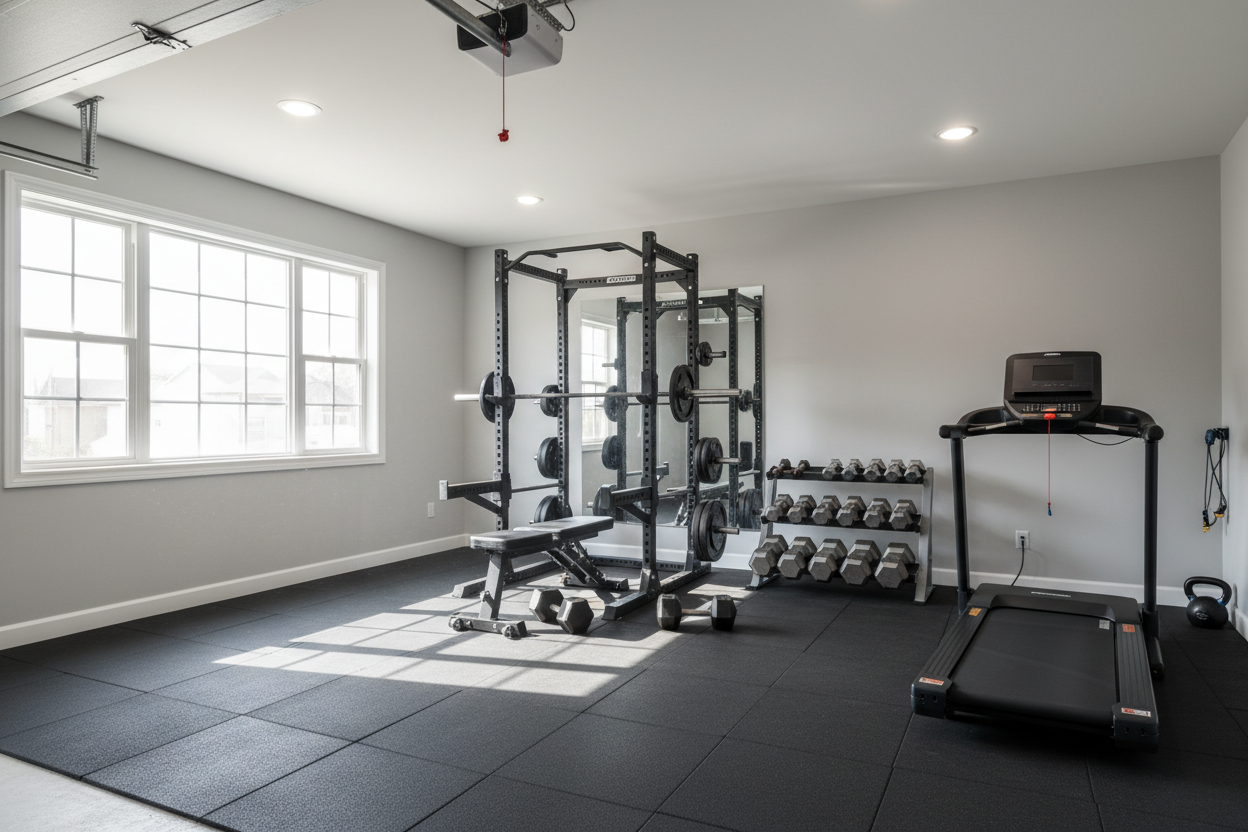
I remember the first time I fell for the 'smart' fitness trap. I bought a high-tech rower with a massive screen, thinking the flashy visuals would distract me from the fact that my lungs were on fire. Three months later, the company updated their software, the screen lagged, and I was stuck with a $2,000 paperweight that required a $40 monthly subscription just to see my own stats. If you are hunting for the best exercises machine for home, you need to ignore the silicon and focus on the steel.
- Steel gauge and frame weight determine safety and longevity.
- Constant mechanical tension from cables beats 'gamified' resistance every time.
- Subscripton-free equipment has a higher resale value and zero monthly overhead.
- Functional trainers and Smith machines offer the most versatility per square foot.
The Big Lie About 'Smart' Fitness Gear
The fitness industry wants you to believe that a touchscreen mirror or a bike with a 'leaderboard' is the secret to getting in shape. It is a lie designed to keep your credit card on file. Muscle growth is driven by progressive overload—adding more weight or doing more reps over time. Your biceps do not care if a virtual coach is shouting at you from a 32-inch 4K display; they only care about the load.
Most 'smart' machines use electromagnetic resistance that feels 'mushy' compared to real iron. They lack the tactile feedback of a knurled bar and the satisfying clink of a weight stack. When you are looking for the best machine, you want something that will still work twenty years from now when that 'smart' tablet is obsolete tech junk.
So, What Is the Best Workout Machine for Home?
If I had to strip my garage down to one single unit, it wouldn't be a treadmill or a Peloton. It would be a functional trainer or a high-end Smith machine combo. This is the true answer to what is the best workout machine for home because it allows you to safely perform squats, presses, and rows without needing a spotter. You can push yourself to absolute failure on a heavy bench press, and if the bar stalls, you just flick your wrists to rack it.
Building a versatile home gym setup means maximizing your footprint. A good multi-functional trainer gives you two independent cable columns, which are essential for isolation work like flyes and lateral raises. It bridges the gap between 'old school' iron and modern safety, giving you the best of both worlds without the monthly app fee.
Why Weight Capacity Beats WiFi Connectivity
I have tested racks that felt like they were made of soda cans. If a machine wiggles when you're doing pull-ups or shifts when you rack a heavy barbell, it is a liability, not an asset. You should be looking for 11-gauge or 12-gauge steel. This isn't just about 'feeling' heavy; it is about structural integrity under load.
A unit with a heavy-duty footprint stays planted. When you are pulling 200 pounds on a cable row, you don't want the machine sliding toward you. Mass is the ultimate stabilizer. If the shipping weight of the machine is under 200 pounds, it is probably a toy. Real machines have real weight.
The Best Machine Always Offers Mechanical Tension
One of the biggest mistakes home lifters make is relying on resistance bands or 'dynamic' digital weight. These methods often lose tension at the bottom of the movement where your muscles are most stretched. A selectorized weight stack provides constant mechanical tension throughout the entire range of motion.
For those who train alone, a Smith machine home gym station is a literal lifesaver. It guides the bar on a fixed track, which is perfect for maintaining form when your fatigue kicks in. It allows you to focus entirely on the mind-muscle connection rather than balancing the bar, which is often the best machine choice for hypertrophy-focused training.
Don't Forget the Lower Body (The Most Ignored Area)
Most 'all-in-one' machines are great for chest and back but leave your legs wanting more. If you're serious about your physique, you can't just do leg extensions and call it a day. You need movements that target the posterior chain—the glutes and hamstrings—which are the powerhouse of your body.
To round out your gym, consider adding a dedicated hip thrust machine. It takes up significantly less space than a full leg press but provides a level of glute activation that is hard to replicate with just a barbell. It is the kind of specialized tool that turns a basic workout space into a professional-grade facility.
How to Actually Choose Your Iron Sanctuary
Before you pull the trigger, measure your ceiling height twice. I once bought a gorgeous power rack only to realize my basement ceiling was two inches too short for the pull-up bar. Check the 'working' dimensions, not just the footprint—you need space to load plates on the sides and room for your bench to slide back.
At the end of the day, the single best exercise machine is the one you will actually use. For me, that means a machine that is ready the second I walk into the garage. No booting up, no updating firmware, no 'searching for signal.' Just heavy steel and a lot of sweat.
My Personal Experience: The 'Wobble' Lesson
Early in my lifting career, I bought a 'budget' power tower from a big-box store. It was light enough to carry into the house by myself—that should have been my first warning. The first time I tried weighted dips with a 45-pound plate hanging from my belt, the entire frame flexed and tipped. I ended up on the floor, and the machine ended up on Craigslist. Now, I won't buy anything that doesn't have a base wider than my wingspan and a weight that requires two people to move.
FAQ
Do I need to bolt my home gym machine to the floor?
If it is a light power rack, yes. If it is a heavy functional trainer with a wide base and a 400-plus pound shipping weight, usually not. However, bolting down always provides the most 'solid' feel during explosive movements.
Is a Smith machine better than a power rack?
Neither is 'better,' they just serve different purposes. A power rack is better for functional strength and stabilizer muscle development. A Smith machine is better for safety when training alone and for targeted muscle growth.
How much space do I really need?
For most multi-functional machines, you want at least an 8x8 foot area. This gives you room to move around the unit, adjust the cables, and safely load weight plates without hitting the walls.
Share:
The Best Exercise Equipment Cheap Has Zero Moving Parts
I Tested 4 Back and Shoulder Workout Machines (Only One Survived)